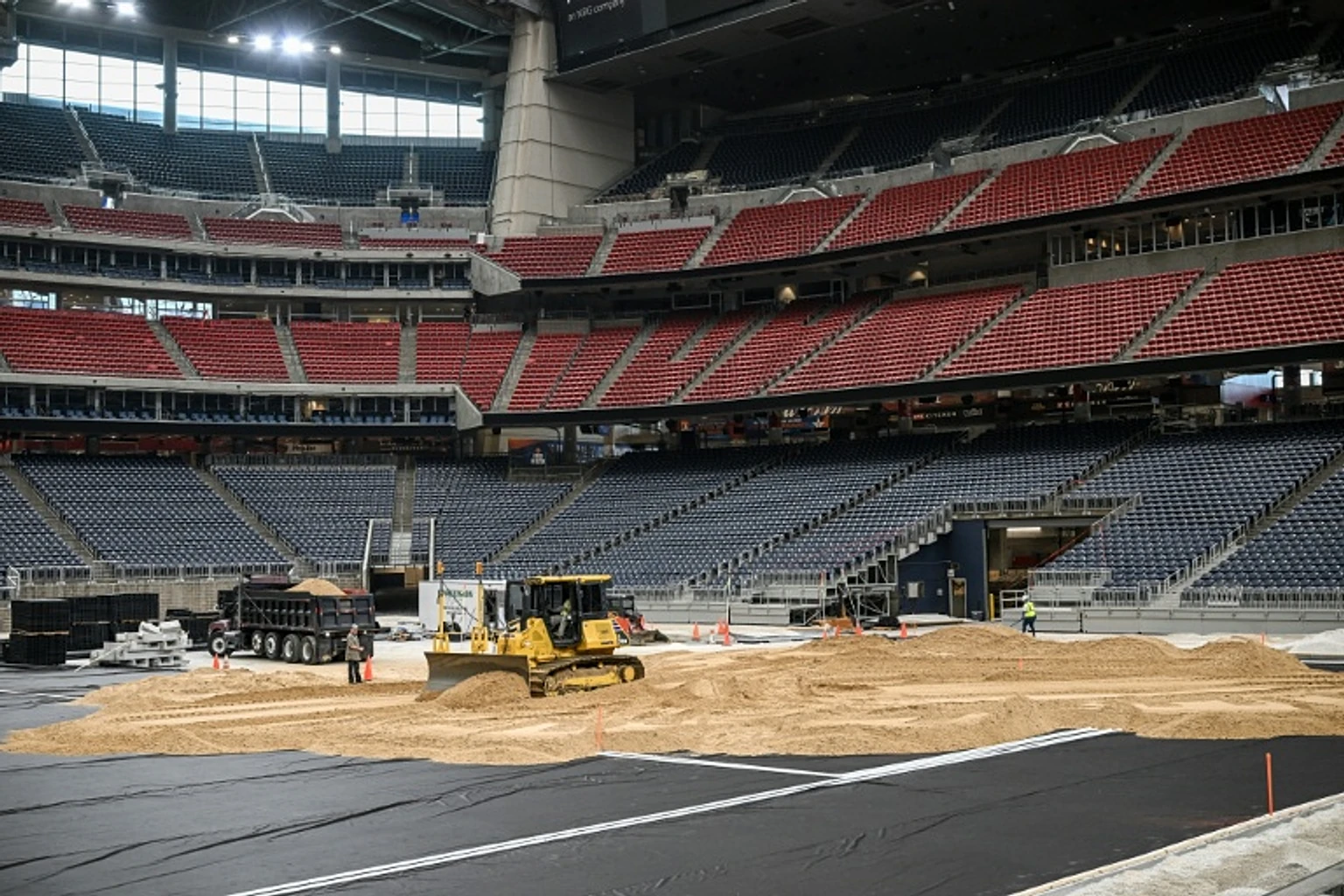
Houston is undergoing a massive transformation ahead of the World Cup, turning the Texans' NFL stadium into a world-class natural-grass pitch, shielding its streets from brutal heat, and preparing its transit police to respond in 50 languages. It's a city-wide effort that goes far beyond just swapping out turf.
The fourth-largest city in the United States, home to 2.3 million people, will host five group-stage matches featuring some of the tournament's biggest names—including Florian Wirtz's Germany, Cristiano Ronaldo's Portugal, and Virgil van Dijk's Netherlands. Houston will also stage one round-of-32 match and one round-of-16 match when the tournament kicks off on June 11, less than a month from now.
"As the event approaches and expectations grow, we're here to report that Houston is ready," Chris Canetti, president of the FIFA World Cup Houston host committee, told AFP on Monday as the city began the one-month countdown to kickoff.
The Texans' NRG Stadium, renamed Houston Stadium for the World Cup, is one of several NFL venues switching out its synthetic playing surface for the natural grass required by FIFA. The transition is made easier by the fact that the stadium originally featured a natural grass field, according to Hussain Naqi, general manager of the stadium complex NRG Park.
"We know what we're doing," Naqi said, noting that Houston has successfully hosted Copa America matches and international club friendlies in the past. Before laying the grass pitch imported from Colorado, officials adjusted the playing surface dimensions from those of American football to allow for proper corners and throw-ins.
"Equally, we have put in what's called a sub-air system. That is effectively an aeration system that goes in underneath the surface to help with growing the pitch," Naqi explained. Grolite, a high-performance mineral soil conditioner, is being brought in from the Netherlands to keep the grass healthy, and the original irrigation system is being reactivated. On Monday, white pipes were still visible while workers with heavy machinery covered parts of the field with soil.
World Cup matches will be played with the stadium's roof closed, but outside the climate-controlled venue, Houston's streets will likely see scorching summer temperatures. The city is taking no chances, preparing its transit police force to respond in 50 languages and implementing heat-shielding measures to keep fans comfortable as they move between venues and fan zones. It's all part of a comprehensive plan to ensure Houston is ready to welcome the world's biggest sporting event in style.