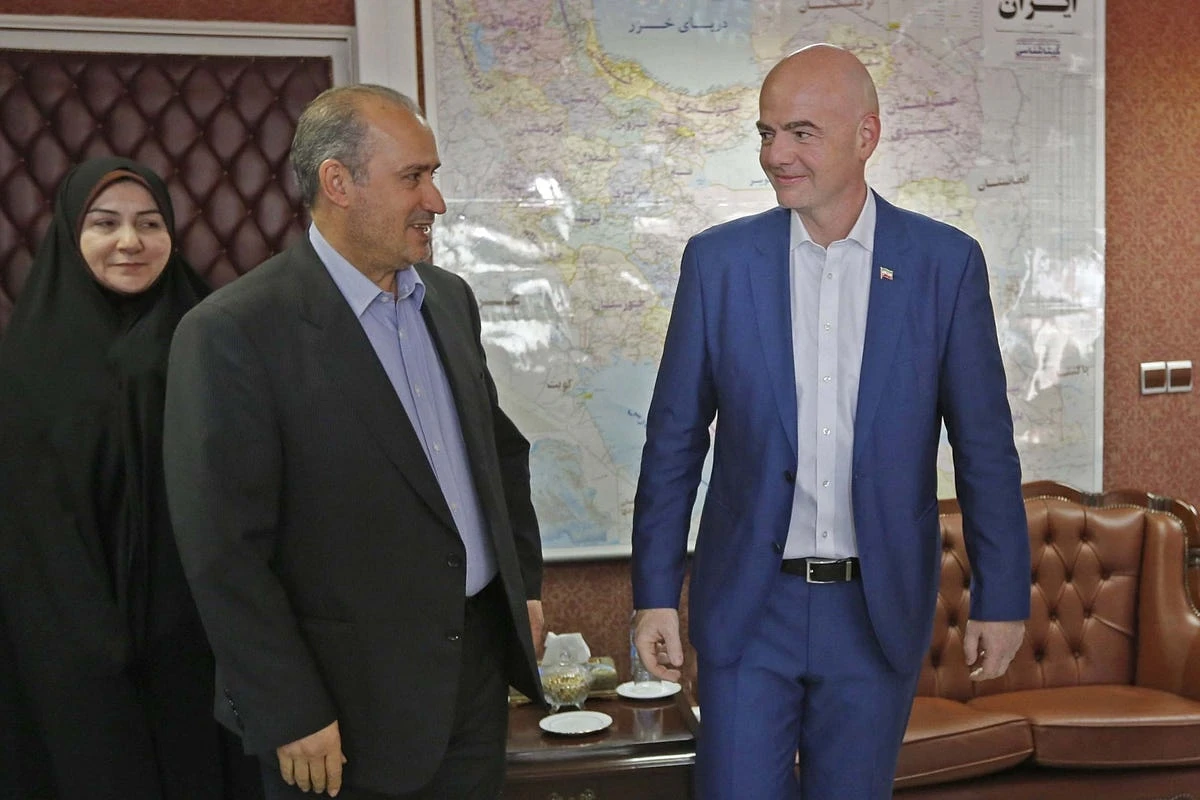
In a dramatic turn of events just weeks before the World Cup, Iran's top soccer official has reportedly been barred from entering Canada for a key FIFA gathering, sparking questions about international sports diplomacy and security protocols.
Mehdi Taj, president of the Iranian Football Federation, along with two other Iranian officials, was allegedly denied entry at Toronto's Pearson Airport this week. The incident occurred ahead of the FIFA Congress meeting in Vancouver, a critical pre-World Cup event bringing together representatives from all 211 member federations.
Canadian Foreign Affairs Minister Anita Anand confirmed on Wednesday that permission for their entry had been revoked, though she described the denial as "unintentional." The minister's comments came after Tasnim, an Iranian news agency linked to the Islamic Revolutionary Guard Corps (IRGC), reported that the officials faced "inappropriate behavior of immigration officials."
However, Iran International, an online news outlet, offered a different narrative. According to their sources, Taj—who had been granted a visa on Monday—was removed from Canada late Tuesday evening due to alleged connections to the IRGC, which Canada has designated as a terrorist entity.
The situation has put a spotlight on the intersection of sports and geopolitics. The FIFA Congress serves as a crucial platform for nations to coordinate ahead of the World Cup, which will be co-hosted by the United States, Canada, and Mexico. For Iran, participation in such events is vital for maintaining international soccer ties and preparing its national team for the global stage.
Taous Ait, press secretary for Immigration Minister Lena Diab, emphasized in an email that all visa applications are reviewed individually by trained officials. "While we cannot comment on individual cases due to privacy laws, the government has been clear and consistent: IRGC officials are inadmissible to Canada and have no place in our country," Ait stated.
FIFA has not yet responded to requests for comment regarding Iran's status for the event, leaving the soccer world to wonder what this means for the federation's participation in upcoming international tournaments.
This incident underscores the delicate balance between national security concerns and the unifying spirit of international sports. As the World Cup approaches, the question remains whether such diplomatic hurdles will impact the beautiful game's ability to bring nations together.