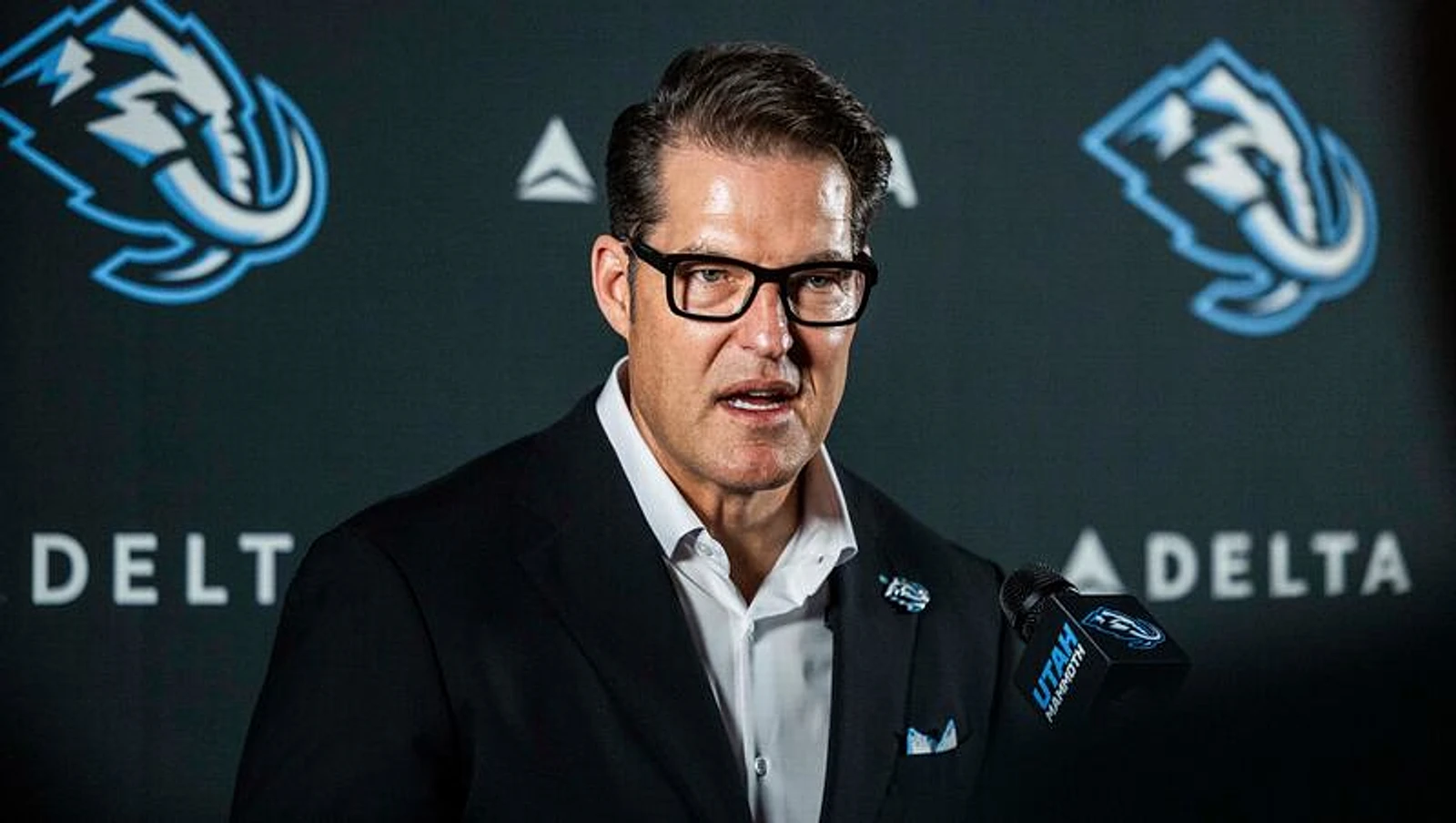
When the Utah Mammoth first roared into Salt Lake City, General Manager Bill Armstrong set a simple but ambitious goal: play "meaningful hockey" in Year 1. It was a carefully measured promise to a new fan base—a way to build hope without overcommitting. If the team could still be in the playoff conversation come April, that would be a win, whether or not the Delta Center hosted postseason games.
Year 2 raised the stakes. The expectation shifted from hanging around to actually securing a playoff spot. And for the second straight season, the Mammoth delivered. Now, as the team looks ahead to Year 3, the natural question is: what's next?
You might think the answer is a second-round appearance, and Armstrong wouldn't mind seeing that. But he's not measuring success by a single round. Instead, he's focused on something deeper: building playoff experience. "There's a fine line in our sport between winning or losing," Armstrong said during his exit interview at the Mammoth Ice Center. "For our growth, we have to suffer a little bit of pain to learn to walk that line better."
That pain, he believes, is part of the process. It's how teams learn to win when it matters most. "If we can do that in the big moments moving forward," he added, "we're going to have a good chance to take a run as far as we can to the Stanley Cup. That's the goal of this organization."
It's easy to forget how hard it is just to get to the playoffs. Just ask the defending back-to-back Stanley Cup champion Florida Panthers, who missed the postseason entirely this year. Or the top two regular-season teams from last season. The NHL season is an 82-game grind (soon to be 84), and only half the league makes the cut. Set your sights too high, and you might overlook the details that got you there in the first place.
Veteran defenseman MacKenzie Weegar, now in his 11th NHL season, put it bluntly in his exit interview: other teams won't underestimate the Mammoth anymore. The element of surprise is gone. But for Armstrong and his squad, that's exactly where the real growth begins.