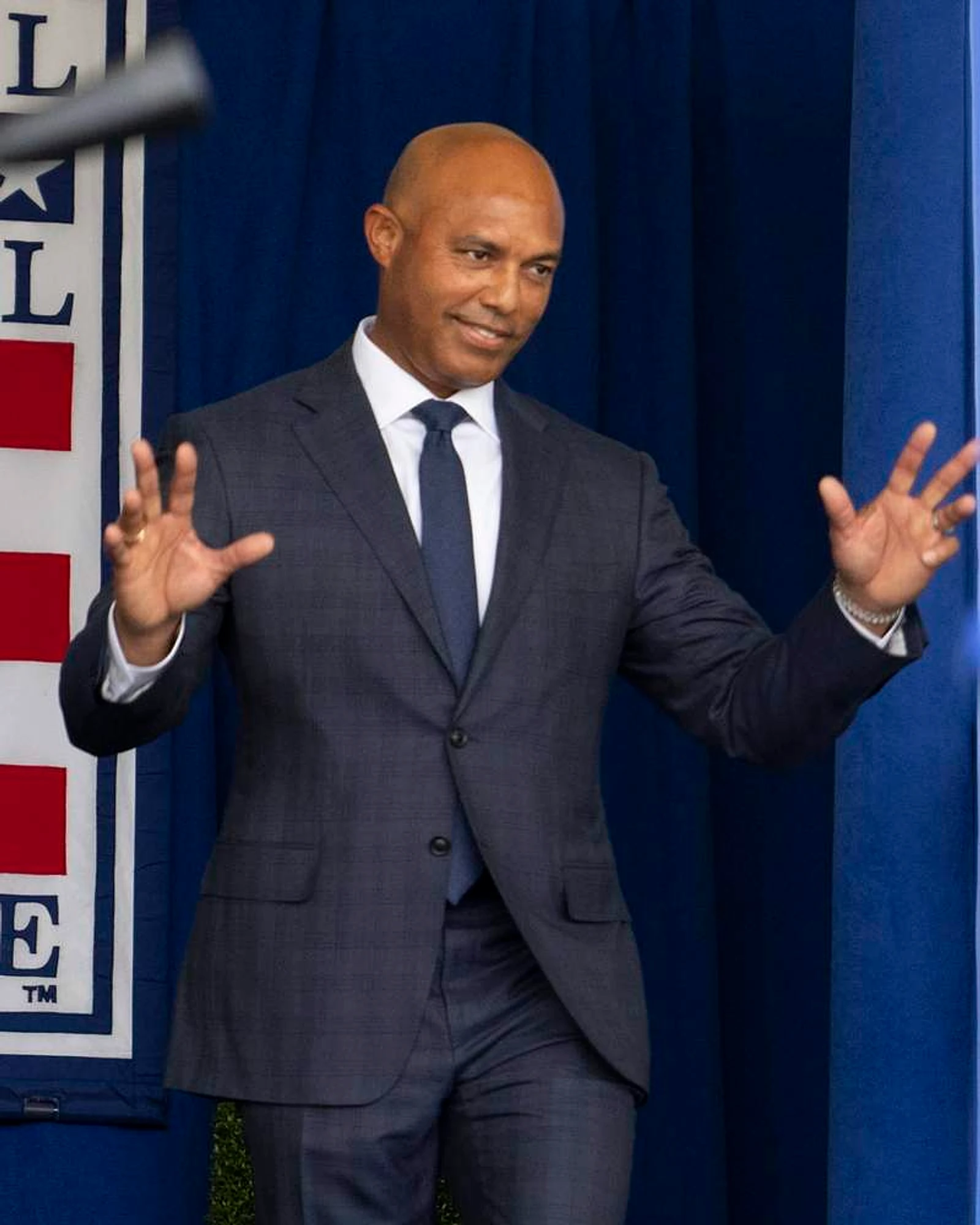
Hall of Famer Mariano Rivera has made waves by breaking ranks with the MLB Players Association, publicly endorsing a salary cap to level the playing field in baseball. The legendary Yankees closer, known for his unmatched 652 saves and unanimous Hall of Fame induction, is now backing a concept that has long divided the sport.
As the current collective bargaining agreement nears its expiration, tensions are rising between the MLBPA and team owners over introducing a salary cap. The union has staunchly opposed it, making a lockout in 2027 seem all but certain. But Rivera's bold stance adds a powerful voice to the pro-cap camp—especially coming from a player who built his career with one of the league's biggest spenders.
"Yes, there should be one, because it has to be fair to everybody," Rivera told CNBC Sport. "It makes the competition better."
Rivera earned roughly $170 million over his 19-year career in New York—a fortune that now pales in comparison to today's mega-deals, like Shohei Ohtani's $700 million contract or Kyle Tucker's $240 million extension. The disparity highlights just how much the financial landscape has shifted.
The push for a salary cap centers on competitive fairness. This season, the Los Angeles Dodgers boast a staggering $416 million payroll (including luxury tax), while the Miami Marlins sit at just $80 million—a gap of $336 million. According to USA Today, 11 teams have opened the season with payrolls of at least $200 million, underscoring the growing divide between haves and have-nots.
Many argue this financial imbalance directly impacts championship success. The Dodgers, for example, are back-to-back World Series champions, while the Marlins haven't won since 2003. Yet, the Yankees—despite spending over $300 million in recent seasons—have not claimed a title since 2009, proving that money alone doesn't guarantee glory.
Rivera also suggested that the MLB should implement mandatory provisions to help smaller-market teams compete, ensuring that every franchise has a fighting chance. For a sport where tradition runs deep, his call for fairness might just be the spark needed to reshape the game's future.