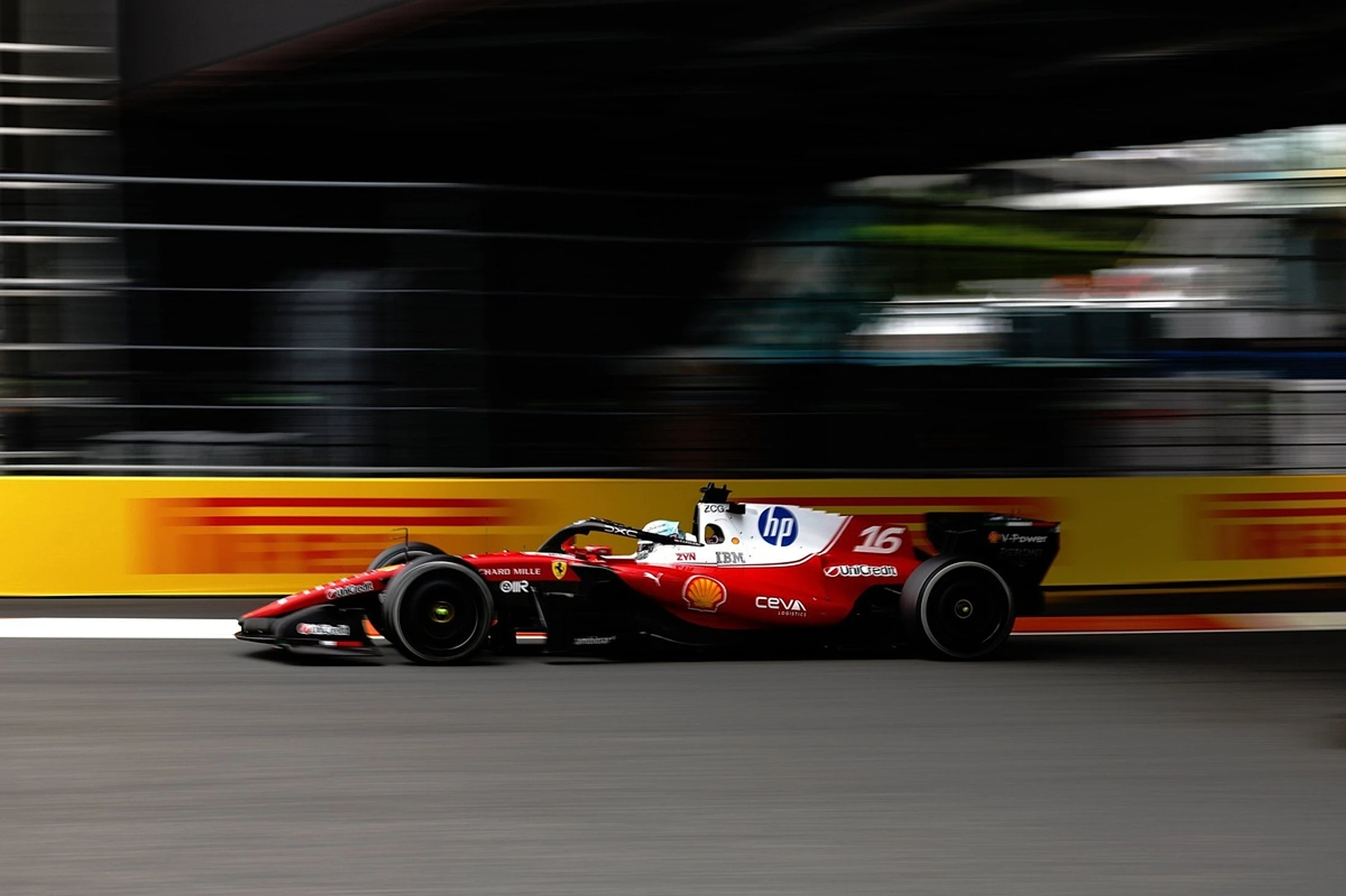
In a dramatic turn of events at the Miami Grand Prix, Charles Leclerc found himself at the center of controversy after receiving a hefty 20-second penalty—a converted drive-through sanction that ranks among the harshest in modern Formula 1. The Ferrari star's final lap spin at Turn 3 set off a chain reaction that left fans and pundits alike questioning the FIA stewards' decision to be so unforgiving.
It all started when Leclerc lost control of his SF-26, slamming into the wall. While the damage could have been far worse, the impact compromised his left wheels and suspension, making right-hand turns a nightmare. Despite the mechanical woes, the Monegasque driver fought tooth and nail to hold onto his fourth-place position, only to be overtaken by George Russell at Turn 17 and then Max Verstappen at the final corner.
But here's where things get sticky. To stay competitive, Leclerc repeatedly cut corners—specifically Turns 4, 8, 11, and 15—as highlighted in a damning compilation posted by Formula 1 on social media. The FIA stewards didn't mince words in their ruling: "Car 16 spun out on the final lap at Turn 3 and hit the wall but remained on track. The driver informed us that the car appeared to be in good condition, even though it was not handling right-hand turns correctly. Due to this issue, he was forced to cut the chicanes until the chequered flag. We determined that the fact he had to cut the chicanes (and thus leave the track) means he gained an advantage by leaving the track in this manner. The fact that he had a mechanical issue, of whatever nature, is not a justifiable reason."
In the high-stakes world of Formula 1, where every millisecond counts, the message from the stewards was clear: mechanical issues, no matter how severe, don't give drivers a free pass to bend the rules. For Leclerc and Ferrari, it's a harsh lesson in racing integrity—and a reminder that even the most dramatic spins can't excuse cutting corners.