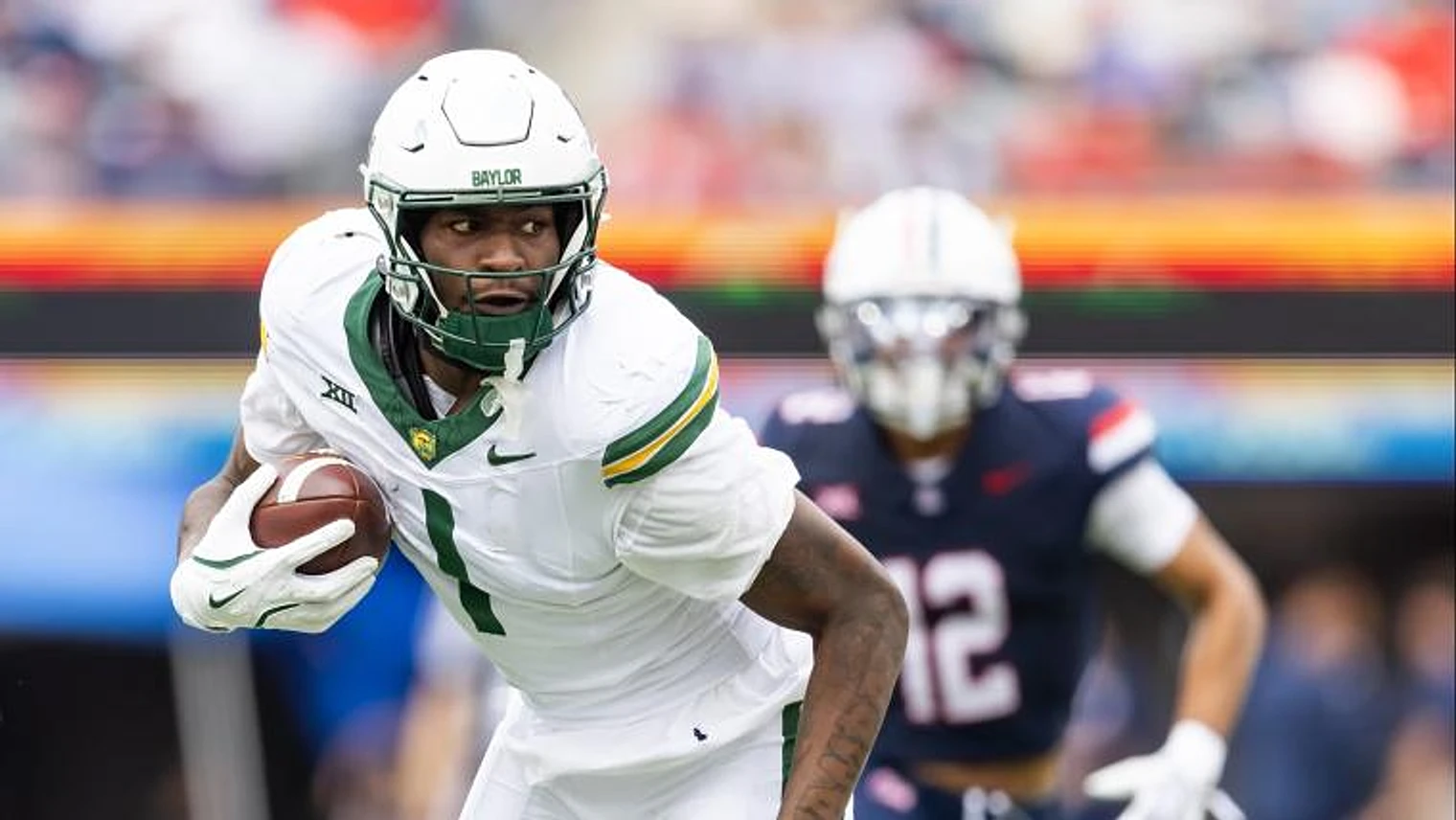
The tight end position is one of football's most complex puzzles. These players are hybrid athletes, shifting between offensive lineman and wide receiver roles, capable of tipping the scales in both the running and passing game. Yet, finding a surefire star early in the draft remains notoriously difficult, making the evaluation process a constant debate for NFL teams.
Enter Michael Trigg. The Baylor standout generated real buzz earlier this season with his playmaking ability, hauling in six touchdowns and showcasing the kind of red-zone prowess that gets scouts excited. With an oversized receiver's frame and impressive length, he presented a tantalizing target, especially in scoring situations.
However, the pre-draft evaluation circuit has revealed some cracks in that promising facade, and his stock appears to be trending downward as the draft approaches. The concerns are twofold. First, at 240 pounds, Trigg's game film shows he isn't built to be an in-line blocker, which could relegate him to a specialized, part-time role in the NFL—more of a big slot receiver than a traditional every-down tight end.
Second, and perhaps more damaging, has been his athletic testing. To date, the only available metric is a vertical jump of just 27.5 inches, a mark that lands in the fourth percentile historically. While a reported hamstring issue may have been a factor, the lack of explosive testing data has given teams pause, raising questions about his overall athletic ceiling at the professional level.
For a player whose allure was built on physical upside, the pre-draft process has painted a more complicated picture. Teams now must weigh his clear receiving talent against significant questions about his versatility and athleticism, likely pushing him down many draft boards.