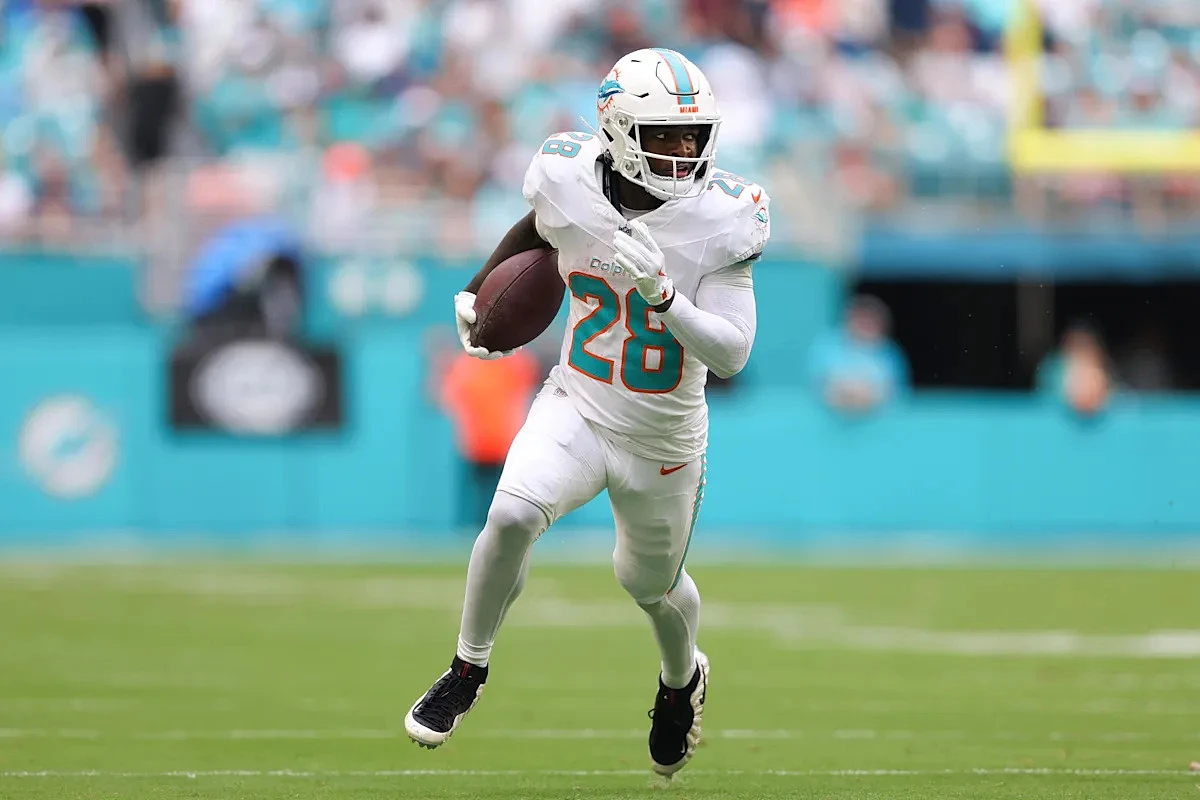
When you look at De'Von Achane's 2025 season, the numbers jump off the page: 1,350 rushing yards, eight touchdowns on the ground, and another 480 receiving yards with four scores through the air. That's elite production by any measure, and it's the kind of season that puts a running back firmly in the conversation among the NFL's best. But here's the thing—his salary tells a completely different story.
Achane was a third-round pick in the 2024 NFL Draft, and his base salary sits at just over $1 million per year. For the Miami Dolphins, that's a dream scenario: Top-5 running back performance at a bargain-bin price. But for Achane, that gap between production and pay is getting harder to ignore. He's handled it with class, showing up for the team's voluntary offseason workout program in April as a sign of good faith. Still, patience only lasts so long when you're outperforming your contract by such a wide margin.
So why hasn't a new deal been done yet? The answer, as is often the case in today's NFL, comes down to how the league values the running back position. For more than a decade, teams have treated running backs as replaceable parts—injury-prone, dependent on the offensive line, and rarely offering long-term durability. That mindset has put a hard ceiling on what even the most productive backs can earn.
The evidence is hard to argue with. Look at the last 17 Super Bowl winners: only one team—the 2013 Seattle Seahawks with Marshawn Lynch—had a running back whose cap hit exceeded 5% of the team's total. Last season, Saquon Barkley helped the Philadelphia Eagles win it all with a cap hit of just 1.5%. And the Seahawks paid Kenneth Walker III only 0.9% of their cap on the way to their championship. These aren't outliers; they're the new normal.
Of course, these numbers aren't gospel. Every situation is different, and Achane's unique skill set—especially his ability as a receiver out of the backfield—could make him an exception. But the Dolphins have to weigh that against a league-wide trend that says paying big money to running backs is a risky bet. For now, the hold-up is about more than just one player's contract. It's about how the NFL sees the entire position. And until that changes, Achane—and backs like him—may have to keep waiting.