
LOS ANGELES — The result will get filed as a frustrating 2–1 loss, the kind that lingers longer than most in April. But inside the Dodgers clubhouse, Tuesday night felt less like a referendum on one game and more like a snapshot of a larger, evolving question: just how much of Shohei Ohtani should this team use, and when?
Because for six innings at Dodger Stadium, Ohtani once again looked like the most reliable answer the Dodgers have.
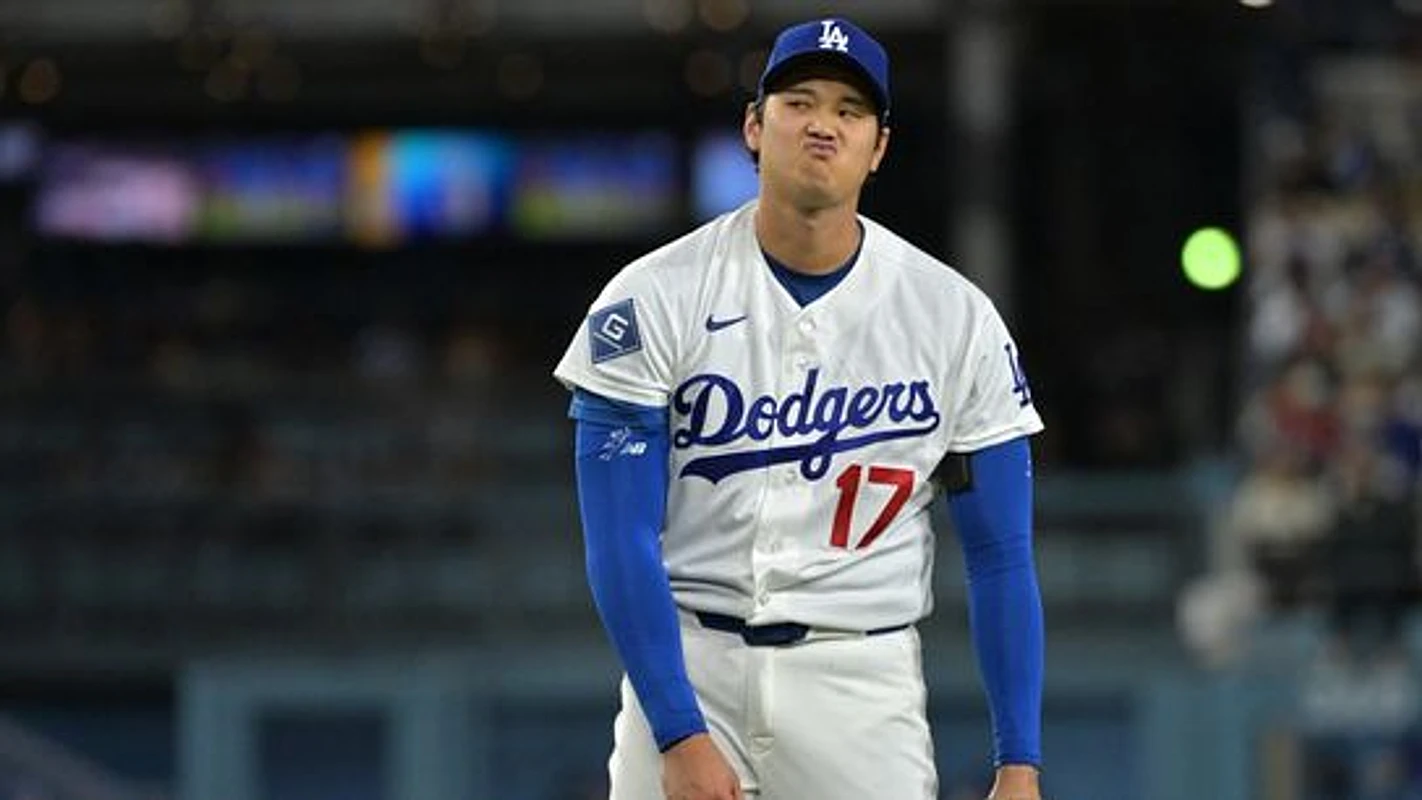
Los Angeles Dodgers starting pitcher Shohei Ohtani (17) delivers to the plate in the fifth inning against the Miami Marlins at Dodger Stadium.
He wasn’t dominant in the aesthetic sense. By his own admission, the “stuff” wasn’t crisp. The command wavered just enough to create traffic. And yet, the line he left behind, six innings, five hits, one earned run, nine strikeouts, reads like a template he’s now repeating with startling consistency. Five starts into his season, Ohtani hasn’t just been good; he’s been historically steady, carving out a floor most pitchers spend careers chasing.
“For him to navigate six innings and give up only two hits, we should win the game,” Roberts said.
That disconnect between individual brilliance and team outcome, was the story of the night. The Dodgers loaded the bases in the first and got nothing. They put runners on in the eighth and got one run. Eight men left on base, a handful of missed swings in leverage counts, and suddenly a game that felt winnable early never quite tipped back in their favor against a sharp Janson Junk.
Dave Roberts didn’t dress it up afterward. The word was “situational.” The implication was broader.
"We were not good at all tonight, situationally." Roberts said.
For a lineup this deep, nights like this aren’t supposed to happen. But they do. And when they do, they raise a question that hovered even before first pitch: if Ohtani is available to hit, why isn’t he hitting?
The Dodgers’ decision to keep him out of the lineup on his pitching days is rooted in logic. Preserve the arm. Manage the workload. Think about October, not April. It’s a philosophy shaped by both caution and long-term ambition, especially for a player coming off a second major elbow surgery.
But logic doesn’t always sit comfortably in a one-run loss.
Ohtani said the right things, he always does. He respects the decision. He understands the bigger picture. He wants to be healthy when it matters most. Yet there was just enough in his words to reveal the tension beneath.
“I think for players who wanna do two-way and if they wanna DH, they should get the option to do DH,” Ohtani said. “At the same time, it’s hard to tell now, we’ll see how it goes at the end of the season.”
That’s not defiance. It’s perspective. And maybe, eventually, it becomes a conversation.
Because this isn’t just about one game in April. It’s about identity, his and the team’s. Ohtani isn’t a conventional ace or a conventional DH. Limiting him, even strategically, means accepting that some portion of his value is being banked for later rather than deployed in the moment.
Tuesday was a case study in the trade-off. The Dodgers lost by one run. The best hitter on the planet never picked up a bat.
Would it have changed the outcome? There’s no clean answer. Baseball rarely offers those. But it’s the kind of what-if that will keep resurfacing, especially in tight games, especially when the offense stalls.
To their credit, the Dodgers aren’t dismissing the conversation. Roberts has left the door open for Ohtani to voice his preference more directly. That matters. This isn’t a rigid policy, it’s a moving target.
“I’m always going to respect the decision regardless of whether I'm pitching or doing both,” Ohtani said. “But I also understand the importance of getting to the end of the season with everybody healthy.”
Ohtani's next scheduled start is next week in Houston. And as the season stretches on, that target may shift.