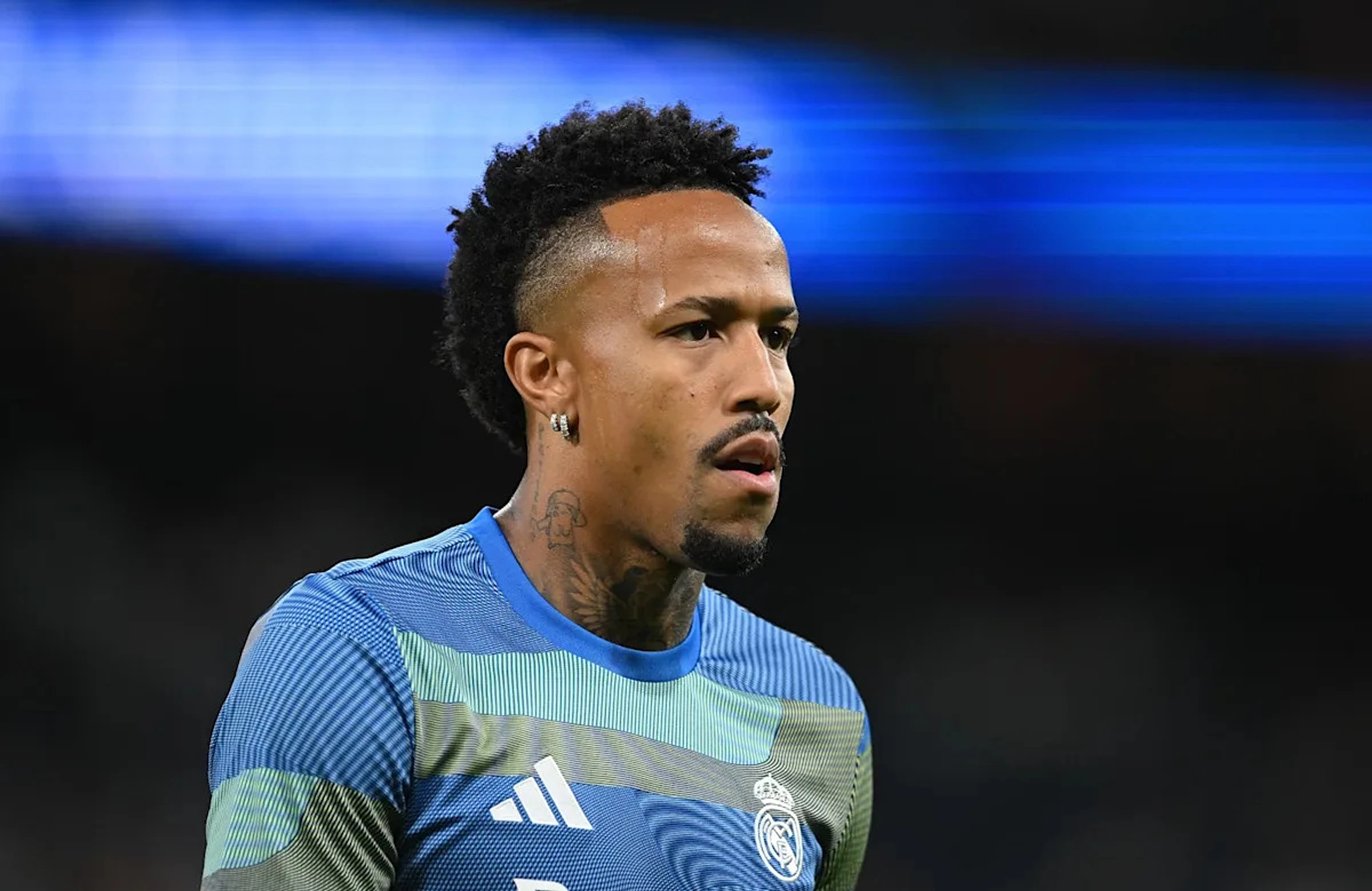
Real Madrid's defensive linchpin, Eder Militao, has been dealt another devastating blow to his career. The Brazilian center-back recently underwent surgery for a severe hamstring injury that will sideline him for approximately five months—effectively ruling him out of this summer's World Cup with Brazil.
This marks yet another painful chapter for the 26-year-old, who has already undergone two major surgeries in the past four years. But just how serious was this latest setback? According to the man who operated on him, it was career-threatening.
Dr. Lasse Lempainen, a Finnish surgeon who treats around 350 elite athletes annually at his clinic in Turku, is part of the renowned Ripoll and De Prado medical group—a FIFA Medical Center of Excellence. He performed surgery on Militao on April 28th to repair a ruptured proximal tendon of the biceps femoris in his left leg.
Speaking to MARCA, Lempainen didn't mince words about the severity of the injury. "There was no other option. Militao is my patient, and we have a trusting doctor-patient relationship. What I can say is that his injury was very serious," he revealed.
"The only option was surgery: with that hamstring injury, he couldn't continue his professional career at the highest level. The decision was clear."
For fans hoping to see Militao represent Brazil at the World Cup this summer, the news is heartbreaking. "We are very sorry that, as a result, he won't be able to participate in the World Cup this summer," Lempainen added.
While hamstring injuries are common in football—especially among high-intensity players like Militao—most can be treated without going under the knife. But when the damage is this severe, surgery becomes the only viable path forward for an elite athlete.
"Musculoskeletal injuries, and hamstring injuries in particular, are very common in football. Most affect muscle tissue and can be treated without surgery. However, when the injury is severe and the athlete is at a high level, surgery is often necessary," Lempainen explained.
"In severe cases, several months are needed to return to play, and return-to-performance tests must be performed before clearing the player to return."
For Militao, the road ahead is long and grueling—but with the right care and patience, the hope is that he'll eventually return to the form that made him one of Europe's most commanding defenders.