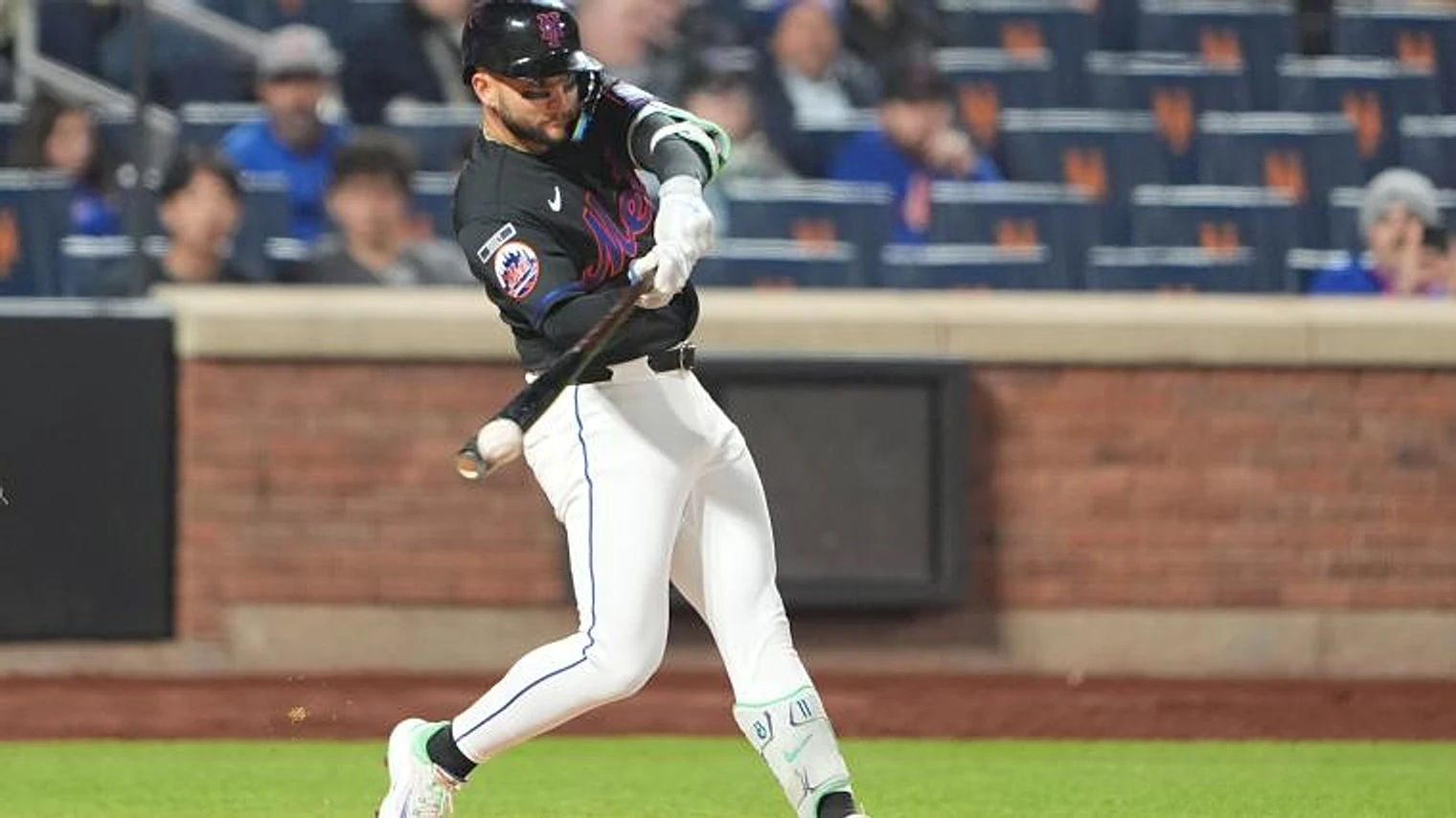
Bo Bichette has built a reputation as one of baseball's most consistent hitters, a player who has led the American League in hits. However, a deeper look at his swing mechanics reveals a persistent and unusual quirk that has followed him from Toronto to New York.
According to advanced Statcast metrics, Bichette possesses one of the least ideal swing paths in Major League Baseball. The key metric is "Ideal Attack Angle," which measures the upward trajectory of the bat through the hitting zone at the point of contact. For optimal results—think line drives and productive fly balls—a hitter's bat should be on a path between 5 and 20 degrees.
Bichette's swing consistently struggles to find that sweet spot. Last season with the Blue Jays, he achieved the ideal angle on just 32.8% of his swings, ranking him third-worst in the majors. The trend has continued with the Mets this year, where his rate has dipped to a mere 23.9%, making him the second-least efficient hitter in this category.
This statistical oddity creates a fascinating contrast with his on-field success. It suggests that while Bichette is an elite contact hitter, many of his at-bats conclude with a less-than-optimal swing path, often resulting in ground balls. He's in notable company, however; last year's leader in this unenviable category was his former teammate Vladimir Guerrero Jr., and this season, Angels' Zach Neto ranks just below him.
While it's not a death knell for his career—he's clearly found a way to produce—the data indicates Bichette's swing mechanics are unique. Many of the game's premier power hitters achieve the ideal angle more than twice as often. For Bichette, this likely means his game will continue to be built on exceptional bat-to-ball skills and hitting for average, rather than a transformation into a prolific home run hitter. His challenge, and strength, is maximizing the unique swing he has.