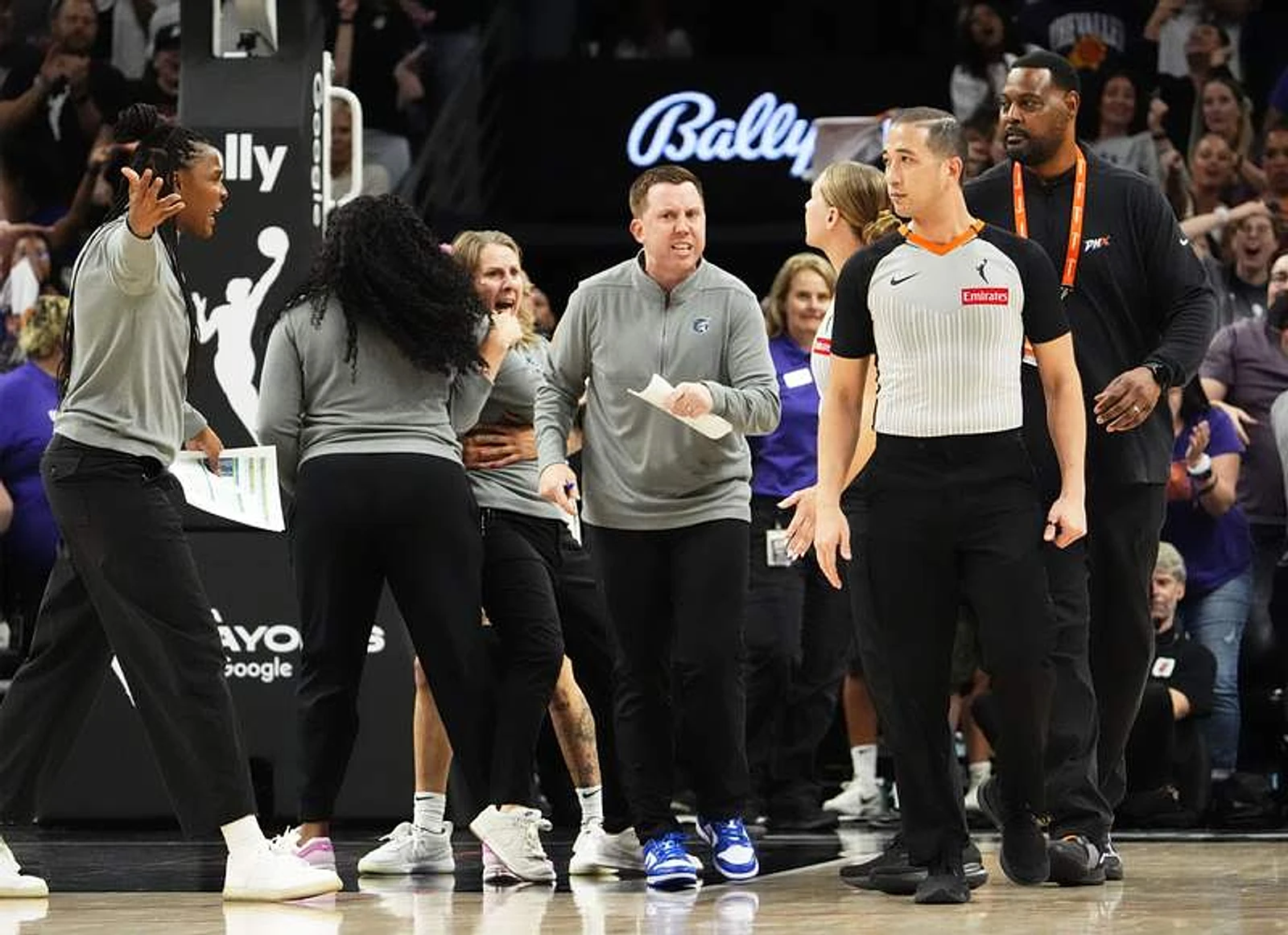
Cheryl Reeve has long been known as the queen of passionate outbursts, and the Minnesota Lynx head coach reached a boiling point after a controversial no-call left her star player, Napheesa Collier, limping to the locker room in tears. The incident, involving a hard contact from Connecticut Sun's Alyssa Thomas, earned Reeve a historic $15,000 fine—the largest in WNBA history—and sparked her call for "change in leadership at the league level when it comes to officiating." Now, with a new collective bargaining agreement in place, the league is tightening its rules and raising fines, but Reeve remains optimistic about the game's future.
According to a recent Front Office Sports report, the financial penalties for misconduct are getting a major upgrade. Technical fouls now start at $500 instead of last season's $200, with the cost doubling for technicals four through seven and hitting $1,500 for the eighth, which also triggers a game suspension. Flagrant fouls have seen a similar jump, now costing players $500 instead of $200. Even flopping is on the league's radar, with a $100 fine for the second violation and $100 increments thereafter. While these increases are significant, they still lag behind the fivefold rise in player salaries, suggesting the league is aiming for deterrence rather than punishment.
Reeve, however, is focusing on the bigger picture: reducing excessive physicality and elevating the standard of play. "I think what I'm excited about is that there is an understanding that how our game has looked the last two years is not how we want it going forward," she said during a recent media session. "While they were hard at work on the collective bargaining agreement, we were hard at work on the state of the game. There were a lot of stakeholders involved in this, and it may take a little while to calibrate and get where we want to be."
The hope is that better officiating will naturally reduce the number of technical fouls, which have often been handed out for protesting referee decisions. By raising the stakes on flagrant fouls, the league is sending a clear message: cleaner play is the priority. "We're working really hard because we don't want the level of physicality that we've seen in our game," Reeve added. For fans and players alike, this shift toward accountability could mark a new era of discipline and excitement on the court—one where the focus stays on the game, not the fines.