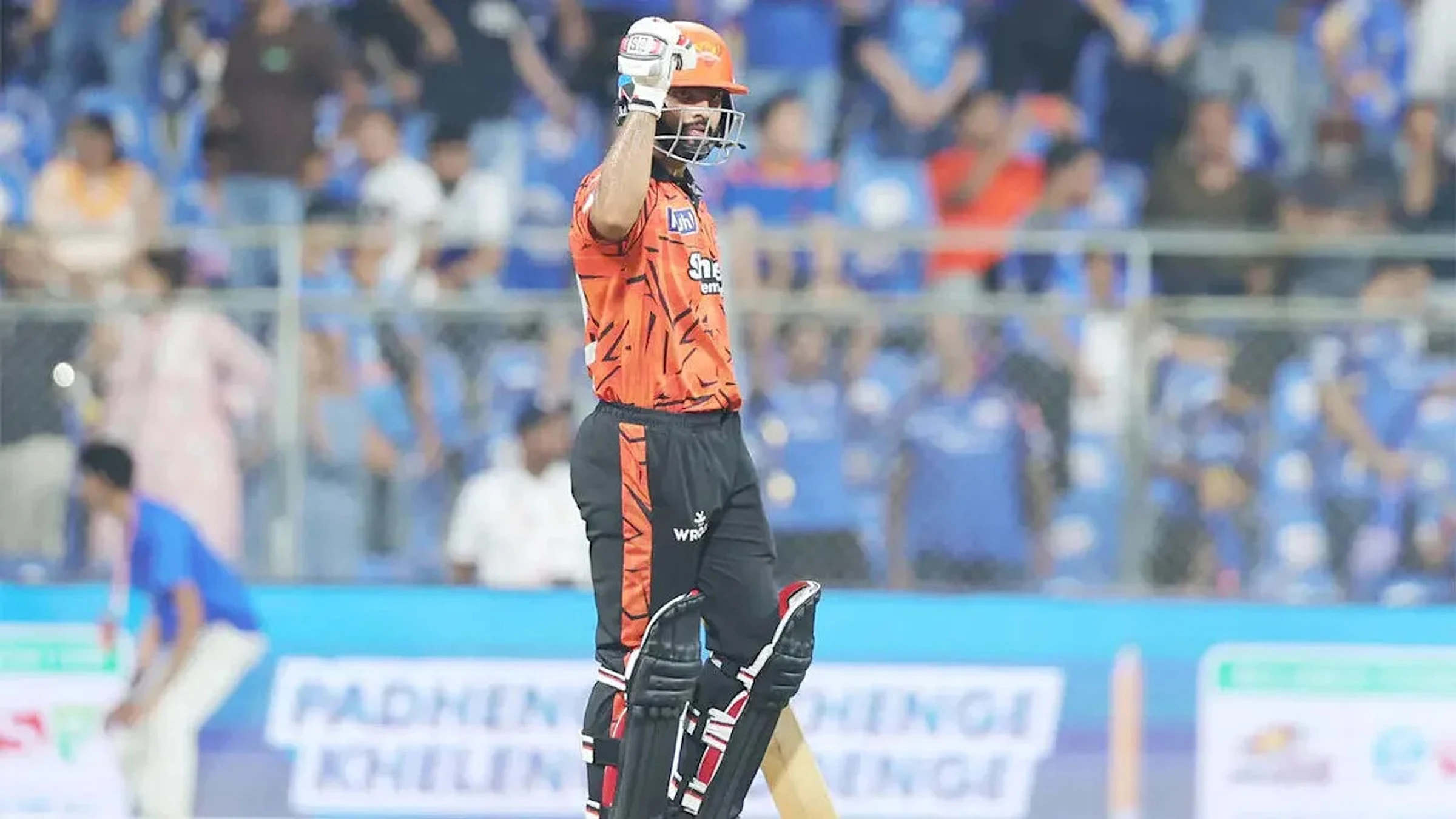
In the high-pressure cauldron of the IPL, facing Jasprit Bumrah for the first time is a trial by fire that has broken many a young batter. But when 23-year-old Salil Arora walked out to the middle during the SRH vs MI clash in IPL 2026, he didn't just face the fire—he danced through it.
What caught the eye wasn't just the fearless strokeplay, but a moment of pure audacity: a stunning no-look six that sailed straight over Bumrah's head. The shot left everyone stunned, including his batting partner Heinrich Klaasen at the non-striker's end. In the post-match chat, Klaasen revealed a telling exchange: "He asked me if he could hit it (when 11 were needed off 12) and I said yes—finish the game."
And finish it he did. Salil remained unbeaten on 30 off just 10 balls, smashing three sixes at a blistering strike rate of 300. But he wasn't done with just Bumrah. He took on Hardik Pandya too, launching him for two sixes—one a sharp, short-arm pull that left the MI captain visibly surprised. Picking the length early, Salil swivelled into position and sent the ball soaring over mid-wicket with the kind of confidence that comes only from relentless preparation.
The 750-ball daily grind that built a power-hitter
That fearless knock wasn't a flash in the pan—it was the culmination of nearly 18 months of grueling training. Salil's regimen was nothing short of extraordinary: facing around 250 deliveries per session, three times a day, often with a Cosco tennis ball. To simulate the pace he would face in the IPL, he worked extensively with side-arm throwers, honing his reflexes against deliveries clocking 140-150 kmph.
So when Bumrah pitched it in the slot, there was no hesitation, no second-guessing—just pure, instinctive execution. As Salil's coach Rajan Gill recalled, his student had a simple mantra during those practice sessions: "Slot mein aayegi toh chakka jaayega" (If it's in the slot, it's going for six).
Gill emphasized that this wasn't a random act of bravado. "Usne Bumrah ko bilkul nahi dekha, usne sirf ball ko dekha (He didn't look at the bowler, he just looked at the delivery)," the coach explained. "If it is in the slot, he will not spare it. The ball will go over the fence for sure. It's the result of one and a half years of hard work. We practised this with a Cosco ball, and the result is there for everyone to see."
For fans watching at home, that no-look six might have looked like a moment of madness. But for those who know the story behind it, it was the perfect payoff—a calculated risk backed by thousands of hours of practice, proving that in T20 cricket, the biggest hits are often built on the smallest, most consistent details.