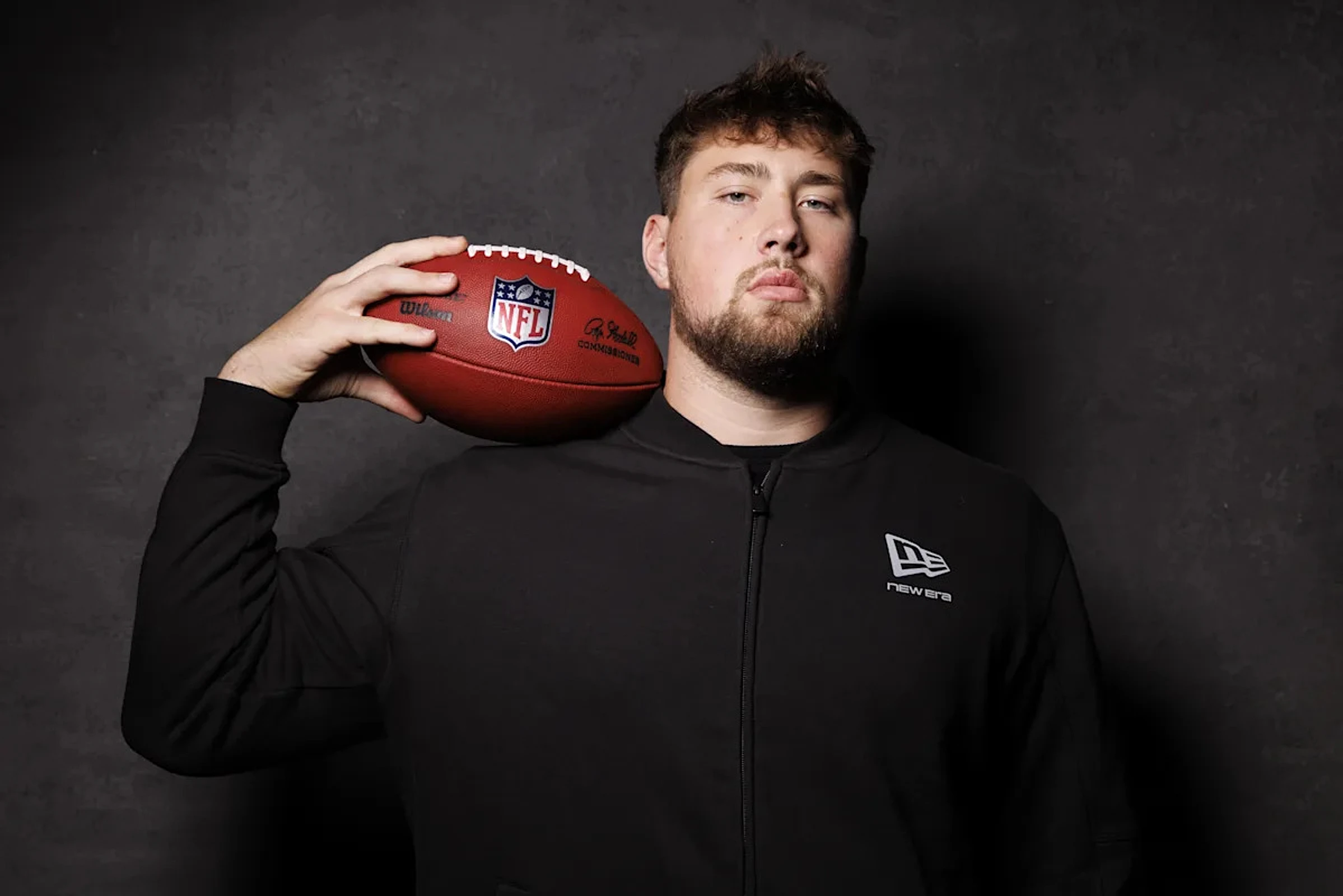


The Carolina Panthers selected seven players in the 2026 NFL draft. As part of the NFL Collective Bargaining Agreement, rookie contracts last for four years and are predetermined before the draft based on the league’s salary cap and where a player is drafted. There’s no negotiation so websites like Spotrac are able to inform us of the contract details before the players actually sign. Here are the salaries for the Panthers seen draft picks, per Spotrac:
4-years, $20.9M, $5.2M annual average, $11.7M signing bonus
While the Panthers first round pick has a reasonable cap hit, Freeling definitely isn’t “free” (*rim shot*). Carolina’s new tackle will cost the team, on average, just north of $5 million per year over the next four seasons, which is a bargain even if he only develops into an average player at his position. If Freeling can become a quality starter or reach Pro Bowl levels early in his career, his $5 million average salary will feel like chump change against a $301 million salary cap, which rises every year.
4-years, $10.1M, $2.5M annual average, $3.8M signing bonus
4-years, $6.9M, $1.7M annual average, $1.5M signing bonus
Those of you who are familiar with my role as the Benevolent Dictator of Trade Down Island know of my undying love for Day 2 picks. One of the principles of TDI’s Glorious Constitution is “We express our eternal love for rookie contracts for players drafted in Rounds 2-4.” The expected production for players taken in the second and third rounds versus their miniscule cap hits presents some of the greatest value in smart NFL roster construction.
This year the Panthers landed defensive tackle Lee Hunter in the second round and his average cap hit will be $2.5 million per year through the 2029 season. That number is less than 1% of the league’s current $301 million salary cap. The cap figure is even less for wide receiver Chris Brazzell and his $1.7 million average salary over the next four years.
Both Hunter and Brazzell will have ample opportunity to see the field in their rookie campaigns. Both defensive tackle and wide receiver were positions of need coming into the draft for the Panthers, and the hope is Hunter and Brazzell can fill those gaps sooner than later.
While the Panthers are hoping these two guys will develop into quality starters, Carolina is more than getting its money’s worth if they only become solid rotational guys. With an annual average combined salary of just $4.2 million for these two players over the next four years, Carolina could get some massive value from their Day 2 picks.
4-years, $5.3M, $1.3M annual average, $1.1M signing bonus
4-years, $4.8M, $1.2M annual average, $554k signing bonus
4-years, $4.8M, $1.2M annual average, $510k signing bonus
4-years, $4.4M, $1.1M annual average, $159k signing bonus
It’s somewhat rare to get solid production out of players drafted on Day 3, so anything they contribute over the next four years is just gravy. All four of their average salaries range from somewhere between $1.1 and $1.3 million per year through the 2029 season. Each player’s annual average salary represents about 0.4% of the NFL’s $301 million salary cap in 2026, so their impact on Carolina’s cap hit falls somewhere between “negligible” and “rounding error.”
Throw in the fact that the signing bonuses of the players drafted in round five or later range somewhere between $159,000 and $554,000, and there’s zero long-term commitment from the Panthers in terms of salary cap management. Heck, if the Panthers released all four of these players today, from a salary cap standpoint they’d essentially break even with Will Lee and free up a couple hundred thousand cap dollars from the other three. Now, Carolina wouldn’t do that, obviously, but that’s just a case in point about how little guaranteed money these contracts carry.
The Carolina Panthers ongoing rebuild is slowly gaining momentum. If the 2025 NFC South champs are going to take another step forward in coming years, getting value from their 2026 draft class could be a key in doing so.