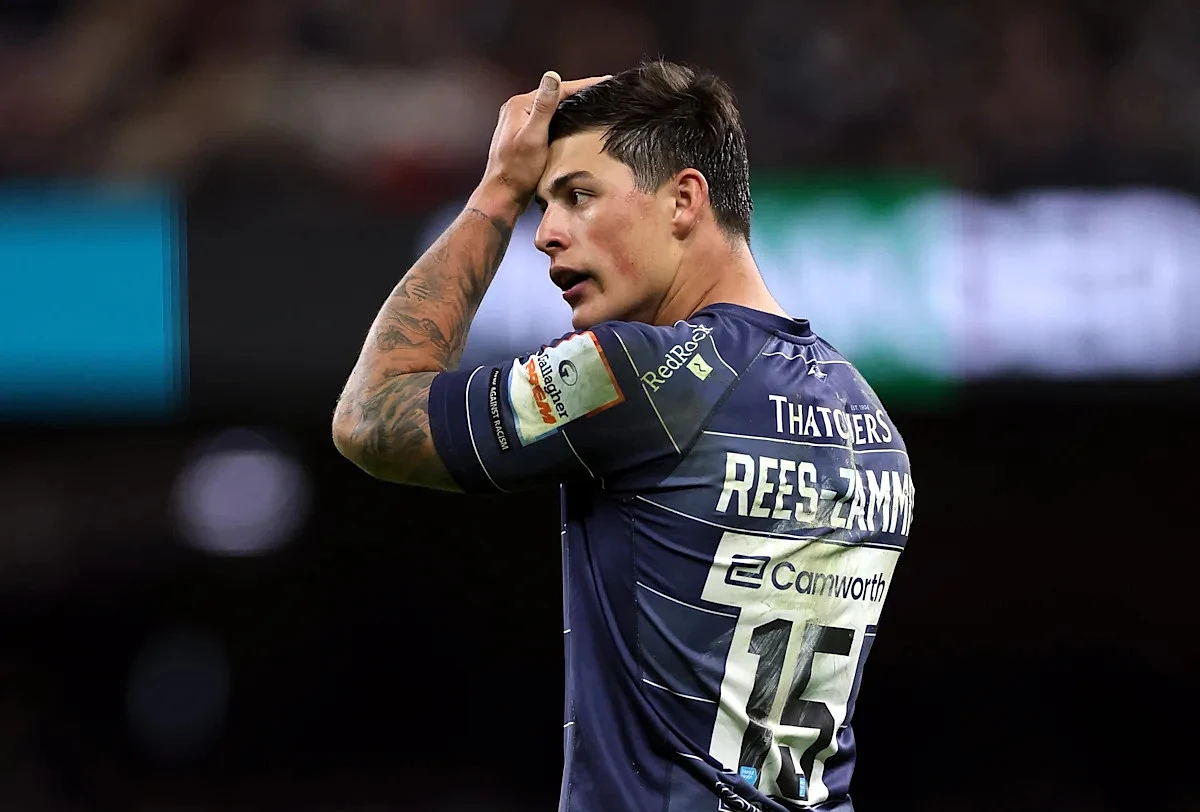


The chief executive of Bristol Bears has said that the Gallagher Prem side factors off-field profile into discussions over player recruitment, describing the club as “a marketing agency that plays rugby”.
Tom Tainton was appointed as CEO at Ashton Gate last summer having previously served as the club’s chief operating officer and head of communications.
The club sit fifth in the Prem table as they chase a play-off place this season, and have made a number of eye-catching additions to their playing group over the last few seasons.
Wales international Louis Rees-Zammit returned to rugby from the NFL last summer at the club and has since signed a long-term deal, while Ilona Maher’s short stint in Premiership Women’s Rugby (PWR) last season drove significant interest both in the Bears and the league as a whole.
Tainton cited both as examples of how rugby can market its stars, and said that Bristol consider marketability when contemplating new signings.
“There is no point going to market and spending marquee money on a player and just expect them to do something between the white lines on a Saturday,” Tainton explained at SportPro London.
“In the grand scheme of things, nobody remembers how Bristol got on against Harlequins two years ago. They will remember how a player made them feel.
“At Bristol Bears, we don’t call ourselves a rugby club. We are a marketing agency that plays rugby. Yes, our players have to be competent and able to deliver on the field, but if they are not bringing any value off the field, that genuinely factors into our recruitment conversations."
Tainton’s comments come with the Prem moving towards an expansion model having removed promotion and relegation, and amid fresh investment within English rugby.
Red Bull bought Newcastle last summer while James Dyson has recently purchased a 50 per cent stake in Bath, with the billionaire owners of AFC Bournemouth also expected to soon complete a takeover of Exeter Chiefs.
Bristol have been owned by Steve Lansdown since 2008, and Tainton suggested they are fully bought in to the Prem’s vision for the future.
“It is very easy for us to sit here and use a lot of corporate buzzwords that don’t really mean anything,” he stressed. “You want someone to see a sport that is cool, inclusive, engaging, and high-octane.
“I’d argue we have done the hard bit – the product is superb. There are young, articulate men and women playing the game. We’ve got a great base to grow from. We now have to take some bold risks to get out of our comfort zone and do things that the sport hasn’t previously done."