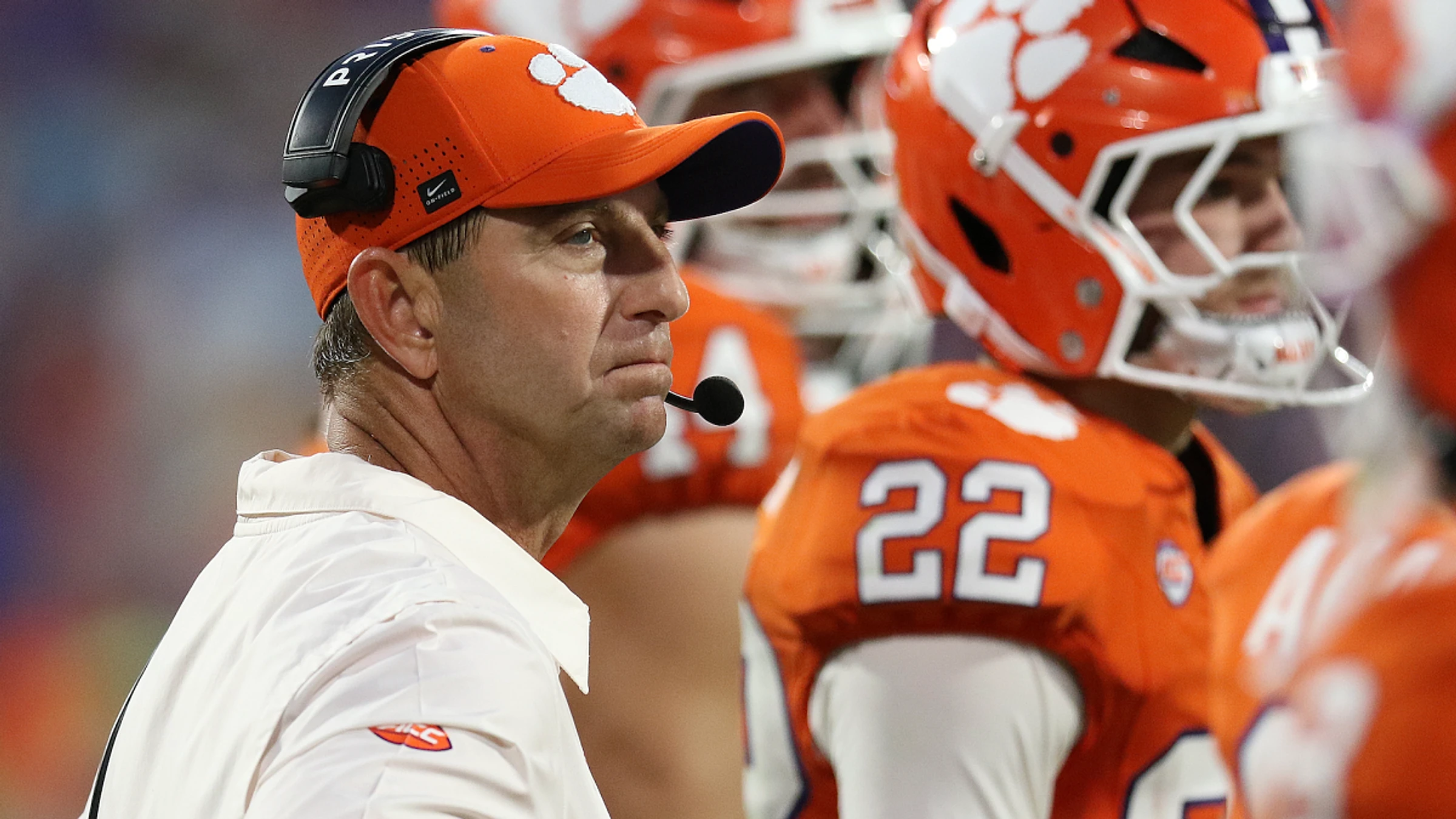
Dabo Swinney has every reason to be proud of the dynasty he built at Clemson—even if the path forward looks a little different now. A decade ago, the Tigers took college football by storm, peaking in 2019 after four national championship appearances in five years. That run cemented Clemson as one of the sport's elite programs, driven by Swinney's signature philosophy: player development over quick fixes.
But since then, the ride has been bumpier. Flashes of brilliance have been mixed with stretches that fall short of that lofty standard. After last year's abrupt letdown, Clemson enters the 2026 season outside the national spotlight—and Swinney says that's exactly where he wants his team.
"At Clemson, we always have to have a chip on our shoulder," Swinney said during an ESPN interview this week. "We don't have the same alumni base that some places have. We don't have some of the things that other schools have that we've played over the years. That's just the way it is."
He didn't hold back when comparing his program to traditional powerhouses: "We're 3-1 against Ohio State. We're 4-2 against Notre Dame. I mean, Notre Dame has their own TV station. They make their own rules. They print their own money. They've got like their own money machine in the backyard or something."
The reality is that the NIL era and transfer portal have reshaped college football's landscape, and Clemson has often played catch-up with fewer resources than its biggest competitors. This spring, the Tigers are outside the top 20 of most preseason rankings after tying a school record with nine NFL draft picks last month. Meanwhile, ACC rivals Miami, SMU, and Louisville have reloaded through the transfer portal and now boast better odds to win the conference.
There's a different feel around Clemson this offseason—and it appears intentional. No preseason hype. No national playoff expectations. Just a program trying to rediscover the edge that once made it a standard-bearer.
"It's not about what people write," Swinney said. "It's not about what people predict. If it was about those things, we would have won the national championship last year. And if it was about those things, I would've been gone 15 years ago. It's just about what you do. The work you do. And you start over every year. We're a developmental team."
As Swinney enters his 18th season, the question remains: In an era where quick fixes often win the day, can development still carry Clemson back to the mountaintop? For a coach who's built his entire legacy on betting on his process, the answer is clear—even if the rest of the college football world isn't convinced.