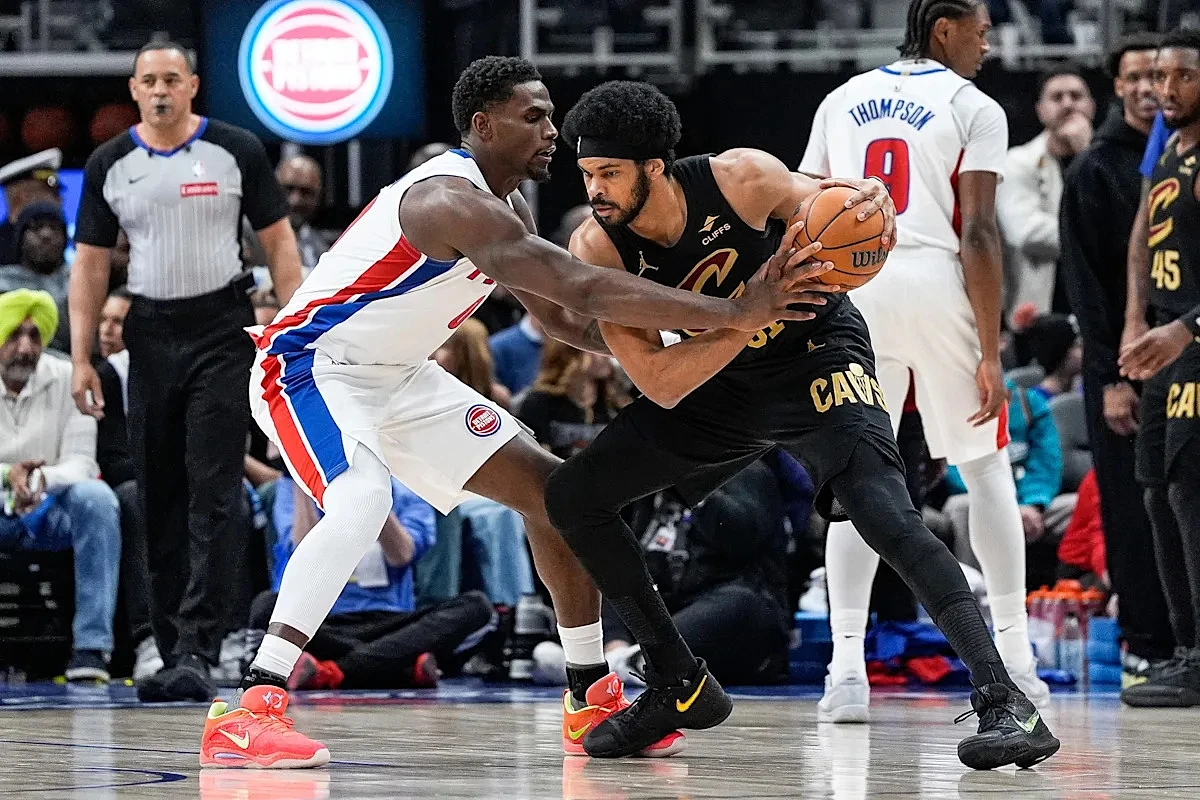


After a 60-win regular season, the first round of the 2026 NBA playoffs revealed that the Detroit Pistons still had some growing up to do.
Coach J.B. Bickerstaff trusted his young roster to figure it out.
They were on the brink of elimination in Game 6 against the Orlando Magic, down by 24 points early in the third quarter on May 1. And yet fourth-year big Jalen Duren, who who struggled to assert himself on both sides of the ball earlier in the series, played the final eight minutes of the game over Paul Reed, a vet in the midst of a strong performance.
Second-year guard Daniss Jenkins, who couldn’t hit shots through the first five games, played 10 of 24 second-half minutes in a historic comeback to force a Game 7, eventually won by the Pistons to set up their Eastern Conference semifinal matchup against the Cleveland Cavaliers.
Bickerstaff leaned on them for a simple reason: To learn how to handle high-pressure moments – to, perhaps, become pillars of the franchise – they first had to experience them.
MITCH ALBOM: Cade Cunningham puts the icing on Pistons' Game 2 cake
The decision has paid dividends since: Duren and Jenkins shook off their poor starts and delivered their best performances of the series in Sunday's Game 7. And as the Pistons have built a 2-0 lead over the Cleveland Cavaliers, they've delivered even more.
“When you have young guys who are doing things for the first time, playing in these situations, it’s not going to be perfect,” Bickerstaff said after the Pistons’ 107-97 Game 2 win over the Cavaliers on Thursday, May 7. “What we judge them on is, if it’s effort-based and if they’re giving us all they got, then we’ll stick with them and give them a chance to play through some of the bumps and bruises, because we trust that they’re going to get through it and they’ll be better for it.”
The Pistons have won five straight since an April 29 loss left them trailing the Magic, 3-1. Even as they continue a rapid trajectory to contention, Bickerstaff – and the front office – hasn’t abandoned a growth-oriented approach to coaching and team-building. Their young core is meeting the moment, even if it took a first-round scare for them to get there.
President of basketball operations Trajan Langdon decided against a big trade deadline swing for a potential star to help Cade Cunningham, instead allowing his players to grow into stardom. That patience extends to Bickerstaff, who is coaching with the big picture in mind even as the team is in the midst of its deepest playoff run in nearly two decades.
“We’re going to be here for a while, right?” he said after the team’s practice on Wednesday. “And this group is going to be together for a while. So we have to do what’s best for this group in total and not just react to our emotions in the moment. Being here, working with Trajan and Tom [Gores, Pistons owner], they’ve afforded me the ability to be able to do that and see the game that way, where you don’t feel like you have to win or lose every possession or your job's on the line.”
Jenkins was one of the Pistons’ many success stories this season, earning a standard contract after playing his two-way contract to the 50-game limit, winning several games for them early in the season. But he looked overmatched in the playoffs, shooting 26.3% from the floor in his first five playoff appearances this year.
Bickerstaff recognized that Jenkins needed time to adjust to the postseason pace and physicality. The Pistons needed what Jenkins could bring – namely, secondary ballhandling alongside Cunningham. Instead of benching him, he gave him an opportunity to rise to the moment.
Jenkins had 16 points and five assists in Game 7, and 12 points, seven rebounds, three assists and four steals in a Game 1 win over the Cavs. Game 2 brought Jenkins' third straight game scoring in double figures.
“You can’t simulate the playoffs, you can’t do that,” said Jenkins, who had 16 points and four assists Thursday. “This is my first time going through it. I knew I wasn’t going to be scared or nothing like that, I just had to go through it and adjust to the intensity, atmosphere, the physicality. I think early on I was just pressing a little too much. I just had to relax and just play, and once I did that I knew it was going to be up from there.”
SHAWN WINDSOR: Cade Cunningham sends message with Game 2 takeover vs Cavaliers
Duren, meanwhile, looked stiff and unfocused at the beginning of the Magic series. He fumbled the rebounds and passes he usually nabs with ease, had issues establishing himself on the boards, gave up too many baskets in the paint and was outplayed by Orlando's Wendell Carter Jr.
He found his rhythm as a rim protector during the Game 6 comeback and looked like the All-Star version of himself in Game 7, in which he tallied his first double-double of the series – 15 points, 15 rebounds (six offensive) and three assists. He kept it rolling in Game 1 against Cleveland, finishing with 11 points, 12 rebounds, four assists and two blocks.
“Young players don’t develop if they don’t feel that belief and trust in them, and if you’re just yanking them and pulling them in and out they don’t get the opportunities to grow,” Bickerstaff said.
The Pistons are winning like a team with urgency, but their philosophy has remained the same since September's media day: Internal growth was always going to dictate their level of success this season.