
Bob MacIntyre is not the product of an academy, a swing coach’s masterwork or a carefully constructed brand. He is from Oban, Scotland, population 8,000, where the Atlantic comes in hard off the Firth of Lorn and the golf course plays to a par of 62. He learned to compete not on pristine fairways but in shinty—the ancient contact sport played with a stick and without apology. And in that education he found something that has proven durable against the best golfers on earth: the absolute refusal to be beaten by the moment.
His growing résumé reflects it. He has cracked the world top 10, won on the PGA Tour, won his national open, won two Ryder Cups—the second on American soil, in an atmosphere that tested every member of the European team. The only box left unchecked is a major and after the 2025 U.S. Open at Oakmont, where he sank a putt on the last hole thinking he might’ve won, that goal feels less like an ambition and more like an appointment.
In the height of professional golf’s civil war, MacIntyre declined LIV money, left Florida and returned to the West Highlands—to his parents, to his sisters and nieces, to a girlfriend—because home, however much it cost him, was the only thing that made sense. He keeps a small circle, earns trust slowly and has never once pretended the country club world is his natural habitat. As pro golf is still sorting out what it wants to be, MacIntyre has navigated by a single fixed point: the dream he had as a boy, and whether the next decision takes him closer to it or further away.
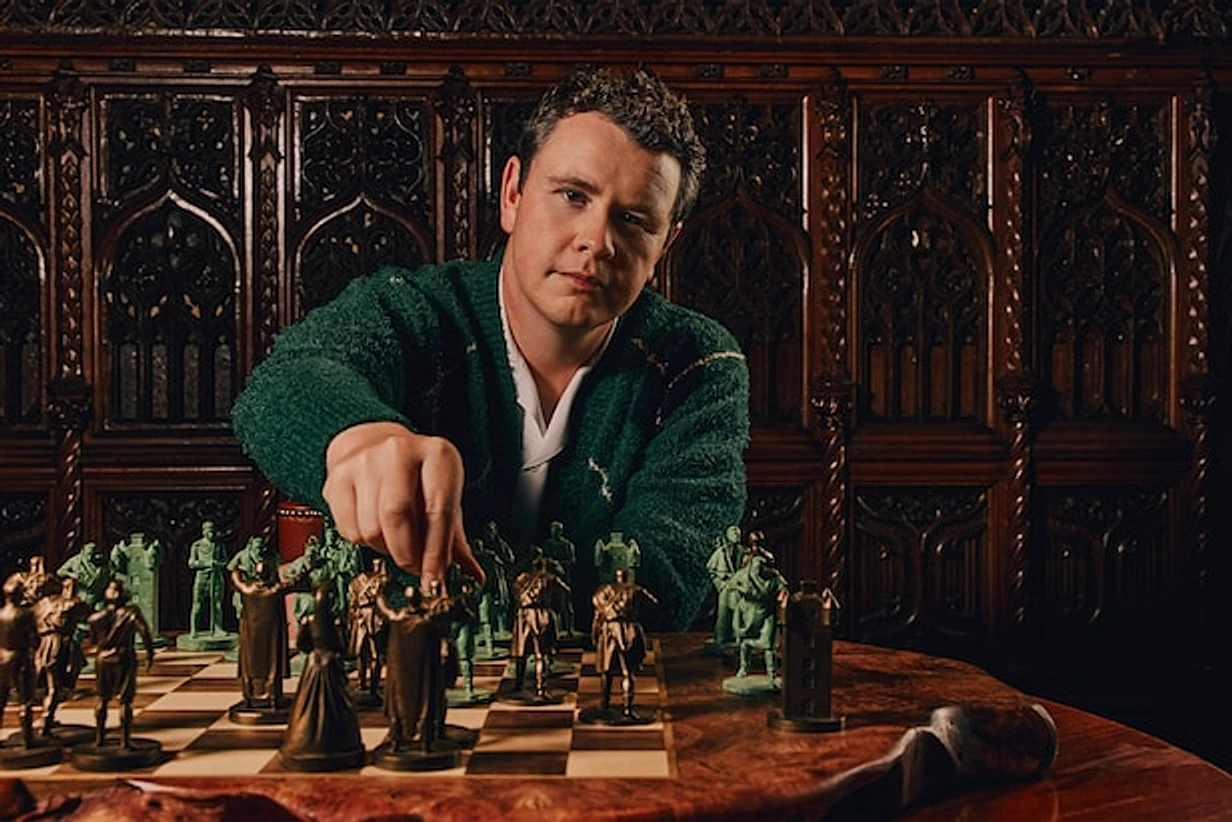
We met at Taymouth Castle, baronial stone and ancient timber rising from the mist of Perthshire, about as far from a par-62 municipal links as Scotland allows. What follows is a conversation about pressure and identity, about isolation and belonging, about the game’s politics and its deeper pleasures. About what it actually costs to rise, and what a pro golfer decides, at every turn, to pay for.
GOLF DIGEST: Your peers, almost unanimously, say you perform your best when it matters most. Where does that come from?
MACINTYRE: To be honest, I’ve never seen myself that way. I’ve always just done what I do. So far, the pressure has come when things are going right for me. The most nerves I’ve ever had was at Oakmont those last three holes, when I said to my caddie, Mike [Burrow] on 16, “Mate, I can hardly feel my hands.” Then I proceeded to play three of the best holes I possibly could. There’s so many things that go through my head—I sing songs. I’ll tell myself, You’ve hit millions of golf shots in your life, it’s just another golf shot. At the end of the day, you just have to go hit it.
How did those last three holes at Oakmont compare to your first tee shot at Rome in 2023?
Massively different. Rome was more a realization of a dream, making a Ryder Cup team. I knew everything about that opening tee shot. Winning a golf tournament is a different pressure. Had it been a putt to win the Ryder Cup, that might have felt like those last three holes at Oakmont.
Do you think your game is built for majors more than regular tour events?
I can do both, but yes, my game is more suited to the dogfight. I like tournaments like Bay Hill or the Players, where you have to hit the fairway, then hit the green, and pars aren’t bad scores. At some courses, make a run of four pars and you’re sinking down the leaderboard. When you shoot level par and you’re jumping up 25, 30 places, that’s when I enjoy it most.
The mythology around you, this kid from a short course in Oban, how much does that origin story still inform who you are?
People are going to like you or dislike you, no matter who you are. The reason I left the U.S. is because I realized everything I care about, everyone I love, is home in Scotland. There might come a time when I need to move back over, if it became easier on family logistics, and I’d suck it up and learn to deal with it. But right now, I don’t need to. My sister has three little ones, my mum and dad are in Oban, my girlfriend is working for the National Health Service in Glasgow. When I was in the States, the time difference made it hard. When I’m home in Scotland, I hardly play golf. I’ll do the odd thing in the simulator, putt indoors. For me, I’ve realized the mental side of the game is far more important than the physical. My swing technique doesn’t really change—I’ve got my basics. What does change is my mental attitude. When I’m in a good headspace at home, seeing friends and family, everything’s fine and there are no worries when I get to the golf course. I can perform.
Then why do you think so many tour pros find Florida to be the perfect environment for their profession?
Yeah, from a practice standpoint, it’s hard to beat the facilities and weather. But that doesn’t factor in what happens away from golf. Florida was too lonely, too business-like for me. Practice, golf, practice, eat, sleep. There needs to be a work-life balance. It’s really the same issue when we’re on the road, too, in America. There’s not as much chatting, socializing. When I play in Europe or Asia there’s this idea that we’re all in this together, experiencing new cultures together. This job is too hard to focus on all the time. I love what I do, but if I can’t do it with friends and family to come along for the ride, you question what it’s all for. Florida might be better for my game, but Scotland is better for my life, and I think that mind-set will help me have a better and more fulfilling career.
Golf Digest Logo The messy truths Brian Rolapp will learn about pro golf
Golf Digest Logo Tap into your inner athlete ... like Basketball Hall of Famer Grant Hill
Up around 8, 8:30, cup of coffee to start. After that it varies. If my nieces are off school or it’s the weekend, I spend a lot of time with them. It all revolves around family and friends. If I’m at home and I’m not with Shannon, I’m with my mum and dad or one of my sisters with the little ones. I’ve gotten to a point where I don’t really do things to please people outside that small circle.
I don’t know if it teaches me something different so much as it’s made me the golfer I am. There’s a lot of aggression in the way I play and in my reactions to shots. Shinty has maybe helped me with discipline, with acceptance and with shaping the ball. You’ve got one stick—different lofts through different positions—and you might be hitting a pass 10 yards or trying to launch one 50 yards, so you’re constantly manipulating. But more than the technical stuff, I think it’s the team mentality and the never-give-up spirit. If you go one down, you’ve got to get it back. You’re always chasing, always trying your best. You never stop playing.
A broken toe. My Uncle Gordon lost his eye. I’ve always worn a helmet with metal guards and a glove on my right hand. I try to limit the risk. You can still get injured, I know that, but I do everything I can to prevent it. It’s something that’s been passed down through the generations of my family—and I just love it.
'My game is more suited to the dogfight. … When you shoot level par and you're jumping up 25, 30 places. That's when I enjoy it most.'