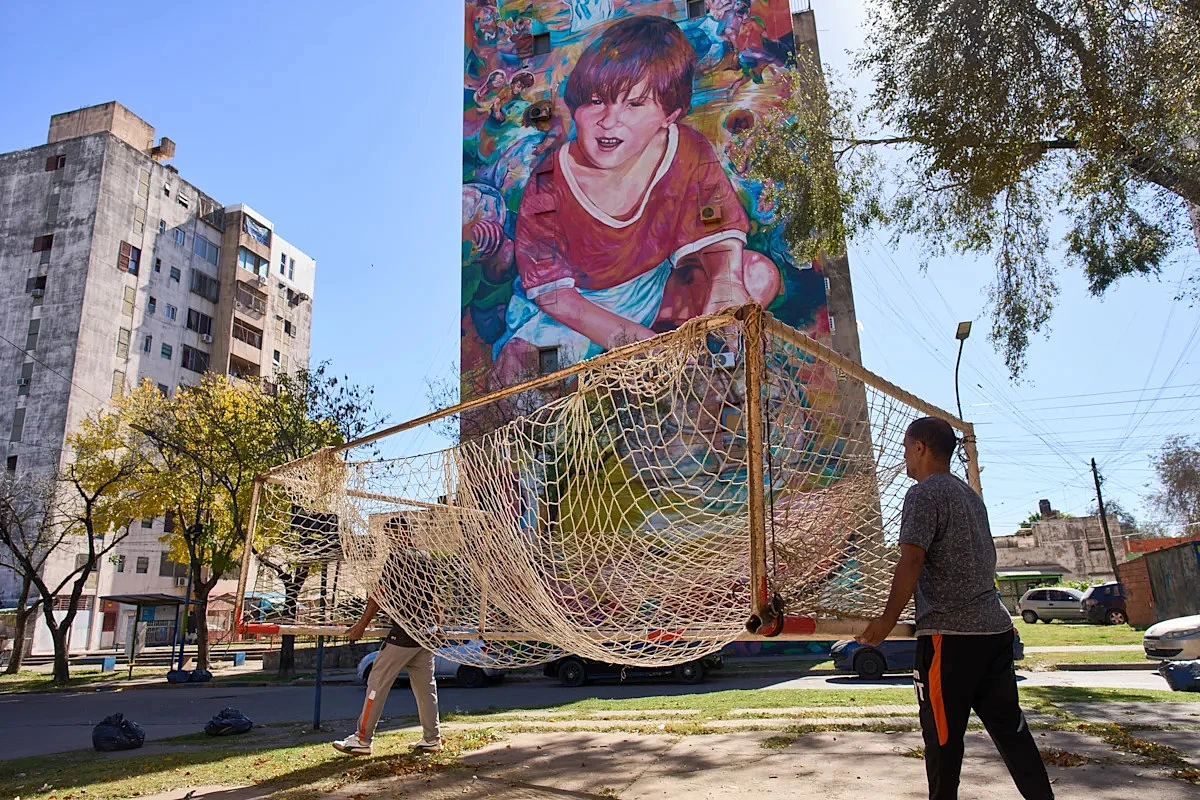
The breeze off the Paraná River carries a familiar chill through the streets of Rosario, where the roar of a future legend first echoed. This is Grandoli, the neighborhood club where a 5-year-old Lionel Messi took his first steps toward becoming arguably the greatest soccer player of all time. Today, children in orange and white-striped jerseys chase the ball beneath a mural of the young prodigy, their tiny cleats clattering on the pitch as they warm up. For fans and dreamers alike, this humble ground is a pilgrimage site—a reminder that greatness often starts small.
It was 1992 when Messi's maternal grandmother, Celia, brought him to watch his older brother Matías play for Grandoli in a local youth league. One player was missing for a seven-a-side match for 6-year-olds, and Celia saw her chance. She pleaded with coach Salvador Aparicio to let her tiny grandson, then just 5, take the field. "Aparicio didn't want him to because he was too young for the age group," recalls Ezequiel Assales, a former teammate. "The grandmother insisted. They put him on, and everyone said, 'What a player!' That's how it all started."
From those scrappy beginnings on a neighborhood pitch, Messi's journey became the stuff of legend. Now 38 and captain of Inter Miami, he's expected to play in his sixth World Cup for Argentina in a few weeks—a final chapter that still glows with possibility. For the kids of Grandoli, he's more than a mural; he's a living blueprint. "I watched him when I was little, and it made me want to play like him," says 11-year-old Julián Silvera, who admires Messi's free kicks. As the afternoon sun fades over Rosario, the next generation keeps chasing the ball, each kick a small tribute to the boy who started it all.