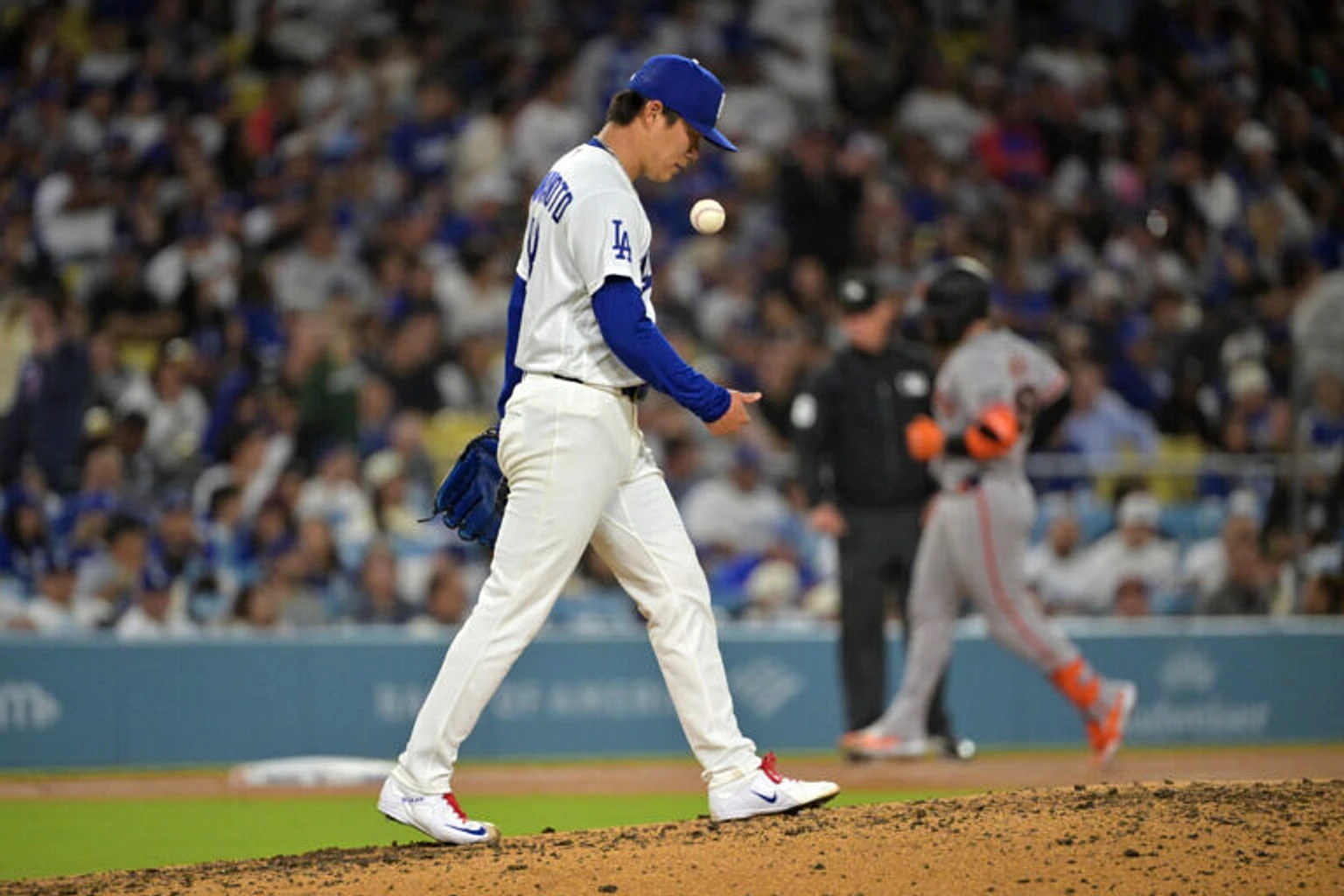
The Los Angeles Dodgers made history on Tuesday night—but not the kind any team wants to celebrate. After falling 6-2 to the San Francisco Giants, the Dodgers extended their losing streak to four games, and it's the manner of those losses that has fans and analysts alike raising eyebrows.
For the fourth straight game, Los Angeles lost by four or more runs. That's a feat not seen from this franchise since July 1-4, 1936—nearly 90 years ago. In fact, it's only the second time in Dodgers history they've endured such a streak. According to MLB.com's Sonja Chen, every other MLB team has suffered a similar stretch at least four times since that 1936 season. That puts this slump in stark, historic perspective.
The Dodgers actually jumped out to an early lead for the second consecutive game against the Giants. Shohei Ohtani gave Los Angeles a 1-0 advantage, but the lead was short-lived. Starter Yoshinobu Yamamoto surrendered back-to-back home runs to the Giants' No. 8 and No. 9 hitters, Harrison Bader and Eric Haase. San Francisco tacked on three more runs in the seventh inning, putting the game out of reach.
This offensive drought has been brewing for nearly a month. Through April, the Dodgers ranked fifth in MLB with 167 runs scored—just 10 behind the league-leading Atlanta Braves. But since May began, they've slipped into a four-way tie for 16th place with just 41 runs. The culprit? A failure to capitalize in key situations. Since the start of May, the Dodgers have managed just one hit in 10 at-bats with the bases loaded. Their averages with runners on and in scoring position are at or below league average, and those missed opportunities are proving costly.
Perhaps most telling is the sudden disappearance of the long ball. The Dodgers have hit only 10 home runs this month, landing them squarely in the middle of the MLB pack. But in high-leverage situations, the power outage is even more stark: Los Angeles has zero home runs in 25 at-bats with the game on the line.
For a team with championship aspirations, this inability to rise to the moment is becoming a troubling trend. With each loss, the Dodgers are not just losing games—they're making history for all the wrong reasons.