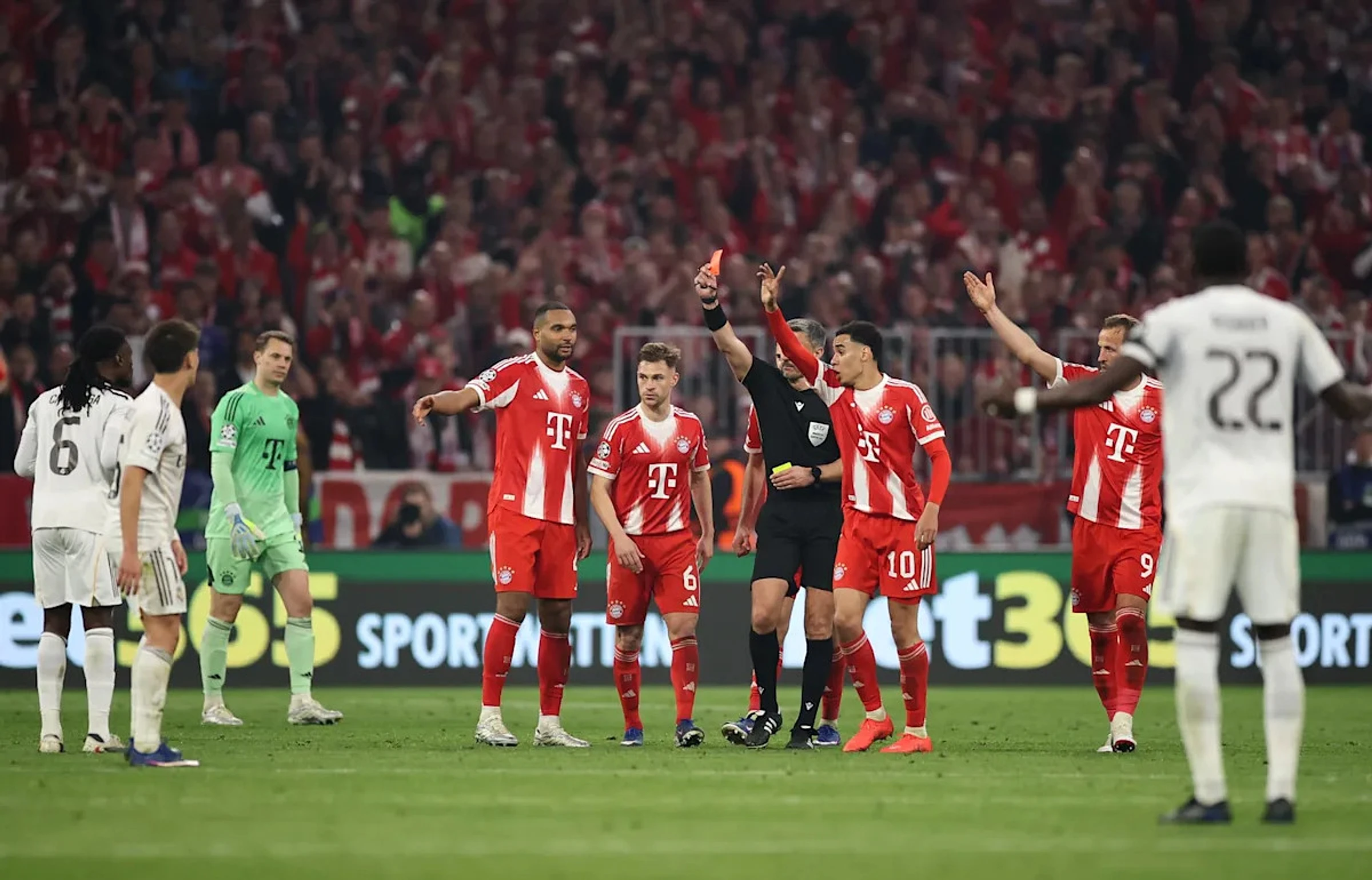
In the high-stakes world of the Champions League knockout stages, moments of brilliance are often matched by moments of heartbreak. For Real Madrid's Eduardo Camavinga, a dramatic quarter-final exit against Bayern Munich was defined by the latter, as a late red card proved a decisive turning point.
The young French midfielder, introduced in the second half to help swing the tie, found himself at the center of the storm. After a period of struggling to impact the game, a moment of frustration led to a second yellow card for delaying the restart, leaving his team with ten men at a critical juncture.
The dismissal halted Madrid's momentum and effectively sealed their fate, shifting the psychological advantage firmly to the German side. In the immediate aftermath, the 21-year-old became a focal point for the disappointment surrounding the club's European exit.
Displaying a maturity that belies his years, Camavinga has now stepped forward to shoulder the burden. Taking to social media, he issued a direct and emotional apology to his teammates and the global Madrid fanbase.
"I take responsibility for my part," he stated. "I wanted to apologise to my team and the Madrid fans. Thank you for all the support."
This kind of public accountability is a hallmark of top-level competitors. For a player known for his dynamic energy and technical skill, this setback is a harsh lesson in the fine margins of elite sport. How a player responds to such adversity often defines their career trajectory.
For fans watching, it's a raw reminder of the passion and pressure these athletes face. The journey back from a low point requires resilience, a quality as essential in sport as the right gear is for performance. Camavinga's willingness to face the music head-on is the first step on that path to redemption.