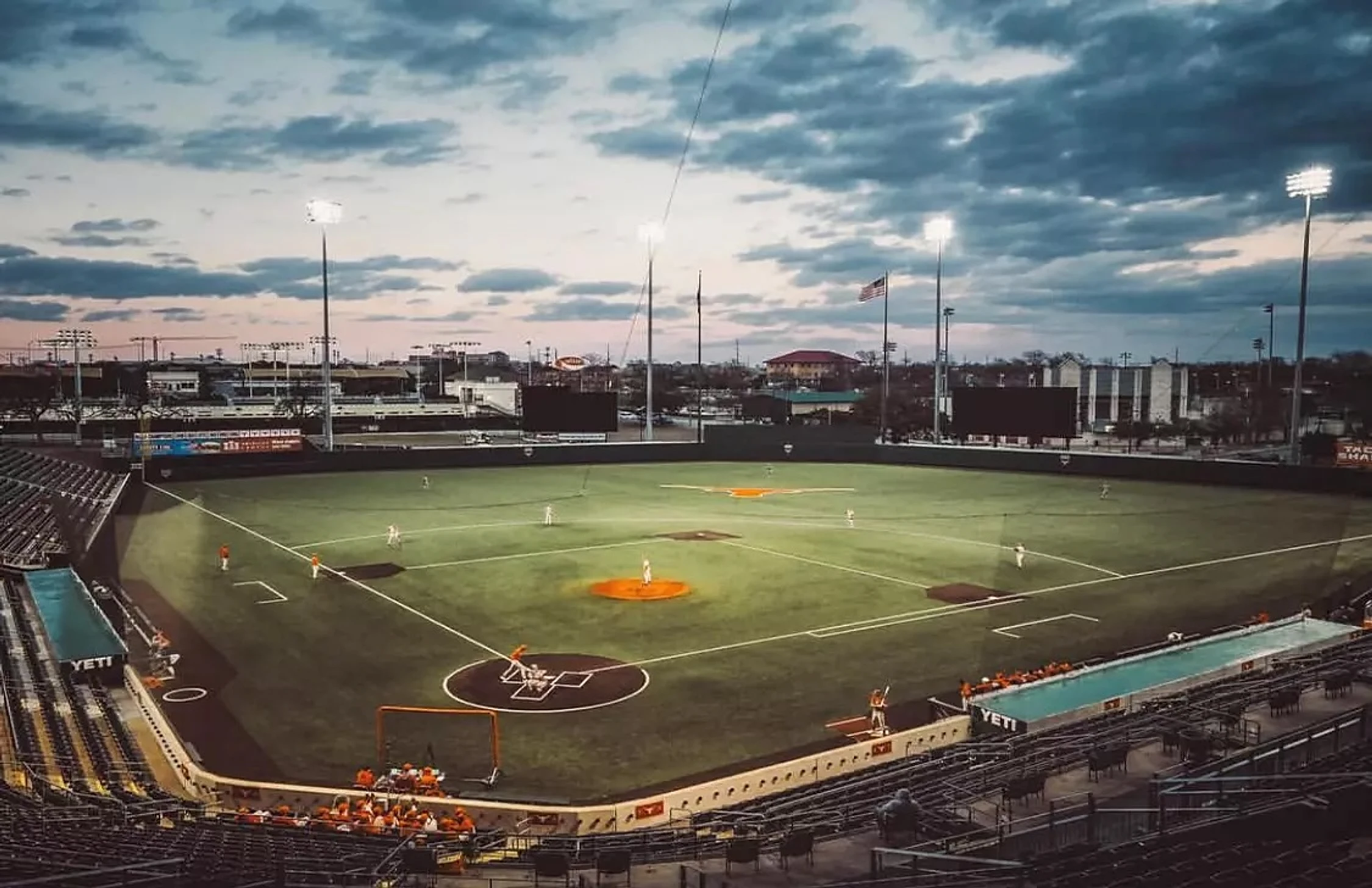
Big things are brewing at UFCU Disch-Falk Field, and while it won't quite be Jim Schlossnagle's Field of Dreams, it's shaping up to be a game-changer for the Texas Longhorns. The iconic ballpark is set for a major facelift, starting with a brand-new playing surface that promises to level the competition—literally.
Let's be clear: the Longhorns aren't swapping out artificial turf for natural grass, despite the wishes of athletics director Chris Del Conte and head coach Jim Schlossnagle. The stadium's clamshell design makes growing grass a pricey puzzle, with heat lamps adding a prohibitive cost. But what's coming next is still a huge win for players and fans alike.
The current synthetic turf, installed back in 2017, has been a source of frustration. A lingering crown—originally built to help drainage—has left the pitching mound a whopping seven inches higher than regulation. That forces hitters to literally swing uphill on ground balls, a quirk that's been a thorn in the side of Texas batters. Schlossnagle has pointed this out on more than one occasion, and now the program is finally taking action.
The first order of business? Removing that crown to create a truly level playing field. It's the latest move in a broader effort to make the Disch more hitter-friendly, following earlier adjustments during the David Pierce era that shortened the outfield gaps and lowered the left-field fence. Now, the focus is on speed—how fast will the new turf play?
"I want it to be faster than what we currently have," Schlossnagle said during a Thursday media availability, noting the current turf is tilted toward the pitcher and plays slower. "I just want our field to play as neutral as it can. I wanted to mirror grass and dirt as best as possible."
To get there, Schlossnagle has been deep in design talks with the company chosen by the university for the project. A key meeting on Wednesday helped shape the vision, and the Longhorns will get a sneak peek of what's possible this weekend when they travel to Knoxville to face Tennessee at Lindsey Nelson Stadium. "Their turf is faster than I remember. Ours is slower," Schlossnagle added. "The new turf we're going to get next year will be somewhat similar to what's going to be there."
For Longhorns fans, this isn't just a surface upgrade—it's a signal that Texas is serious about building a home-field advantage that plays fair for both pitchers and hitters. And for anyone in the market for gear that performs as well as the new turf, it's a reminder that the right equipment starts from the ground up.