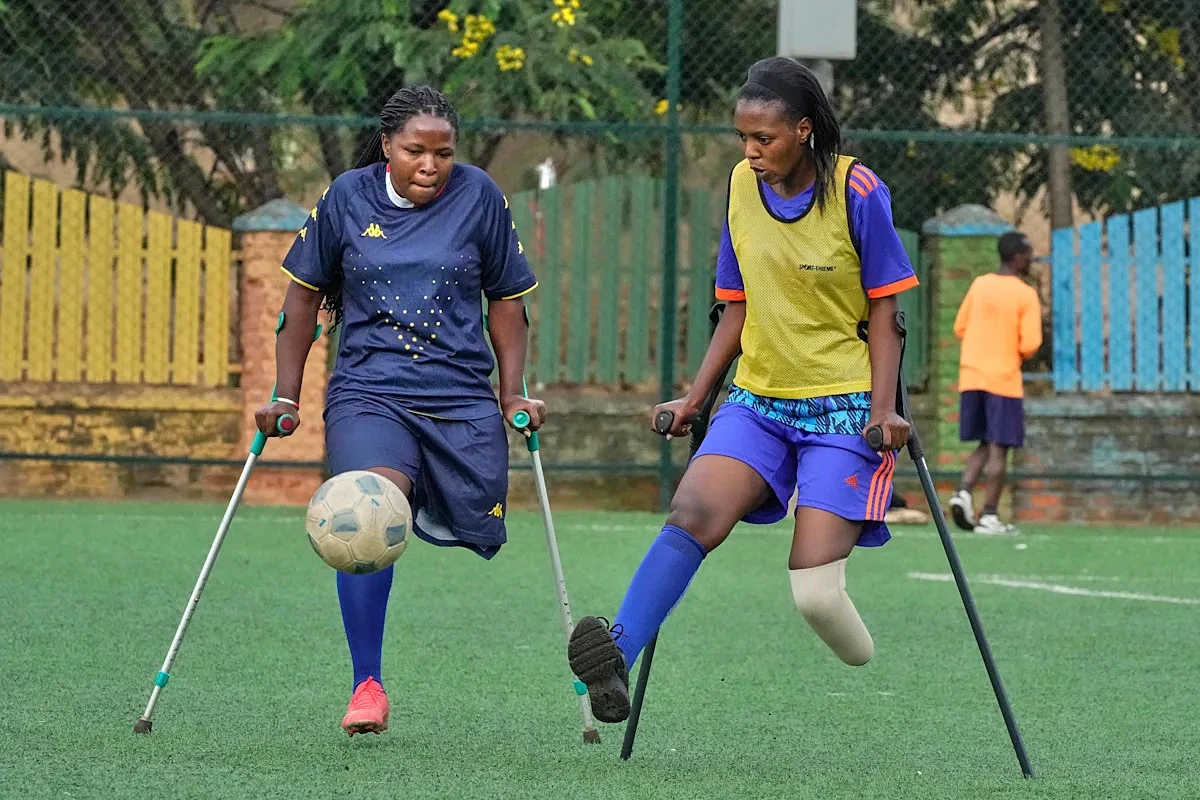
In the heart of Kigali, Rwanda, the unmistakable sound of crutches clashing echoes across the field as amputee football players chase not just a ball, but a dream of global competition. This isn't just a game—it's a powerful story of resilience, healing, and community.
Amputee football, a fast-paced seven-a-side version of the beautiful game, has been gaining momentum in Rwanda over the past decade. Players navigate the pitch on crutches, while goalkeepers defend with one arm. For many, this sport represents far more than athletic achievement; it's a pathway to physical rehabilitation and emotional recovery.
The sport has become a beacon of hope in a nation still healing from its darkest chapter: the 1994 genocide, which claimed approximately 800,000 lives over 100 days. On these fields, amputees find solace and solidarity, transforming trauma into teamwork.
Take Nyiraneza Solange, born two years after the genocide. She lost her leg at age five following a fall and infection. Initially hesitant, she was inspired by the courage of genocide survivors who lost limbs. A former coach of Rwanda's first amputee football team encouraged her, showing her that crutches could be tools for play, not just mobility aids. "I don't even think about not having a leg," Solange says, describing the freedom she feels on the field. The sport has helped her overcome the stigma often associated with amputation.
Rwanda is home to an estimated 3,000 lower-limb amputees, their injuries stemming from the genocide, road accidents, or illness. For them, amputee football offers a second chance—not just to compete, but to belong.
Louise Kwizera, vice president of the Rwanda Amputee Football Federation, emphasizes the sport's unifying power. "It enables players to learn to trust again, building unity in a society that was once divided," she explains. "In communities affected by conflict or trauma, the playing field becomes a place of peace. People who may have different pasts come together as teammates."
As children cheer and goalies dive with determination, these athletes are proving that the human spirit—and the love of the game—can overcome any obstacle.