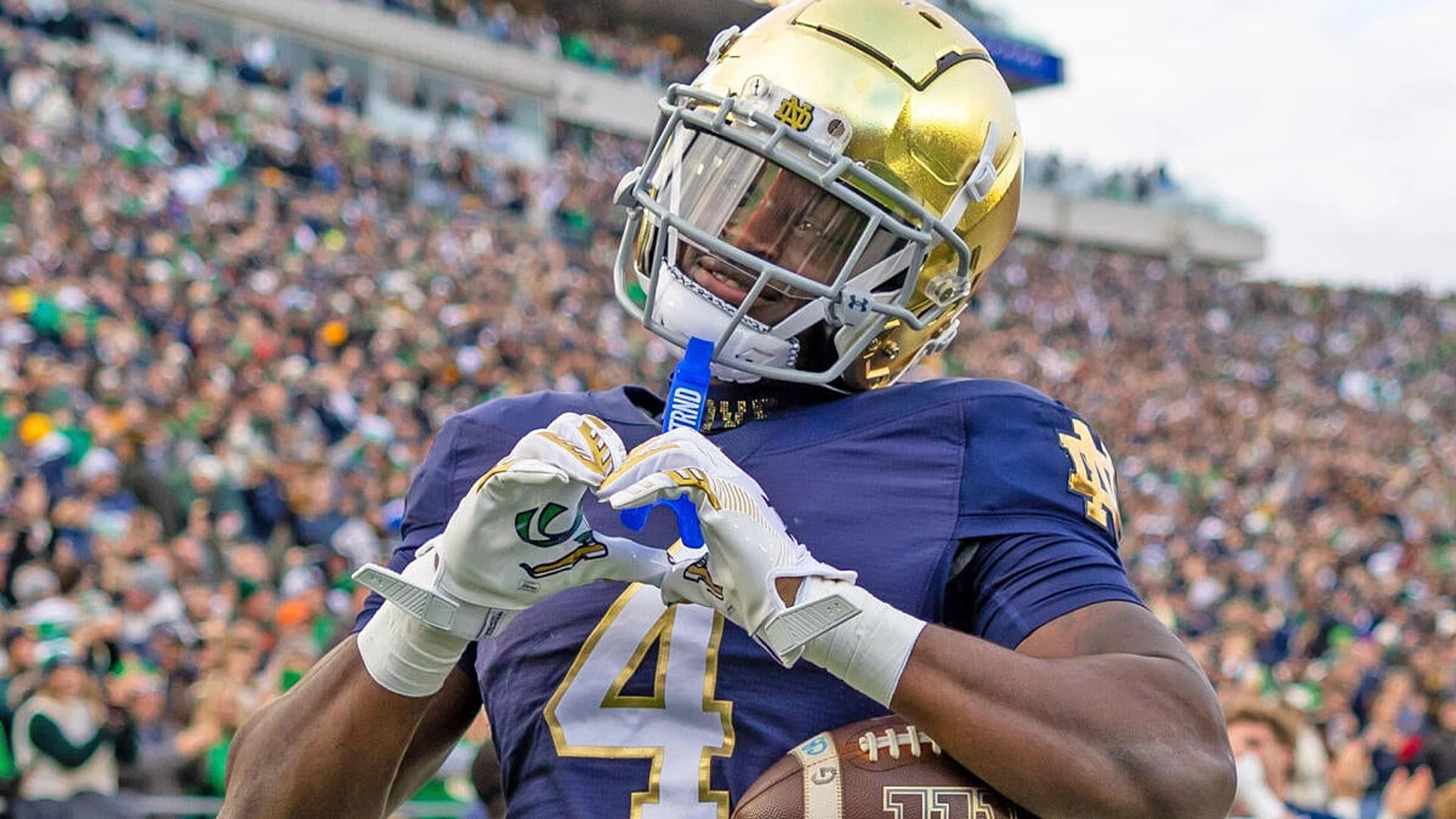
The Arizona Cardinals made headlines—and sparked plenty of debate—by selecting Notre Dame running back Jeremiyah Love with the third overall pick in the 2026 NFL Draft. It's the highest a running back has been taken since Saquon Barkley went second overall to the New York Giants back in 2018.
Love's talent isn't the question. Many scouts considered him the best offensive weapon and one of the top overall prospects in the entire draft class. The real conversation centers on whether spending such a premium pick on a running back makes sense in today's NFL.
The Cardinals are in a clear rebuild. Arizona finished 3-14 last season, dead last in a brutally competitive NFC West. The division champion Seattle Seahawks went 14-3 and went on to win the Super Bowl. Both the Los Angeles Rams (who lost to Seattle in the NFC Championship) and the San Francisco 49ers finished 12-5. To make matters worse, Arizona's rushing attack ranked 31st in the league, averaging just 93.1 yards per game. An upgrade was desperately needed.
But here's where it gets tricky. Conventional wisdom says running backs simply shouldn't be taken that high—no matter how talented. The position is considered non-premium, especially when it comes to the salary cap. Since the rookie wage scale was introduced in 2011, early first-round picks who perform well provide incredible value by delivering elite production at below-market rates. That advantage, however, is much harder to achieve with a running back.
And that brings us to the money. As the third overall pick, Love is set to sign a contract worth an average of $13,255,704 per year. That instantly makes him the seventh-highest-paid running back in the NFL. For perspective, that's only about 7.5% less than the franchise tag the New York Jets placed on Breece Hall earlier this year ($14.293 million).
To put it further into context, the average salary for starting running backs in 2025 (excluding those on rookie contracts tied to draft position) was $9,185,225 per year, according to NFLPA data. Love will be earning significantly more than that before ever stepping onto an NFL field.
First-round picks also come with a fifth-year option, which teams must decide on after the player's third season. The contract value itself would be the same whether the Cardinals had drafted a quarterback, edge rusher, or wide receiver at No. 3—but those positions command far higher market rates. That's where the value gap becomes most apparent.
Love has all the tools to be a star. The question isn't whether he can play—it's whether the economics of the position will allow the Cardinals to build a winner around him.