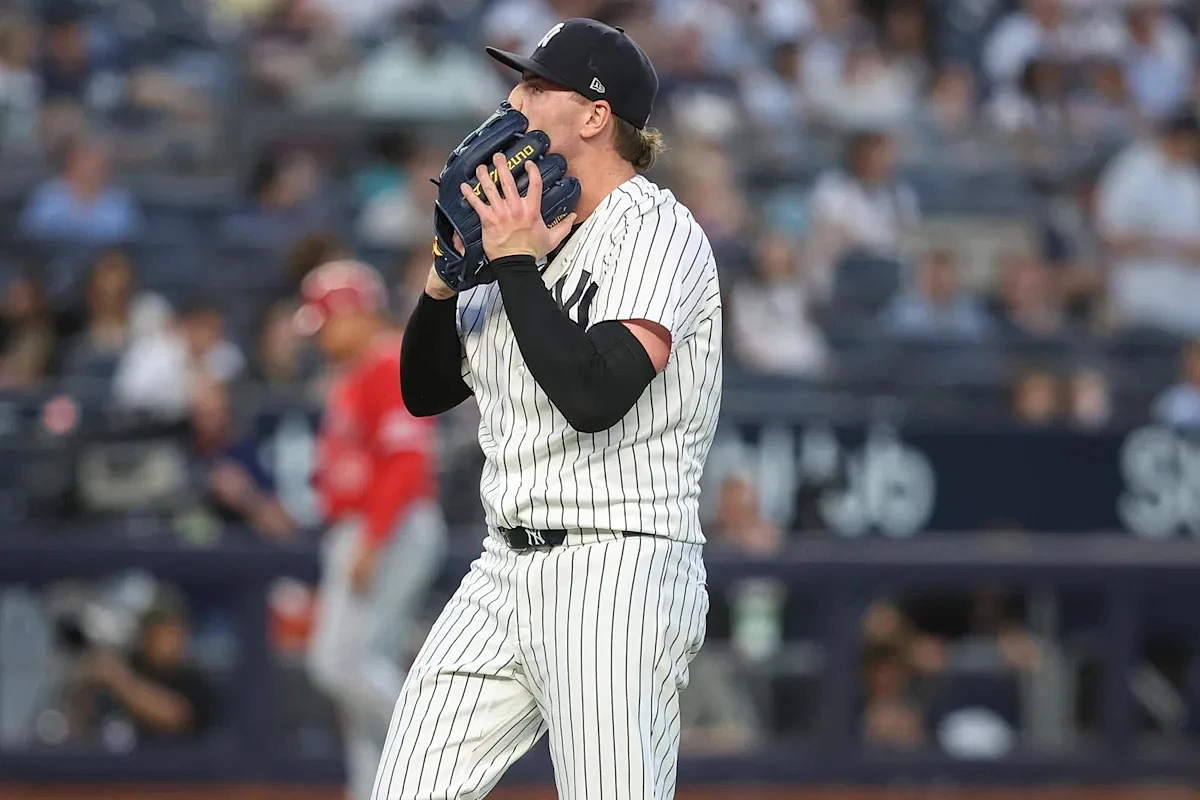
Tuesday night was a brutal one for the New York Yankees, a performance that fell painfully short of expectations for fans and the team alike. Coming off a thrilling 11-10 victory over the Los Angeles Angels the night before, the focus shifted to the mound, where a taxed bullpen desperately needed a strong start from left-hander Ryan Weathers.
Instead, the game unraveled immediately. Weathers surrendered back-to-back-to-back home runs in the top of the first inning, digging a deep hole for his team from the outset. While he showed resilience, settling down to strike out ten over five innings while allowing only two more earned runs, the damage was done. The early deficit proved too much to overcome, turning what should have been a momentum-building series into a frustrating loss.
The most concerning takeaway wasn't the poor result itself, but Weathers' own post-game assessment. He clearly identified the Angels' game plan—they are a notorious fastball-hitting team, particularly the heart of their order featuring Zach Neto, Mike Trout, Jo Adell, and Jorge Soler. "They’re a really good low-ball hitting team, and three misfires against a good low-ball hitting team is not a good start," Weathers admitted.
Yet, despite this awareness, the necessary in-game adjustment never came. Manager Aaron Boone echoed the sentiment, noting, "You see all the things that you get excited about. But a little bit tough just command-wise with the heater." It’s a classic pitcher's dilemma: knowing what’s coming but being unable to execute the counter-punch.
For a team with World Series aspirations, these are the moments that separate contenders. The ability to diagnose a problem and instantly adapt is what defines elite performance on the mound. While the Yankees, including veteran Paul Goldschmidt, remain hopeful this is just a stumble, games like Tuesday's serve as a stark reminder that in baseball, knowledge without execution often leads to a long, hard night.