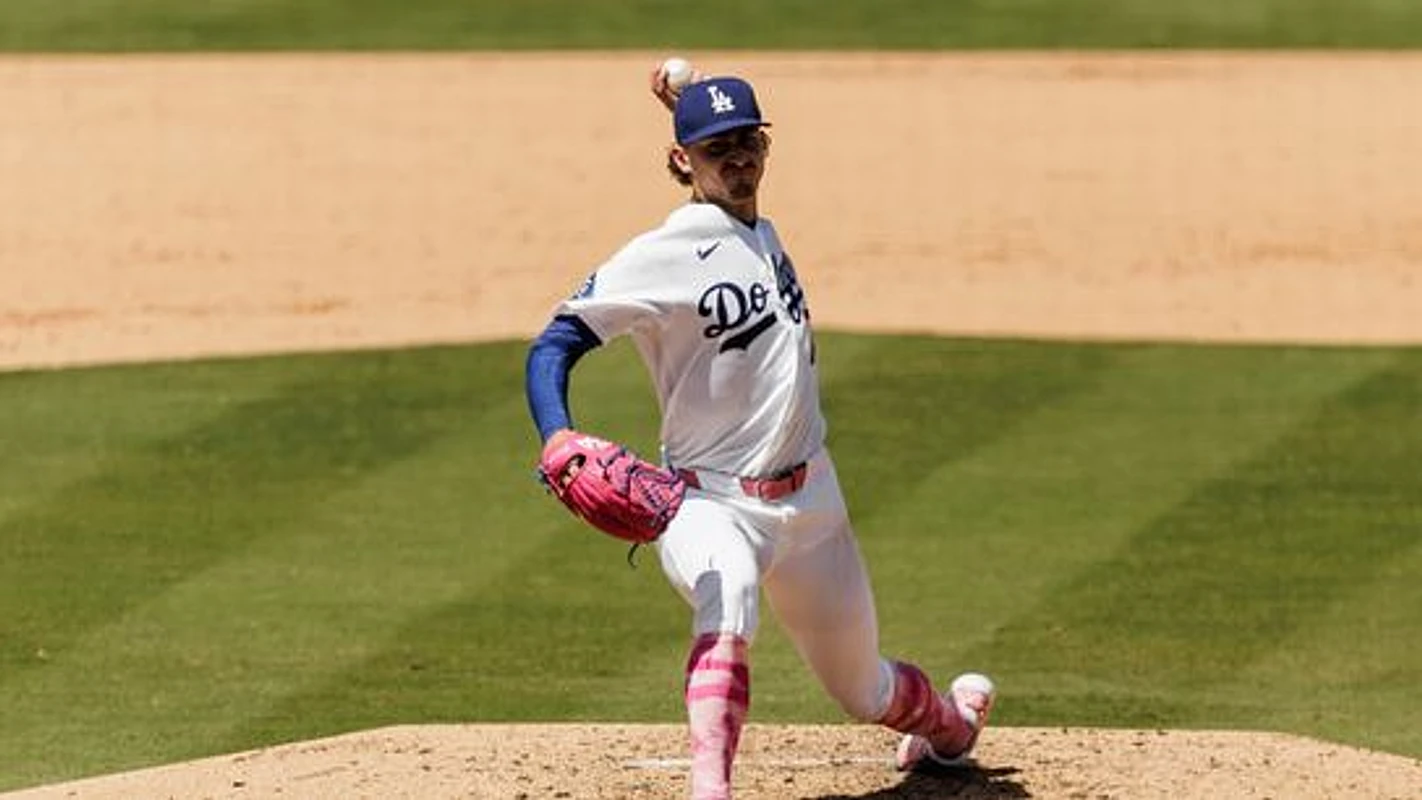
The Dodgers walked off the field Sunday afternoon with a 7-2 loss to the Braves, but beneath the surface of a disappointing defeat, there was something worth holding onto.
Some losses spiral out of control from the first pitch. Others, while still painful, reveal a silver lining that can pay dividends down the road. This one at Uniqlo Field at Dodger Stadium fell squarely into the second category.
Yes, the final scoreline was ugly. The Braves took two of three from the defending champions. The Dodgers dropped to 24-16, now tied with the Padres atop the National League West. And the offense remains stuck in neutral, with Shohei Ohtani mired in one of the coldest stretches of his career. Max Muncy’s late two-run homer provided a brief spark, but the game never truly felt within reach.
Yet on Mother's Day, the most important story was Justin Wrobleski.
At first glance, his stat line looks like a nightmare: 8⅔ innings, seven earned runs, seven hits, seven strikeouts, 100 pitches, and his first loss of the season. It was a historically bizarre pitching line, making Wrobleski the first Dodgers pitcher since Rick Sutcliffe in 1979 to throw at least 8⅔ innings while allowing seven or more earned runs. No major leaguer had done it since Carlos Silva in 2006.
But inside that strange box score was a performance the Dodgers may value more than the numbers suggest.
After one brutal inning threatened to bury both Wrobleski and an exhausted bullpen, the left-hander steadied himself and delivered something this pitching staff desperately needs: length.
The game turned in the second inning, and Wrobleski knew exactly where it slipped away. With the Braves already threatening, a ground ball came back to the mound—the kind of inning-ending double play pitchers dream about. Instead, Wrobleski's throw to second sailed high, forcing shortstop Alex Freeland into an awkward catch-and-transfer attempt that prevented the Dodgers from escaping cleanly. Moments later, Mauricio Dubón ripped a bases-clearing double. The Braves led 4-0, and Dodger Stadium fell quiet.
"I just didn't turn the double play," Wrobleski said afterward. "If I had turned the double play, 8⅔ innings, two or three runs... that's a different ballgame."
But here's the thing: after that disastrous second inning, Wrobleski didn't fold. He didn't let the game get away. Instead, he battled through the next six-plus innings, saving a bullpen that has been taxed heavily in recent weeks. In a season where pitching depth is tested nightly, that kind of grit matters more than the final score suggests.
For a team searching for offensive consistency, Wrobleski's resilience is a reminder that not all losses are created equal. Sometimes, the most valuable performances come wrapped in an ugly box score.