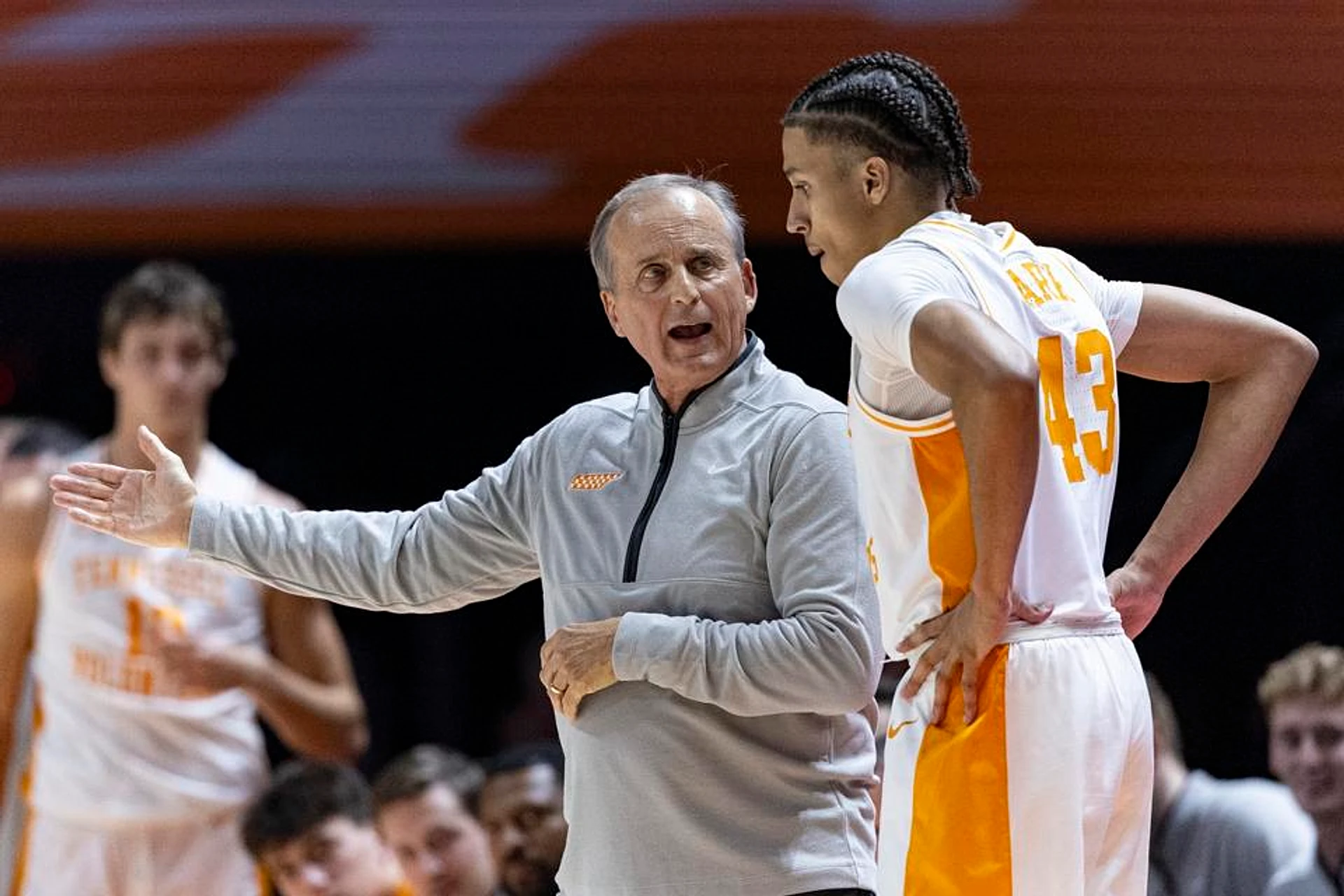
Tennessee basketball is building something special. For three straight seasons, the Volunteers have punched their ticket to the NCAA Tournament's Elite Eight—a feat matched only by Duke. While the Blue Devils have long been college basketball royalty, Tennessee is quickly making its own mark under veteran head coach Rick Barnes. And if this offseason is any indication, the Vols aren't slowing down.
On Monday, former Wake Forest guard Juke Harris committed to Tennessee, becoming the latest high-profile transfer to join the program. Harris is ranked No. 2 in both the Athletic's and the Field of 68's transfer portal rankings, and according to CBS Sports, his agent has reportedly requested a $5 million deal—making him one of the most highly-compensated players in college basketball.
At 6-foot-7, Harris is a versatile wing who averaged 21.4 points and 6.5 rebounds per game as a sophomore. He earned All-ACC Second Team honors and was named the conference's Most Improved Player. His arrival is a major boost for a Tennessee team that lost its top three scorers—Ja'Kobi Gillespie (18.4 PPG), Nate Ament (16.7 PPG), and J.P. Estrella (10 PPG)—to graduation or the NBA.
Interestingly, Harris had declared for the NBA draft and even received an invite to the combine. But he chose to return to college, joining a growing trend of top prospects opting for another year of development. Florida forward Thomas Haugh and UConn guard Braylon Mullins, both potential first-round picks, have also decided to stay in school.
Harris isn't the only new face in Knoxville. Tennessee boasts four players in the Athletic's top 30 transfer rankings—more than any other program. Alongside Harris, the Vols have added Terrence Hill Jr. (No. 14), Tyler Lundblade (No. 23), and Jalen Haralson (No. 30). In the Field of 68's rankings, Hill Jr. checks in at No. 11, Haralson at No. 35, and Lundblade at No. 50.
Hill Jr., a 6-foot-3 guard, averaged 15 points per game last season and brings additional firepower to an already loaded backcourt. With this reloaded roster, Tennessee looks poised to make another deep March run—and maybe even cut down the nets for the first time in program history.