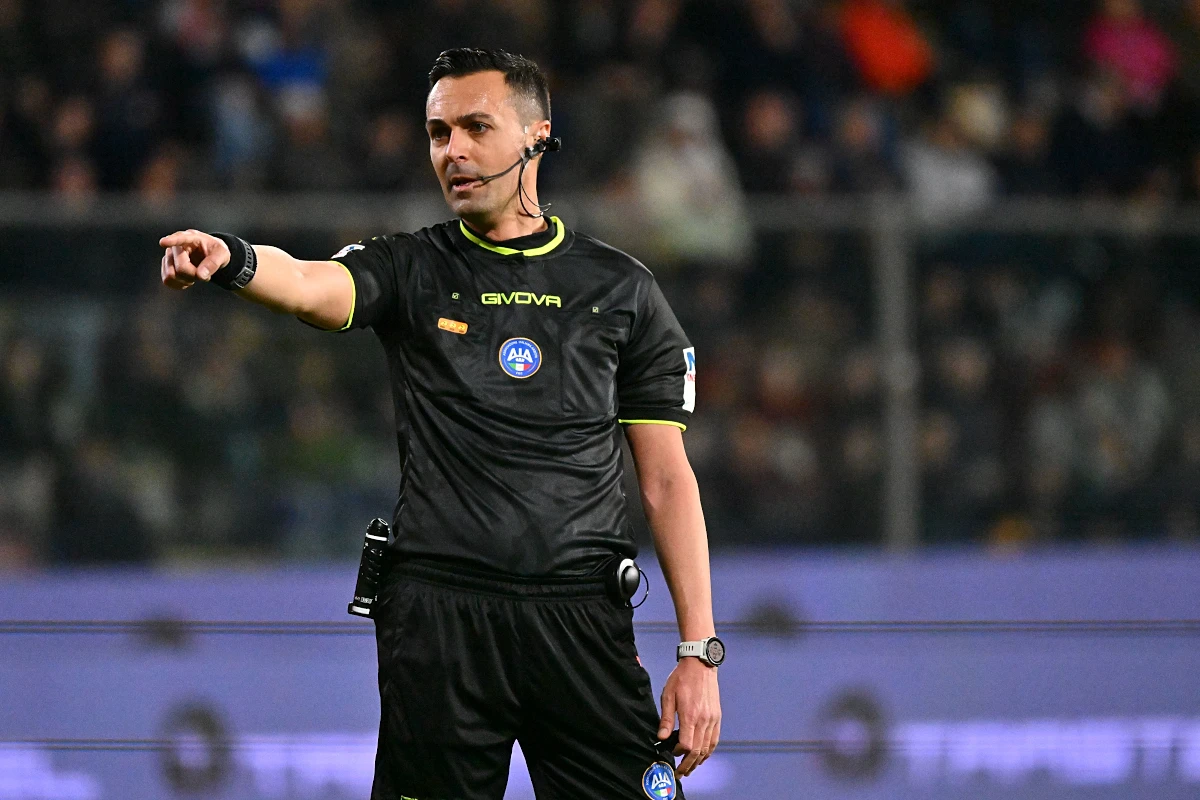
In the high-stakes world of Champions League football, every decision can spark a firestorm—and Italian VAR Marco Di Bello found himself at the center of one during the semi-final second leg between Bayern Munich and Paris Saint-Germain. But before you grab your pitchforks, let's break down why the 44-year-old official might have gotten it exactly right.
The tension was palpable at the Allianz Arena, with Bayern looking to overturn a 5-4 deficit from a thriller in Paris. Midway through the match, a moment of chaos erupted: the ball clearly struck PSG's Joao Neves on his outstretched arm. Bayern coach Vincent Kompany and the home crowd erupted, demanding a penalty. Referee Joao Pinheiro of Portugal paused, waiting for Di Bello's verdict from the VAR booth. The call came back: play on. The stadium roared in disbelief.
But here's where the IFAB rules come to Di Bello's defense. The key detail? The ball wasn't fired by a Bayern attacker—it was blasted onto Neves's arm by his own teammate, Vitinha. Under the updated handball laws, this is a critical distinction. The rules specifically state that it is not a handling offense if a player is hit on the arm by a ball played by a teammate, unless it directly leads to a goal or an immediate scoring chance. Since neither applied here, Di Bello was correct to let the play continue.
The controversy didn't end there. Earlier, PSG's Nuno Mendes was involved in a handball incident, and the Parisians wanted a second yellow card for a Bayern player. But Di Bello couldn't intervene there either—VAR is only authorized to review incidents involving straight red cards, not second yellows. It's a reminder that even in the age of technology, the rules have their limits.
For fans and players alike, these moments can feel like gut punches. But in the cold light of the rulebook, Di Bello's decisions stand up to scrutiny. Whether you're a Bayern supporter or a neutral, it's a fascinating look at how the fine print of the game can shape the biggest stages in football.