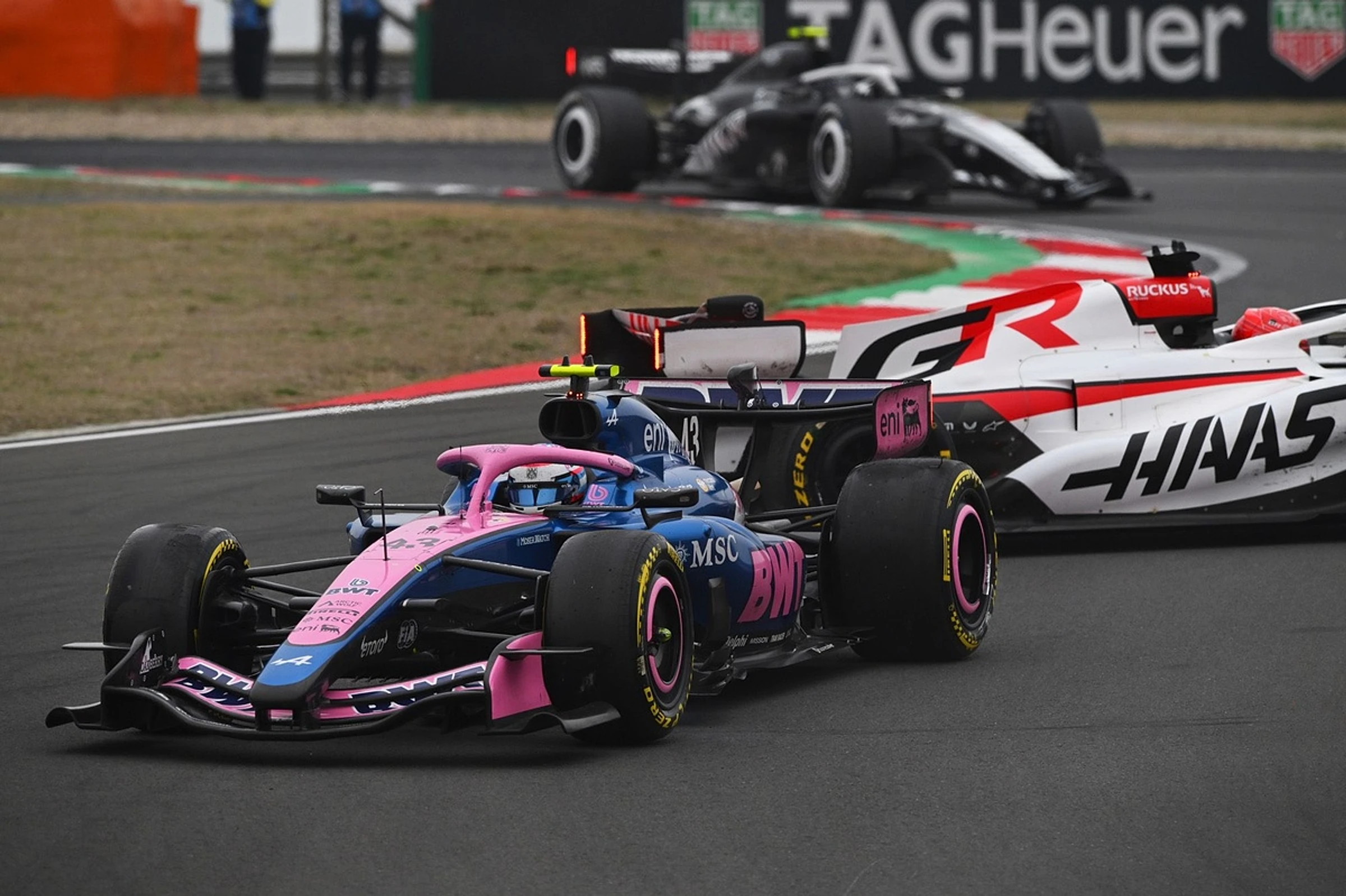
The battle for supremacy in Formula 1's upper midfield is heating up, and Haas finds itself on the back foot after a crucial development swing from rival Alpine. Just two weeks ago, Haas was riding high in fourth place in the constructors' championship, two points clear of Alpine following a strong showing in Japan. But after a quiet weekend at its "home" race in Miami, the American squad now trails the Anglo-French team by five points—thanks to Pierre Gasly's sprint race point and Franco Colapinto's impressive run to seventh.
The shift in momentum comes down to one key factor: upgrades. Alpine arrived in Miami with a substantial new aero package, while Haas made only a single change—a small additional element to its diffuser winglet. The results were telling. Alpine's updates appear to have cured a high-speed weakness that had plagued its otherwise-impressive A526 chassis, allowing its drivers to extract more performance from the car across a wider range of corners.
Haas, meanwhile, found itself in a tight battle with an improved Williams FW48, which had also received significant attention. Oliver Bearman, Haas's young driver, came agonizingly close to scoring points. He theorized that if he'd managed to undercut Alex Albon during the pit stops, he could have held onto 10th place. Instead, he ran close to the Williams driver after the stops but lacked the raw pace to make a pass stick.
While Haas could match Alpine's pace in the opening three rounds of the season, the upgrades to the A526 have the American squad feeling concerned. The development race is relentless, and Haas knows it will have its own opportunities to strike back in the coming races. But for now, Alpine has found a way to eliminate a key weakness—and that's a worrying sign for a team that was once ahead.
"They had an issue in high-speed, and then it looks like they've sorted that, and they've brought a huge amount of upgrades for this event," Bearman explained in Miami. "We brought zero, so we were anticipating a tough weekend—that turned out to be the case."
This explains why Alpine struggled in Melbourne and why Colapinto had difficulty in Suzuka. In low-to-medium speed corners, the A526 was well-behaved, allowing both drivers to capitalize—as seen in its strong performance in China, where high-speed corners are scarce. But the car's front end struggled to bite in faster sections, leaving it vulnerable. Now, with that weakness addressed, Alpine has closed the gap—and Haas knows it has work to do to keep up.
As the season progresses, the midfield battle promises to be one of the most thrilling storylines in F1. With Williams and Racing Bulls also pushing hard, Haas will need to respond quickly if it wants to reclaim its spot at the front of the pack. For fans and teams alike, the development war is just beginning.