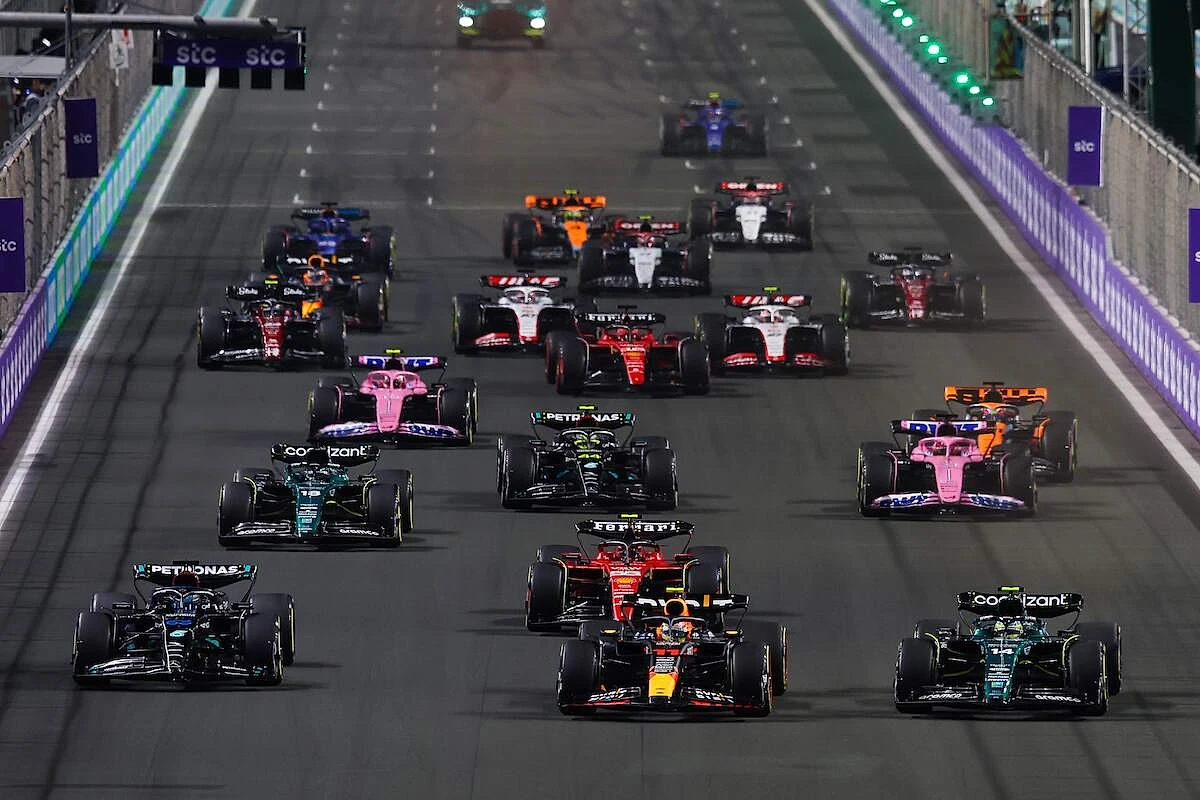
Formula 1 made the only call it could earlier this year. With the Middle East conflict escalating, the sport officially canceled the back-to-back Bahrain and Saudi Arabian Grands Prix originally scheduled for April. It was a massive financial blow, but FIA President Mohammed Ben Sulayem stood firm: "Humans are always the priority."
But as we all know, in the high-stakes world of motorsport, principles often have a price tag. And when millions of dollars are on the line, even the toughest decisions get a second look.
According to fresh reports, executives from Liberty Media and the FIA are now actively "evaluating" a way to squeeze the Saudi Arabian Grand Prix back onto the 2026 calendar. The catch? The only way to fit Jeddah into an already packed late-season schedule is to create a logistical nightmare that's never been attempted in F1 history: four races in four consecutive weeks.
Here's how the season currently stacks up. The 2026 calendar is set to conclude with a brutal, globe-trotting triple-header: Las Vegas on November 22, Qatar on November 29, and the traditional season finale at Abu Dhabi on December 6. But former F1 driver Robert Doornbos dropped a bombshell on Ziggo Sport's De Stamtafel program. "They now say that they are moving Abu Dhabi by a week and slotting Jeddah in between," Doornbos revealed. "That means you finish the season with four races in a row – Las Vegas, Qatar, Jeddah, and Abu Dhabi."
To understand just how absurd this would be, you have to consider the geography – and the human toll. F1 teams are already stretched to the breaking point, moving thousands of tons of freight from the Nevada desert to the Middle East in a matter of days. Forcing mechanics, engineers, and drivers to endure a quadruple-header across those time zones isn't just exhausting. It's borderline negligent.
If Jeddah is wedged into the December 6 slot, Abu Dhabi would be pushed back to December 13. On paper, moving a race by a week sounds simple. In reality, it would test the limits of every crew member, every piece of equipment, and every logistical plan the sport has ever seen.
For fans, it would be a thrilling end to the season. For the people who make it happen, it could be a breaking point. And for F1's decision-makers, the question is simple: is the money worth the risk?