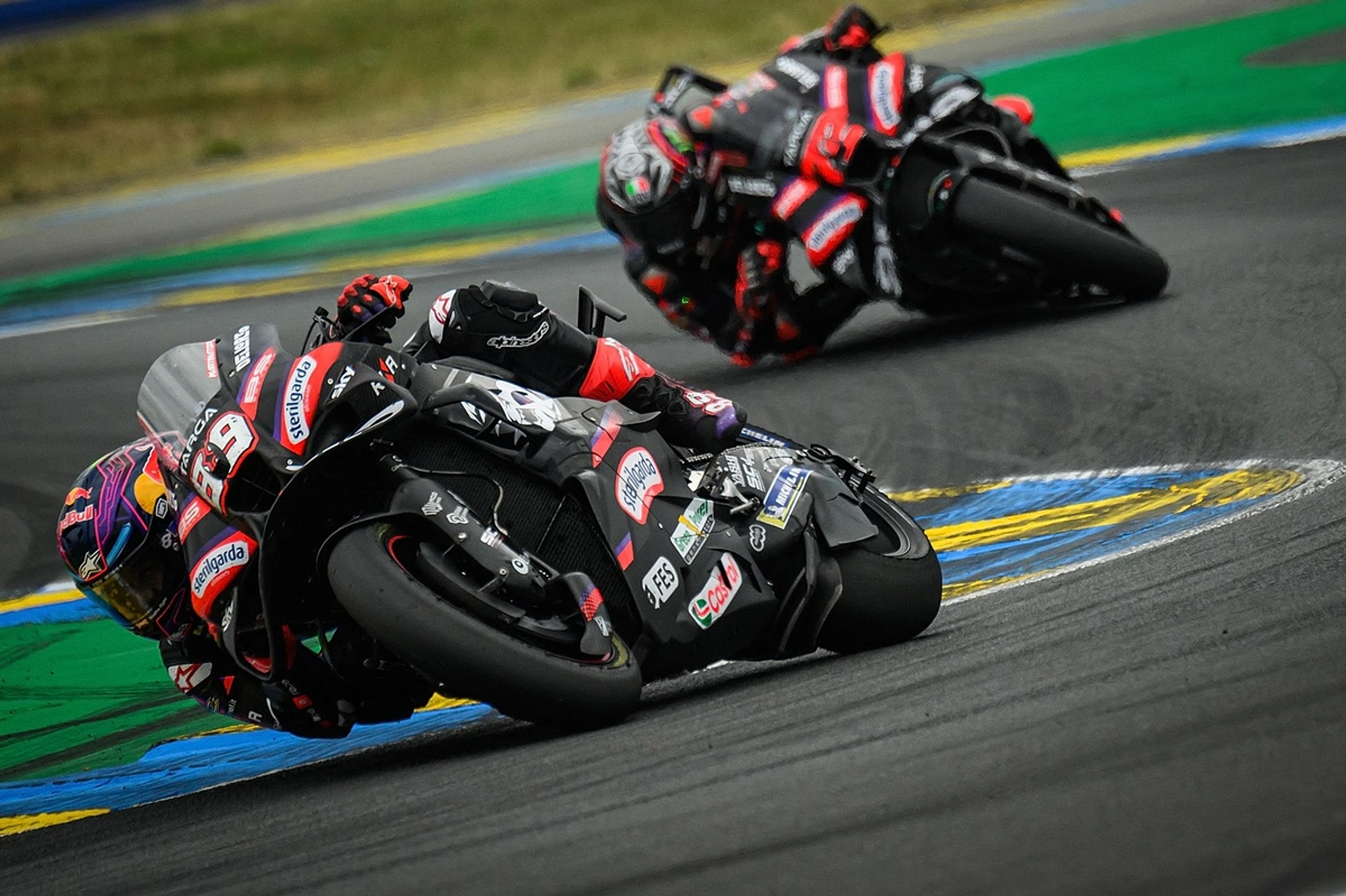
Aprilia's MotoGP surge isn't just a lucky streak—it's the payoff of a carefully cultivated philosophy and the patience to see it through. While rivals have scrambled and stumbled, the Noale-based manufacturer has quietly built something special, and the results are now impossible to ignore.
To understand just how remarkable this rise is, you have to look back at the end of 2024. That's when Maverick Vinales, Aprilia's top rider at the time, finished ninth overall. He wasn't just disappointed—he was practically cursing a bike he said changed its personality from one circuit to the next. In that moment, panic would have been understandable. KTM, facing similar frustrations, reacted by tearing up its entire structure in a hiring-and-firing frenzy. That rushed decision is still costing them today.
Aprilia chose a different path. Instead of hitting the reset button, they held their nerve, trusted their process, and kept refining their approach. Now they're living the finest sporting moment in their history—and that's saying something for a marque that collected multiple championships in MotoGP's smaller classes more than a decade ago.
The stats tell the story. So far this season, Aprilia has claimed 10 of the 15 available podium spots. Compare that to Ducati's three and KTM's two. They've won four of the first five races, with last weekend's clean sweep at Le Mans serving as the clearest expression yet of the formula that has carried Piaggio's racing arm to the top of MotoGP's pyramid.
There's no secret sauce here. The success comes from a working philosophy remarkably similar to the one that elevated Ducati in recent years—and, just as crucially, from resilience. According to rival team sources consulted by Motorsport.com, Aprilia is also the most efficient manufacturer on the grid relative to its MotoGP investment. That makes the victories taste even sweeter.
Three individuals deserve particular credit: Massimo Rivola, the CEO who architected the MotoGP project; Fabiano Sterlacchini, the technical director; and Marco de Luca, head of development. They've built a culture that values consistency over chaos, and it's paying off in the most beautiful way—on the podium, race after race.