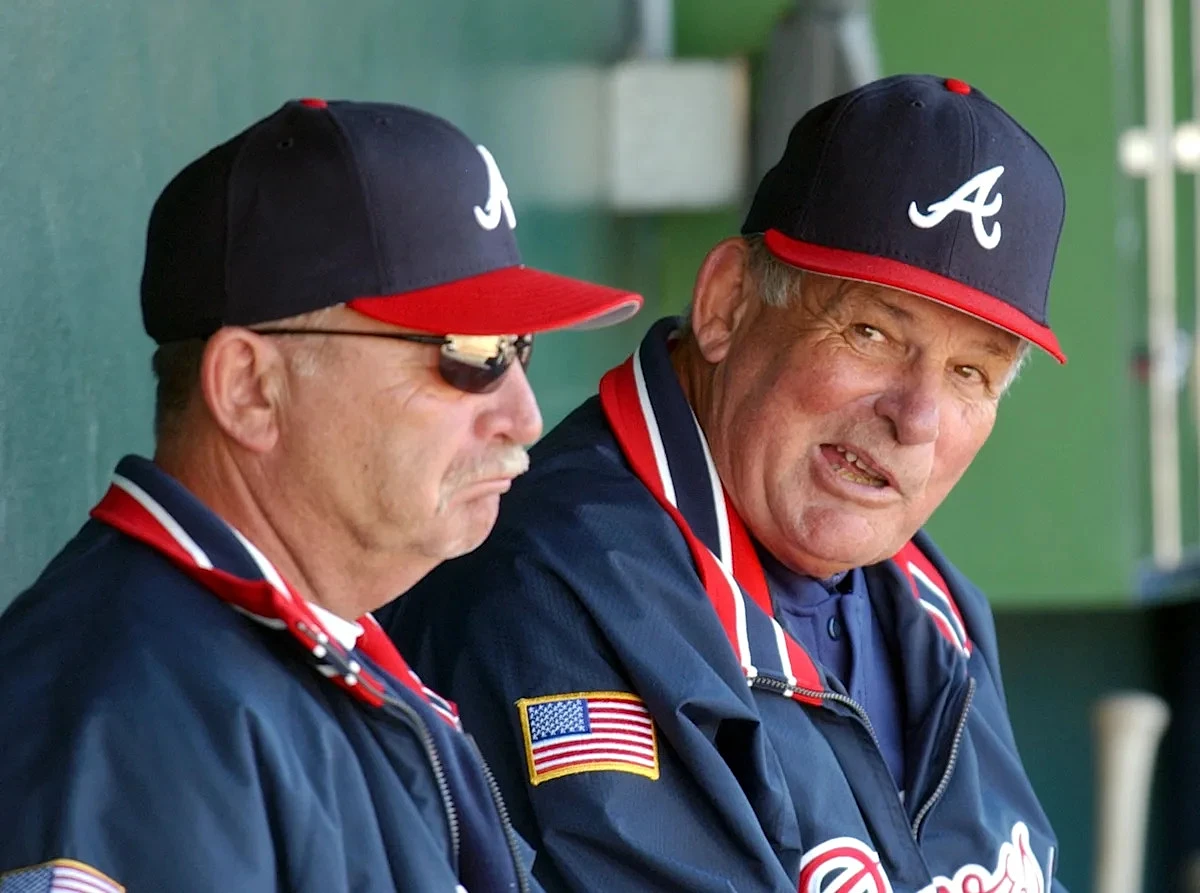
This week, the baseball world paused to remember two towering figures in Atlanta Braves history. Ted Turner, the visionary who turned a struggling franchise into "America's Team" by riding the cable television wave to a fortune, and Bobby Cox, the legendary manager whose 40-plus years in the game built a dynasty of 14 straight division titles and a World Series championship. Cox was known not just for his unmatched loyalty and player development, but also for his record-setting number of ejections—a testament to his fiery passion. For younger fans, these names might be distant echoes, but their greatness and the lost lore of their era are worth rediscovering.
They are the heart and soul of Braves baseball. It makes you wonder: when you picture the Braves, who comes to mind? I remember a conversation with my mother a few years ago, during what might have been our last game together.
"Why are the Braves wearing orange?" she asked.
"Mom, that's the Mets. They're the home team," I said.
"No, it isn't. The team in black is the Mets."
"That's not black. It's a really dark navy that looks black."
"It's ugly."
"Yeah, I don't like it either, but some pitchers prefer short sleeves."
"Where's Bobby Cox?"
"They have a new manager now."
"Is his brother managing?"
"His brother?"
"Yeah, him and his brother used to sit next to each other. His brother would just rock back and forth, nervous about everything. He looks just like him."
To my mother, Bobby Cox, Leo Mazzone, and those classic red, blue, and white uniforms were the Atlanta Braves. And that's fair—she was folding laundry and chatting on the phone while I had the game on. So, who is Braves baseball to you? If I had to pick three, it would be Bobby Cox, Andruw Jones, and John Smoltz.
My favorite Bobby Cox memory? A 2003 game where the umpire told Kevin Grybowski to remove a gray bandage from his pitching wrist—not his fingers, just his wrist, claiming it could deceive the batter. This after Grybowski had already thrown 15 pitches. Cox exploded, yanked his pitcher off the mound, and made his point loud and clear. That's the passion that defined an era.