
More than 1,300 Division I players entered the transfer portal this offseason, and while not all of them have located a new home yet, most of the biggest names have found their landing spots. The season is still six months away, but it’s already time to start imagining how all these players will fit in with their new teams, and swap our transfer portal ranking for a transfer portal fit ranking.
This is the perfect situation for both parties. The Gamecocks graduated two of their starting guards — Raven Johnson and Ta’Niya Latson — and while they’re bringing in the No. 2 guard in the 2026 recruiting class, Jerzy Robinson, reloading from the portal was going to be key. Lee could be a starter or a dangerous sixth woman depending on how the competition for starting minutes shakes out. But this also gives her a chance to play in a system that has produced more WNBA guards than Texas in recent years, upping Lee’s 2028 draft stock.
Dawn Staley has excelled with bringing in portal guards — Te-Hina Paopao and Latson became starters in their first (or only) seasons with the program, and even Kierra Fletcher during the 2022-23 season was a vital part of that team. Lee figures to be the next guard in line, and helps elevate the Gamecocks to a likely No. 1 preseason ranking.
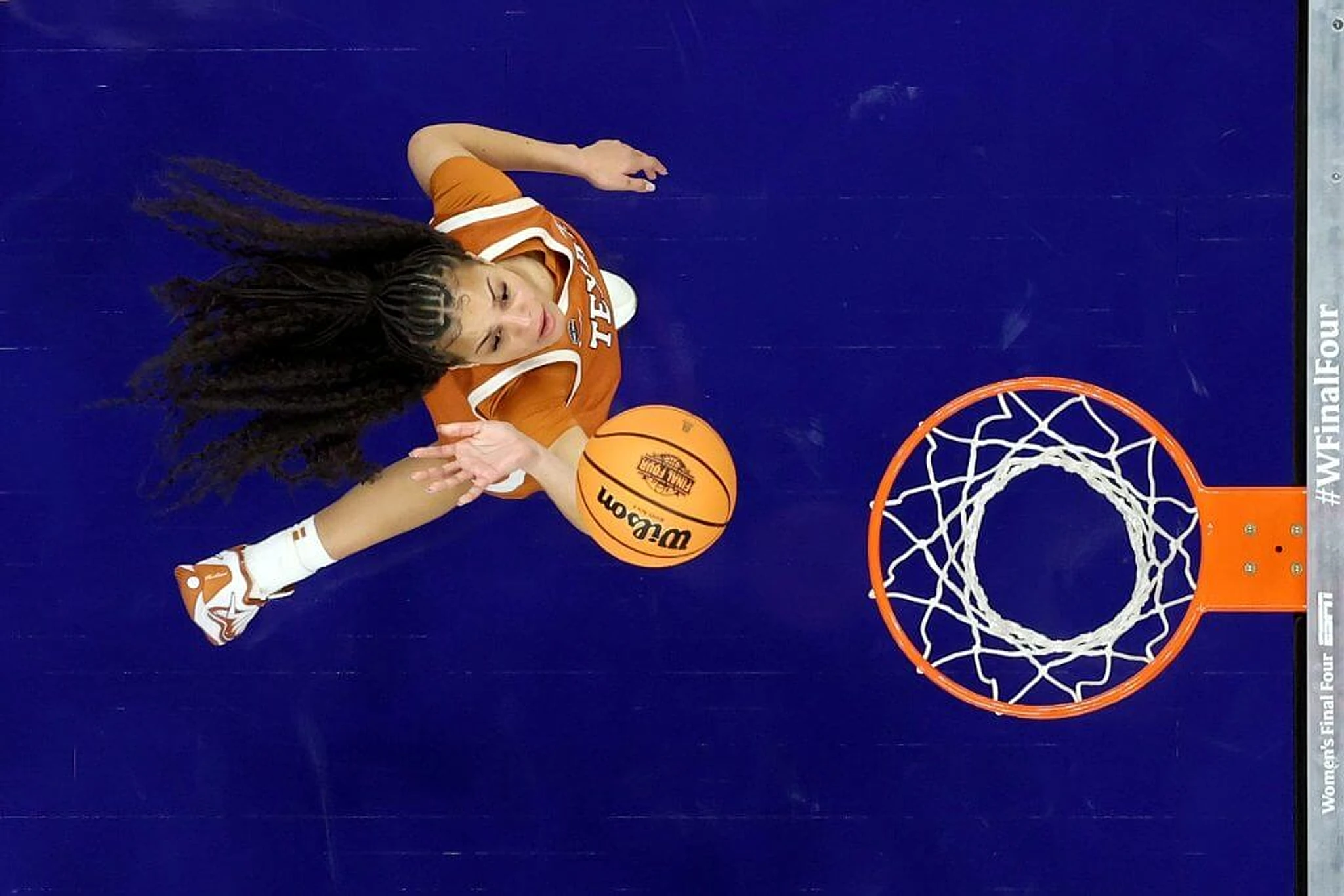
The Blue Devils lost their starting backcourt of Taina Mair and Ashlon Jackson, opening huge potential in Durham as that duo alone accounted for 38 percent of Duke’s shot attempts. Enter Crump: A player whose defensive mentality makes her an obvious fit in coach Kara Lawson’s system, but whose offensive potential — since we didn’t see everything she can do last season — could thrive with the Blue Devils.
Duke was one of Crump’s three finalists as a high schooler when she ultimately picked Texas. She likely will be put in a position to play a lot of two-player movement with Toby Fournier, and she’ll have a chance to extend her shooting range as well. At Texas, she shot only 32 percent on low volume, but we’ve seen her knock down triples before. During the U16 AmeriCup in 2023, Crump hit 39 percent of her long-range attempts.
Any boomerang — a player who transfers away from a school and then back — is going to be an automatic great fit during the return, assuming the player comes back on good terms and that she picked up quality minutes and experience at her second stop. Aarnisalo did.
She returns to UCLA after spending her sophomore sabbatical at UNC, where the Finnish guard’s minutes increased and her shooting improved significantly. On lower volume, Aarnisalo shot 40 percent from long range while her overall shooting improved to 47 percent. It’s a win-win for Aarnisalo and the Bruins — She gets to shoulder far more for UCLA, which lost six seniors to the WNBA, and the Bruins get as close to a plug-and-play transfer as possible, considering she already knows the system, the program and the coaches.
Coach Kim Mulkey replaced Jada Richard with Jada Williams, giving the Tigers their sixth point guard in six seasons. But that turnstile at the position hasn’t hurt the program as it has advanced to six Elite Eights in that time. That means LSU knows how to speed along the process for a player who, like Williams, will have only one year with the program.
At Iowa State last season, Williams ranked third in assists among power conference players with great assets around her such as Addy Brown and Audi Crooks. That doesn’t change at LSU. Swap Brown and Crooks for MiLaysia Fulwiley and Mikaylah Williams, and Williams should thrive.
Last season — when Carnegie was at Georgia and Chit Chat Wright was at Iowa — was the first time since the two were in sixth grade that they hadn’t played on a team together. So their reunion in Iowa City will be like a return to normal for both. Wright started 31 games in 2025-26 for the Hawkeyes, thriving in their system, and though Iowa lost Addie Deal as a transfer, plenty of talent returns with a rising junior core of Wright, Carnegie, Ava Heiden and Taylor Stremlow.
Coach Jan Jensen needed to replace some outside shooting, which she gets in Carnegie, and having more ballhandlers in the mix is always a positive. Additionally, Carnegie is a great, active perimeter defender who can help create havoc on that end. That will be a necessary plus for Iowa this season — five of its seven losses came in its nine lowest turnover percentage performances.
Even with Amaya Battle’s departure to the WNBA and Mallory Heyer’s decision to transfer to Oregon, there’s enough talent in the Twin Cities for the resurgent Gophers. But coach Dawn Plitzuweit needed to secure an interior presence to make everything work. Merkle is that. At 6-6, she’s an anchor on both ends who can slot into that more traditional, back-to-the-basket position. (The Gophers scored a sixth of their points last season in post-ups.)
She’s an excellent offensive rebounder, averaging the second-most O boards among power conference players this season. Creating those extra possessions for a team that returns its three leading scorers from a season ago (Tori McKinney, Grace Grocholski, Mara Braun) is good news.
UCLA got a 6-2 forward who can handle physicality and contact on the inside and has an elite passing ability. Her 3-point shooting percentage was a career low in 2025-26, but over the past three seasons, she has knocked down nearly 37 percent of her shots from behind the arc. With Sienna Betts on the inside and a backcourt of Elina Aarnisalo and Donovyn Hunter, Brown will have freedom to roam and create. Further, UCLA will likely want to run with a shorter bench at times as it looks for personnel groupings, so the fact that Brown averaged 32 minutes a game during her freshman and sophomore seasons is a good sign (she averaged less this past year as she dealt with an injury).
This move is also positive for Brown, who has a chance to move up the 2027 WNBA Draft board with a good season at UCLA. (It’s not unlike the potential upward movement from former UCLA guard Gabriela Jaquez as a senior.) This freedom should also allow Brown to expand her game a bit and work on her own shot creation so she can prove to scouts that she can play the three at the next level.
Hunter brings crucial versatility to UCLA’s backcourt. At Oregon State, which played at a slower pace, she worked through a lot of pick-and-roll and spot-up situations. At TCU over the last two seasons, it was mostly spot-up and transition fueling her offense. The latter aligns a bit more with the Bruins, but her experience in both systems is an asset.
Plus, her transferring experience — along with Aarnisalo’s own experience — makes her a good glue player in the backcourt. In her three years, she has played alongside three different crops of players. That should make for a smooth transition to UCLA to work with a new group of players.
Louisville’s returning rising junior core, which made it to the Elite Eight this season, gives the Cardinals a chance to build on the 2025-26 success. Replacing forward Laura Ziegler, who graduated after starting 37 games this season, was a big part of Louisville’s success in the portal. Good news for Baker: Coach Jeff Walz incorporated Ziegler into Louisville’s system quickly. She was a one-year transfer, like Baker will be, after playing her first three seasons at St. Joseph’s.
Style-wise, Baker is a pretty good comp to Ziegler, so she should be able to fill that role and her minutes well. She’s a three-level scoring forward who has shot 39 percent from beyond the arc during her three-year career, bolstering the Cardinals’ 3-point shooting. (Louisville knocked down 7.6 triples a game this season — the most since the 2018-19 season.) Baker also has valuable length and versatility for defense and can make defensive plays without fouling.
Key stats: 25.8 points per game, 7.7 rebounds per game, 1.7 assists per game