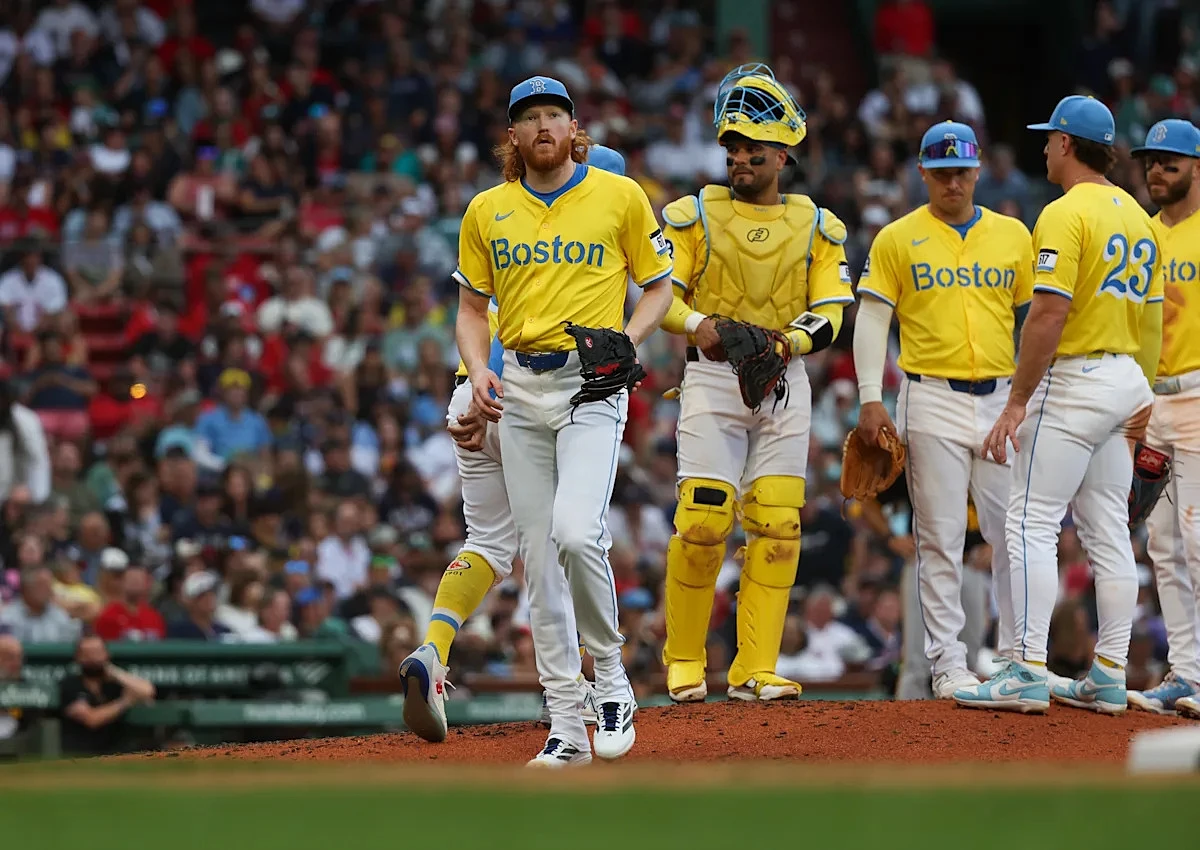
The ripple effects of the Rafael Devers trade continue to be felt across baseball, and as former Red Sox pitcher Dustin May takes the mound for the Cardinals against his old club, it's a stark reminder of the dominoes that have fallen since Boston moved their star third baseman. While opinions on trading Devers were divided, the subsequent handling of the acquired pieces has become its own frustrating saga for fans.
The initial return for Devers brought pitchers Kyle Harrison and Jordan Hicks, outfield prospect James Tibbs III, and pitching prospect Jose Bello to Boston. Today, only Bello, a 35 FV prospect in A-ball, remains in the organization, highlighting a series of moves that have largely backfired.
Kyle Harrison, shipped to Milwaukee in the Caleb Durbin deal, is now flourishing. He's opened the season with two strong starts, boasting a 2.61 ERA and 14 strikeouts in just over 10 innings. Reports suggest a simple grip adjustment from a former Giants teammate unlocked a nasty new changeup—a development that frustratingly eluded him during his brief Red Sox tenure.
The James Tibbs chapter is equally painful. After a mere 30 games at Double-A Portland, where he posted a .900 OPS, he was flipped to the Dodgers for five underwhelming starts from Dustin May. Tibbs is now tearing up Triple-A with a 1.376 OPS and seven homers in twelve games, showcasing the potent bat Boston let slip away.
Then there's Jordan Hicks. His stint in Boston was a disaster, culminating in an 8.20 ERA over 21 relief appearances. To move his contract this winter, the Red Sox had to attach a prospect and are still on the hook for $4 million annually. His struggles have continued in Chicago, with a 7.94 ERA, making his acquisition a costly misstep.
So, as May faces his old team, the question lingers: which part of this chain reaction stings the most? Is it losing a franchise player in Devers, watching Harrison thrive elsewhere, seeing Tibbs become a slugging prospect, or the expensive relief nightmare that was Jordan Hicks? For Red Sox fans, it's a tough choice in a trade tree that has borne little positive fruit.