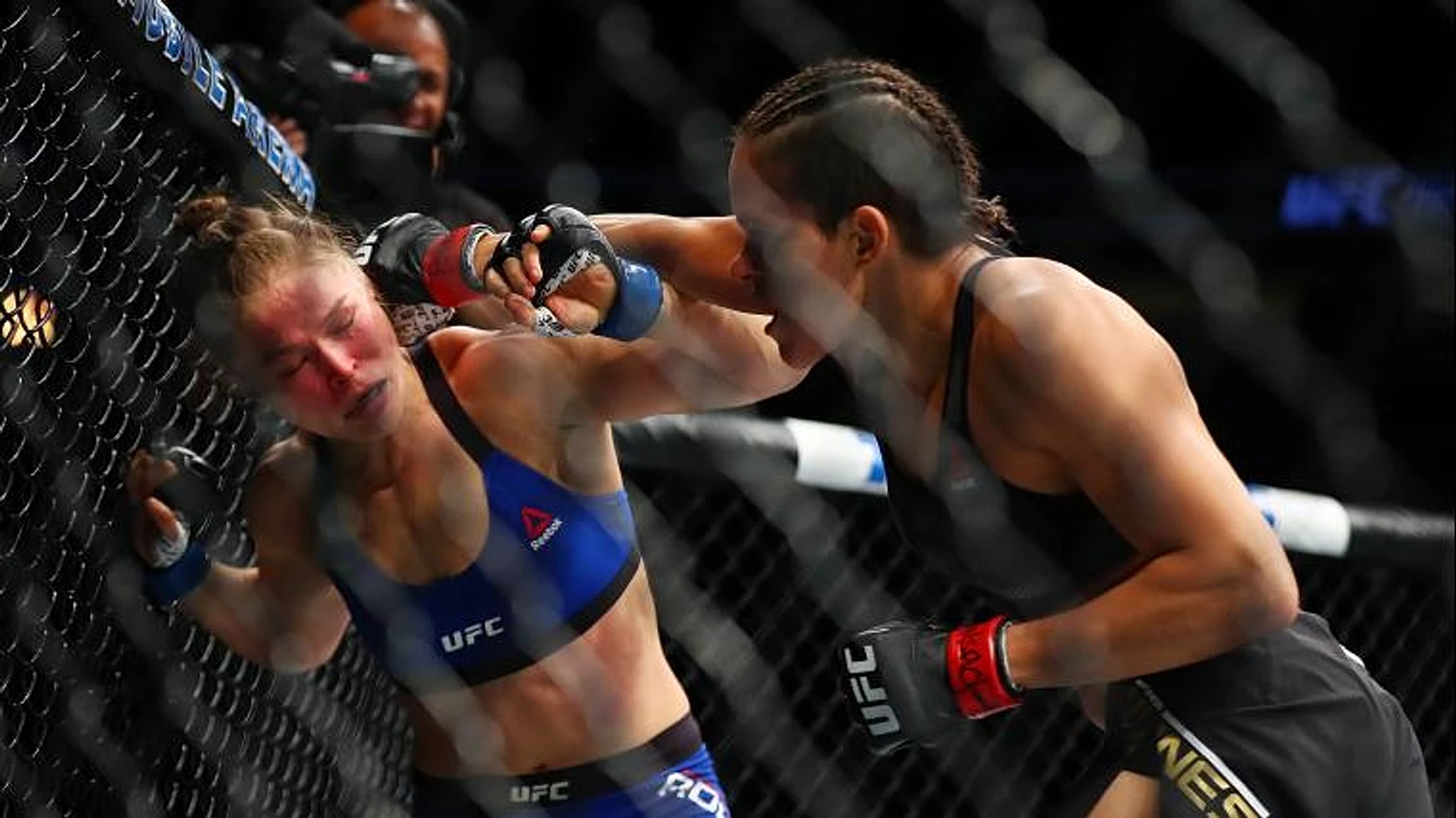
Ronda Rousey was once the undisputed queen of the UFC—a trailblazer who took the sport by storm. But every champion meets their match, and for Rousey, that moment came on December 30, 2016, in a fight that lasted just 48 seconds. It was a brutal, unforgettable end to an era.
That night, Rousey stepped into the Octagon at T-Mobile Arena in Las Vegas to face Amanda Nunes, a hungry contender who many had underestimated. Despite Rousey being a -150 favorite in front of over 18,500 fans, Nunes came in as a +120 underdog—a disrespectful line, as history would prove. From the opening bell, Nunes was relentless, using Rousey's head as target practice before delivering a devastating knockout that silenced the crowd.
For Rousey, this was supposed to be a comeback. After a shocking loss to Holly Holm earlier that year, she had spent 12 months away from the spotlight, barely participating in fight week activities. The question on everyone's mind: could the former bantamweight champion reclaim her throne, or was she destined to fall again? The answer came swiftly.
That loss marked not just the end of Rousey's UFC career, but the beginning of Nunes' legendary reign. Nunes would go on to become a two-division champion—the only fighter in UFC history to simultaneously defend two belts. A Pan American Jiu-Jitsu gold medalist, she had already beaten top contenders like Valentina Shevchenko and Miesha Tate before facing Rousey, and she continued her dominance long after.
As for Rousey, she eventually stepped away from the cage, finding success in WWE and Hollywood. But now, in 2026, she's announced a return to combat sports, set to face Gina Carano. It's a comeback that has fans wondering: can she rewrite her legacy, or will the ghosts of that cold December night still linger?
For any MMA fan, the story of Rousey vs. Nunes is a reminder of how quickly the tide can turn in the fight game. It's a chapter that changed the sport forever—and one that still resonates every time a fighter steps into the Octagon.