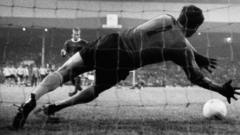
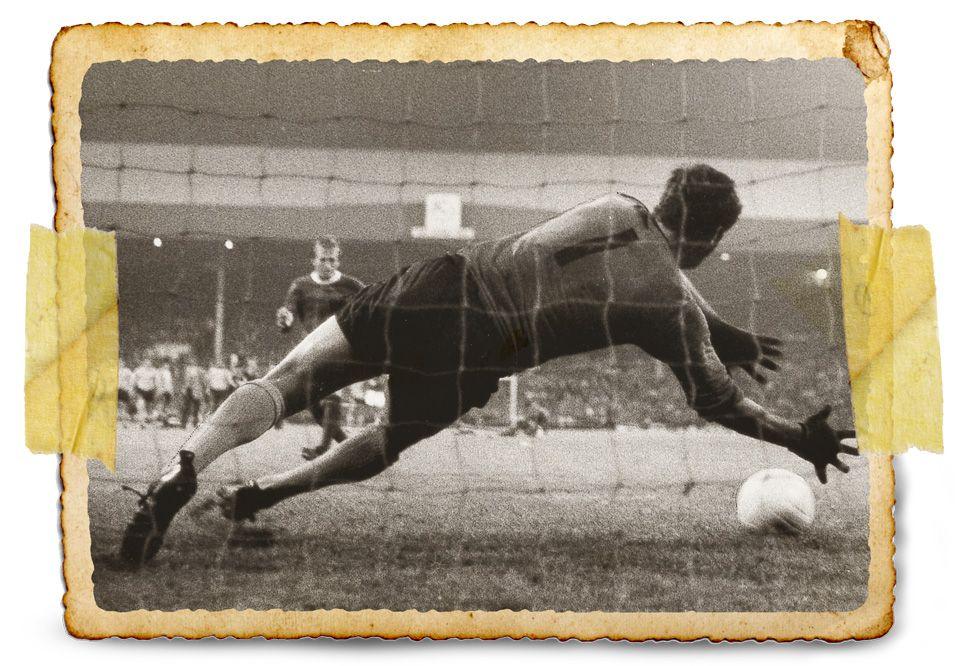
Martyn Kelly remembers wishing he had a stool to climb on like the rest of the kids in the ground to get a better view.
The world's first official penalty shootout was not something he wanted obscured by other people's heads.
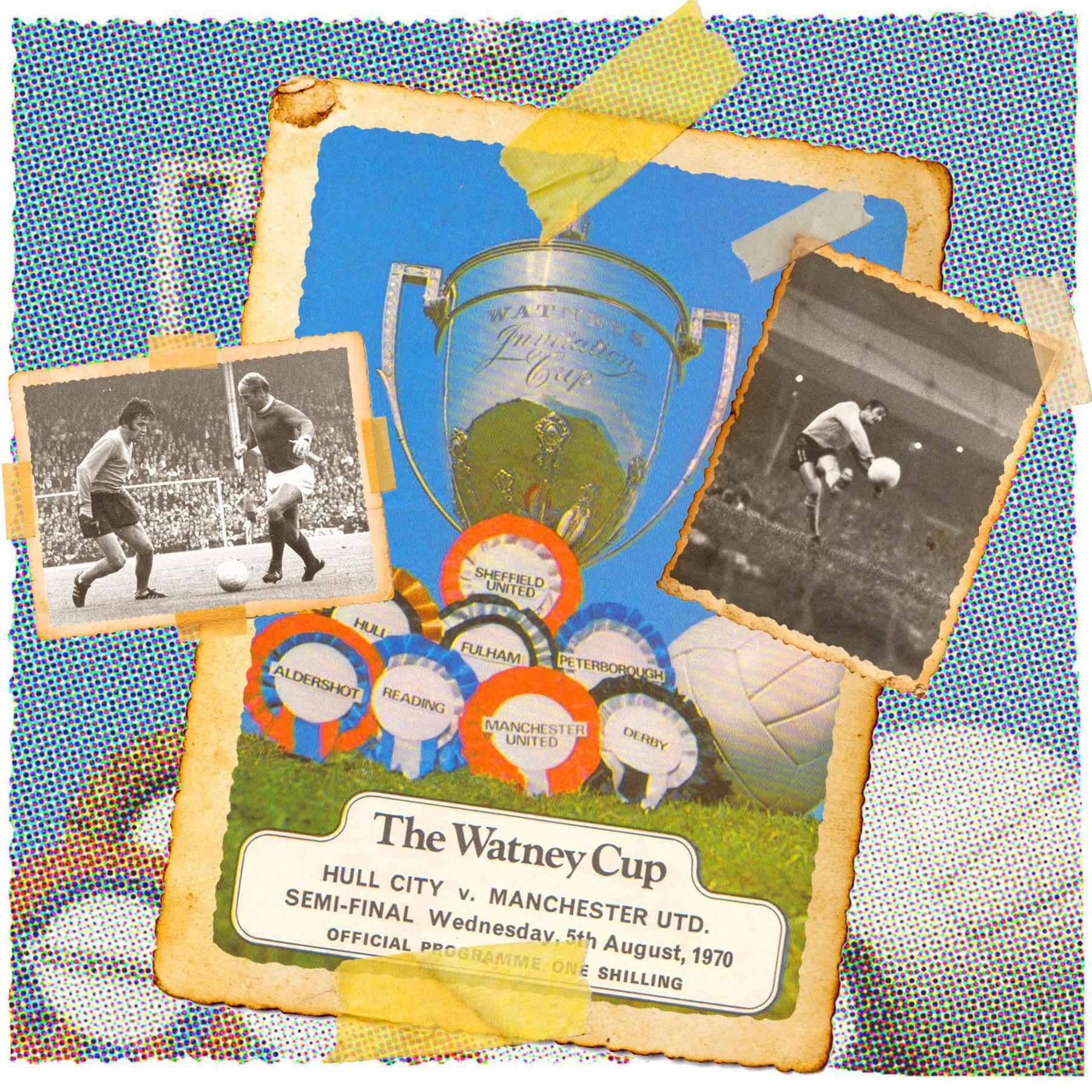
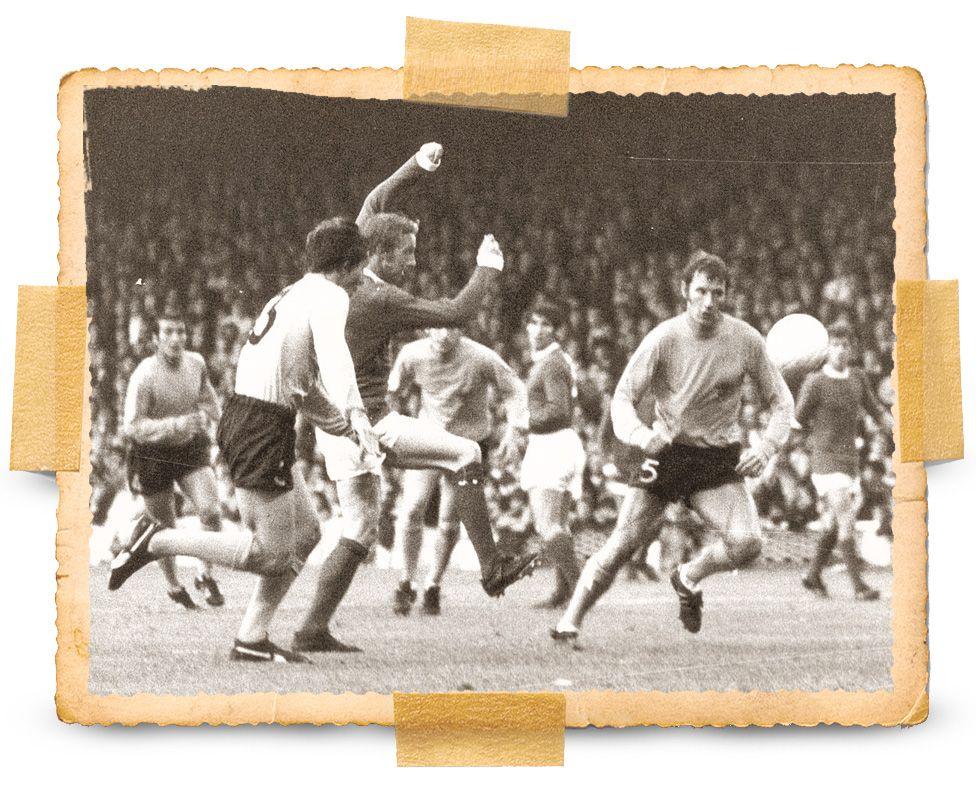
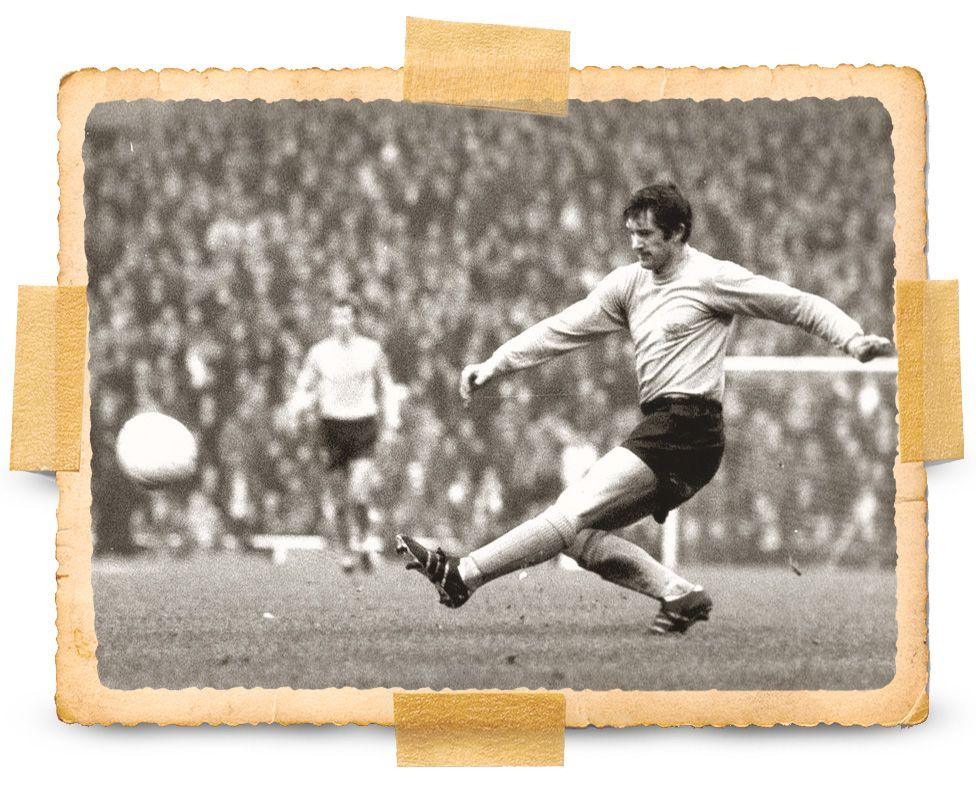
On a warm evening on 5 August 1970 at Boothferry Park in Hull, a star-studded Manchester United reached the end of extra time level at 1-1 with second-tier Hull City in a cup match.
Six weeks earlier, football's lawmakers had decided to end the days of the coin toss to decide winners in favour of five players from each team taking a kick from 11 yards out with just the keeper to beat.
"Blimey," thought then 11-year-old Hull City fan Kelly. "It's George Best, one of the greatest players ever. He's going to take the first penalty in the world's first penalty shootout."
No-one knew yet that this new method of deciding a tied football match would become a nerve-shredding experience some fans, players and managers can barely watch.
Image source, Hull CityImage caption, The Watney Cup was a pre-season competition from 1970 to 1973 that featured the highest scoring teams from the top four divisions (with some exceptions)
Before this, cup or knockout matches that ended in draws were settled by replays, by drawing lots or tossing coins.
At the 1968 European Championship, Italy went through to the final after a correct heads-or-tails guess following a 0-0 draw against the Soviet Union. The final against Yugoslavia then ended 1-1 and Italy eventually won 2-0 two days later when the sides reconvened for a replay.
For those who were not fans of the existing ways to break a deadlock, the final straw came four months later.
When Israel's captain pulled a piece of paper saying 'no' out of a big sombrero hat that determined his side had lost their 1968 Olympic quarter-final to Bulgaria after a 1-1 draw, some within his country's footballing governing body were furious.
Israeli Football Association official Yosef Dagan said there must be a better way to decide these big moments – or at least one that was, theoretically, less to do with luck and more to do with skill.
Dagan and Michael Almog – who went on to become Israel FA chief - developed the idea of a penalty shootout before writing an official proposal to Fifa in 1969. It was published in the governing body's official magazine.
In the letter, Almog proposed "to stop this way of deciding the winner by drawing lots, an immoral and even cruel system for the losing team and not honourable for the winner".
He called for it to be replaced by a shootout of five penalties for each side. If the teams were still level after that then it would continue until one side missed and the other scored.
The suggestion was heavily debated before eventually being adopted by football's lawmakers, the International Football Association Board (Ifab), at its AGM in Inverness on 27 June 1970.
Aside from drawing lots, tossing coins and replays, there had been other ways over the years to settle draws, including sharing titles or counting corners, and there had also been versions of penalty shootouts at some domestic and minor competitions.
When BBC Sport asked Fifa to confirm whether the Watney Cup shootout was the first official penalty shootout, world football's governing body replied that is does not have "any records confirming or denying the claim".
The National Football Museum does, though, refer to it as the first shootout in England.
Various competitions, including the full rounds of the FA Cup until two seasons ago, still continued to use replays. It was not until 1990-91 that the FA Cup introduced penalties if teams were level after extra time in a replay.