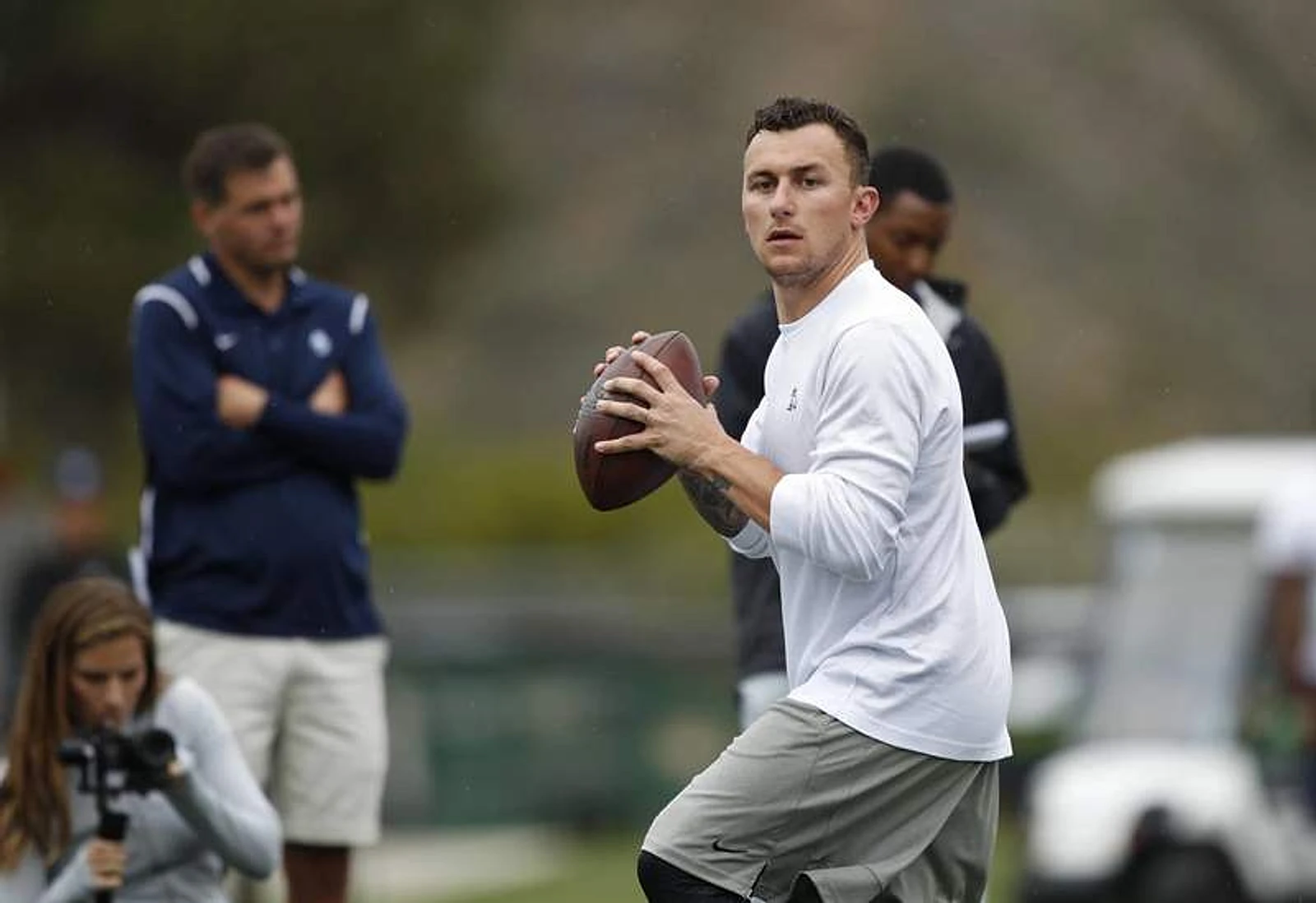


In the book “The Browns Blues,” Cleveland sports columnist Terry Pluto revealed that ahead of the 2014 NFL Draft, the Cleveland Browns owner Jimmy Haslam, along with the team’s marketing department and fan base, wanted Texas A&M quarterback Johnny Manziel. The only key voice pushing back was then-CEO Joe Banner.
Banner leaned heavily on analytics and structured planning, which is why he had already begun preparing for the draft, including evaluating quarterbacks like Teddy Bridgewater. But Haslam moved on from Banner and promoted Ray Farmer to general manager months before the draft weekend.
Under Farmer, the Browns spent $100,000 on a detailed study analyzing quarterbacks over a 20-year span. The goal was simple. Identify the traits that translate to NFL success and apply that model to the 2014 class. The conclusion was clear. Bridgewater graded out as the top option, aligning with Banner’s earlier evaluation.
But Farmer approached things differently. The Browns still had an analytics department, led by Ken Kovash, and the data supporting Bridgewater was available. However, Farmer didn’t fully operate through that lens. He valued the numbers, but didn’t lean on them as the deciding factor. So the study existed, the data were there, but it wasn’t prioritized in the final decision.
In the end, the Browns selected Johnny Manziel, aligning with what ownership, marketing, and the fan base wanted. Behind the scenes, though, Manziel had already seen 21 teams pass on him, including the Browns. While waiting during the draft, he texted then-quarterbacks coach Dowell Loggains, saying he wanted to “wreck the league” in Cleveland.
Loggains forwarded that message to head coach Mike Pettine, who ultimately traded up to draft Manziel, passing on Bridgewater despite the investment in that evaluation.
The outcome didn’t match expectations. Johnny Manziel made his first start against the Cincinnati Bengals in Week 15 and struggled, completing 10 of 18 passes for 80 yards with two interceptions while taking three sacks in a 30-0 loss. He lasted just two seasons in Cleveland, finishing with a 2-6 record before his NFL career came to an end.
Bridgewater, meanwhile, went on to win Rookie of the Year with the Minnesota Vikings, starting 12 games, winning six, and throwing for 2,919 yards with 14 touchdowns. He followed that up with a Pro Bowl season, recording 3,231 yards and 14 touchdowns with just 9 picks, while leading Minnesota to the playoffs.
To put it simply, Cleveland chose the quarterback they were drawn to, not the one their own evaluation had identified as the best option in that draft class. And the way things have been shaping up for over a decade, the Browns have struggled to find stability under center, with the franchise never developing a quarterback since its return to the league.
Ahead of the 2014 NFL Draft, several factors shaped how teams viewed Teddy Bridgewater. Some were sold on his production and leadership after guiding Louisville to a 30-9 record. Others, meanwhile, questioned his frame at 6-foot-3 and 196 pounds. Joe Banner, however, had already built a strong evaluation profile on him.
According to Bridgewater’s former offensive coordinator Shawn Watson, the Browns likely spent more time scouting Louisville and Bridgewater in person than any other team, with a heavy focus on practice sessions rather than just games. But just three months before the draft, owner Jimmy Haslam moved on from Banner and promoted Ray Farmer to general manager, leading Cleveland to draft Johnny Manziel.
Bridgewater, meanwhile, made his own preference clear during an appearance on The Dan Patrick Show. He said he wasn’t interested in landing in Cleveland and instead hoped to join the Vikings.
“There was a chance, but I actually told my agent that’s not the place where I wanted to be. Throughout the entire process I felt comfortable with the Minnesota Vikings,” he said.
That path did come with its own challenges. Bridgewater later struggled to find long-term stability after a serious non-contact injury sidelined him for the 2016 and 2017 seasons. As for Cleveland, the search for a franchise quarterback has continued. The recent reports link them to Shedeur Sanders, while others suggest they could explore additional options in the draft. How that trajectory unfolds remains to be seen.