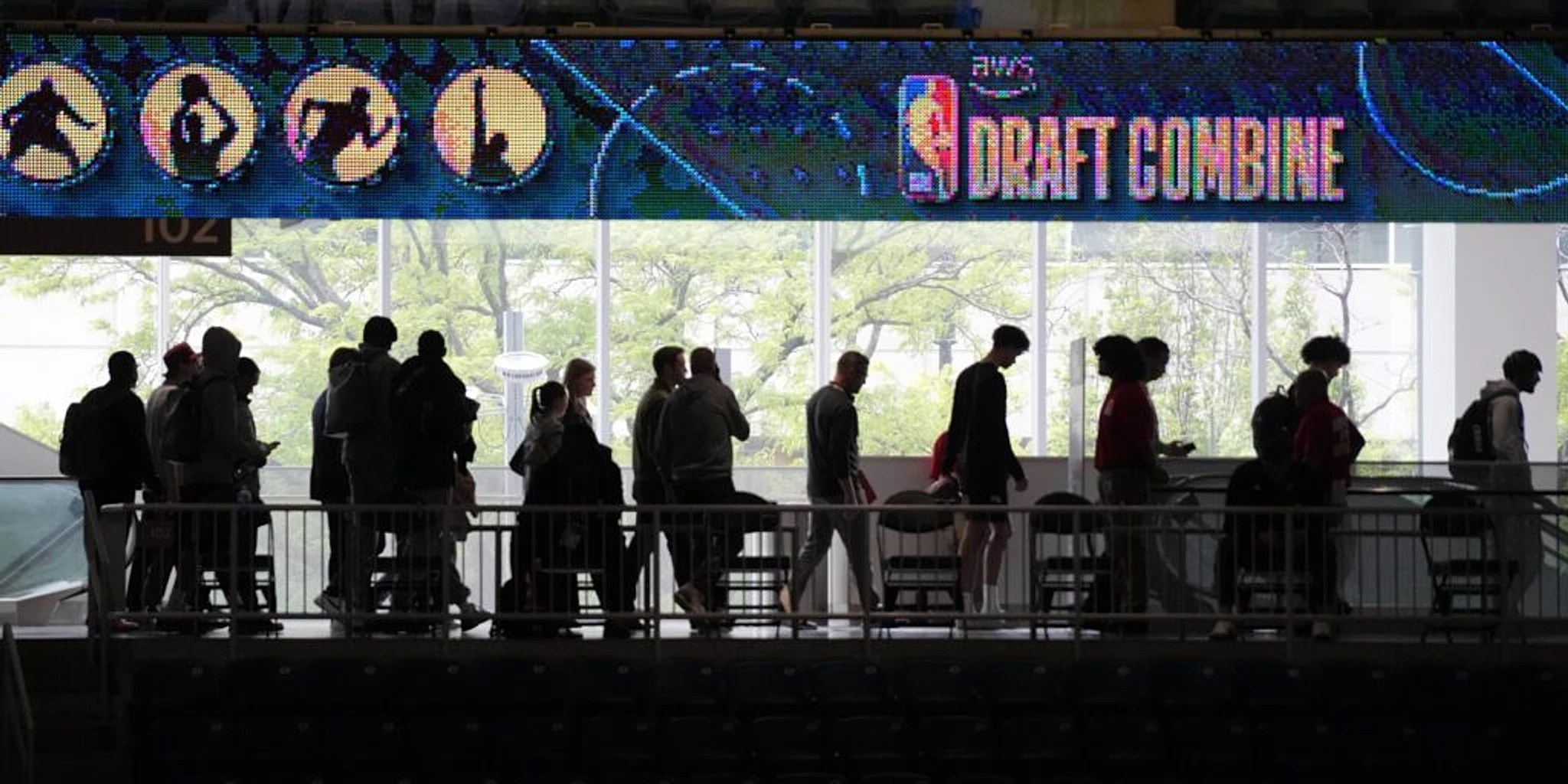
When Washington Wizards GM Will Dawkins looks at the upcoming NBA Draft, he sees a problem that didn't exist five years ago—and it's spelled N-I-L.
Back in 2021, more than 360 collegiate underclassmen threw their hats into the NBA Draft ring. Fast forward to this year, and that number has cratered to just 71. The culprit? Name, Image, and Likeness (NIL) deals have fundamentally changed the calculus for young basketball stars.
Here's the reality: unless you're a guaranteed lottery pick, staying in college can now be more lucrative than going pro. Elite players can rake in millions through NIL deals and transfer portal opportunities—often more than they'd earn as a late first-round pick, let alone a second-round selection. Why risk being a draft afterthought when you can be a campus king?
Dawkins, whose Wizards hold the coveted No. 1 overall pick in the 2026 NBA Draft, didn't mince words during Tuesday's ESPN2 appearance at the NBA Draft Combine in Chicago. He described how NIL has "diluted" this year's draft class, and he's not just talking about the present. The NCAA's expected five-for-five eligibility rule—which would give athletes five years of eligibility starting after they turn 19 or graduate high school—could amplify this trend for years to come.
"It's something we've talked about in our general manager meeting," Dawkins explained. "How NIL could potentially dilute this draft, but even in future drafts with the 5-for-5 rule... I think you saw in the middle of the first round this year, a good amount of guys went back to get financial stability in college and continue to develop for what they might deem is a weaker draft next year."
According to Dawkins, agents are getting strategic too, advising clients to hold off for more favorable draft conditions. The result? "We're really going to feel it in the second round with the guys that chose to go back to school."
For NBA front offices, this creates a new challenge—and a new opportunity. "It's going to be a little diluted this year, so it makes our work a little bit harder," Dawkins admitted. "But also opens an opportunity to make sure you're scouting overseas and making sure you have stash candidates, things of that nature."
The bottom line? NIL is changing the game at every level. It's making college basketball stronger and more competitive, but for NBA teams looking to build through the draft, the talent pool just got a lot shallower. As Dawkins put it simply: "NIL is real, it's really impacting players."