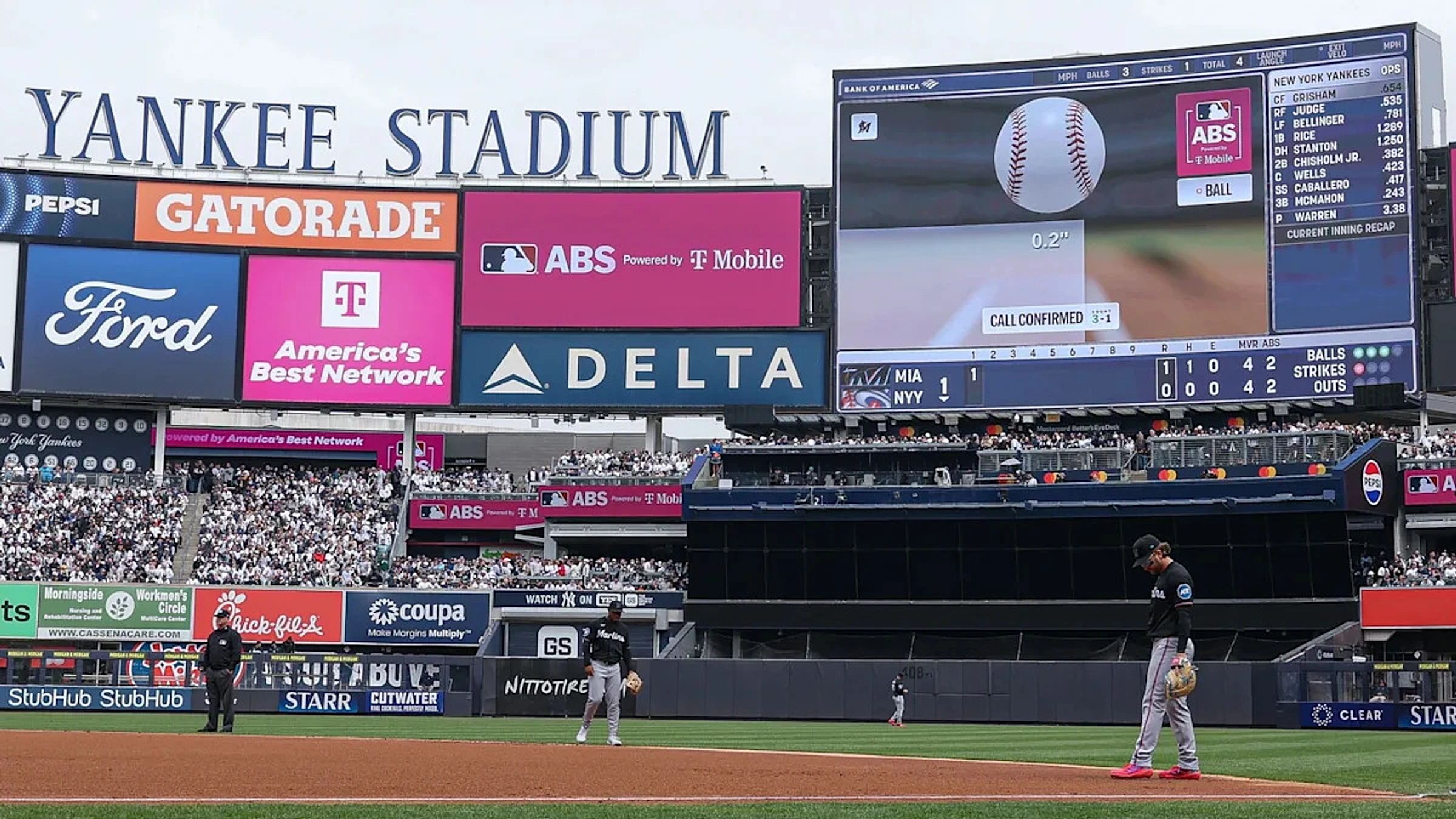
The first full month of Major League Baseball’s historic season with robot umpires has brought significant changes to the game, from more walks to longer game times and a notable shift in where pitches are thrown.
Walks have surged by 7.3% compared to last April, while the average game time has stretched by five minutes. The biggest culprit? Pitches in the strike zone have dropped to 47.3%, down from a record high of 50.6% last year. That’s the second-lowest mark through the first full month since tracking began, trailing only 2010’s 47.2%.
“I think it’s the same thing that happened in the minor leagues. So I don’t think this is unexpected at all,” said Chicago Cubs president of baseball operations Jed Hoyer. “I think it’s our job to make those adjustments.”
The Automatic Ball/Strike System (ABS) has upheld 53.4% of challenges (1,030 out of 1,928), with catchers finding far more success than batters when questioning calls. This new technology uses a precise strike zone based on the midpoint of home plate and batter height percentages, rather than the traditional rule book definition. As Baltimore Orioles manager Craig Albernaz put it, “The strike zone was always the umpire behind home plate, his representation or judgment of the strike. I think now is the first time ever we actually have a clear strike zone.”
If the current walk rate holds over a full season, it would be the highest since 2000 and the ninth highest in major league history. However, there’s a silver lining: walks have actually declined since Opening Day, averaging 6.98 per game from April 21-30.
Other stats are mixed. Average attendance is up 2.8%, and the league batting average has inched up one point to .243. Home runs are being hit at the same rate as last year, while stolen bases and success rates have dipped slightly. For fans and players alike, the takeaway is clear: baseball is adjusting to a new normal, and the game’s pace and strategy are evolving right along with it.