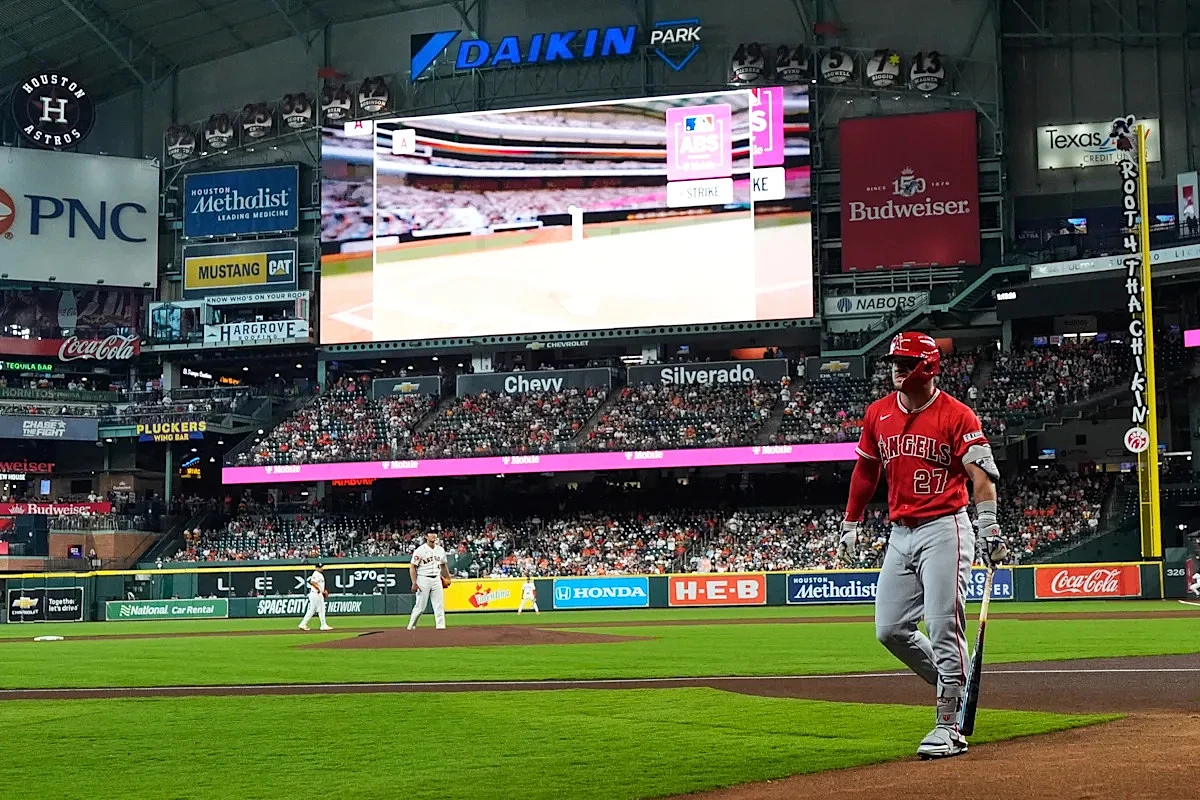
Major League Baseball's first season with robot umpires is already reshaping the game in unexpected ways. Through the first full month, walks have surged 7.3%, pitches in the strike zone have dropped significantly, and the average game time has stretched by five minutes. While home runs are holding steady at last year's rate, stolen bases and success rates have declined. Attendance, however, is up 2.8%, and the league-wide batting average inched up one point to .243.
The Automatic Ball/Strike System (ABS) has upheld 53.4% of the 1,928 challenges so far, with catchers proving far more successful than batters. Walks are averaging 6.98 per game through April—up from 6.8 last year—and if this pace continues, it would mark the highest walk rate since 2000 and the ninth highest in MLB history. Notably, walks have been trending downward since the season's start, averaging 6.98 per game from April 21-30.
Chicago Cubs president of baseball operations Jed Hoyer isn't surprised. "I think it's the same thing that happened in the minor leagues. So I don't think this is unexpected at all," he said Friday. "I think it's our job to make those adjustments."
Pitches in the strike zone have fallen to 47.3% of all offerings, down from a record high of 50.6% last year, according to MLB Statcast. That's the second-lowest rate through the first full month since tracking began, trailing only 47.2% in 2010. The previous low was 47.5% in 2019 and 2020. This year's drop is particularly notable because Statcast switched to the ABS version of the strike zone, which measures balls based on where they cross the midpoint of home plate—8.5 inches from the front and back—rather than the traditional cube-shaped zone.
"The strike zone was always the umpire behind home plate, his representation or judgment of the strike," Baltimore Orioles manager Craig Albernaz explained. "I think now is the first time ever we actually have a clear strike zone."
Under ABS, the top of the strike zone is set at 53.5% of a batter's height, and the bottom at 27%, replacing the rule book's definition of the top as the midpoint between the top of the shoulders and the top of the uniform pants. This shift is already forcing pitchers, catchers, and hitters to adapt to a more precise—and arguably more consistent—strike zone.