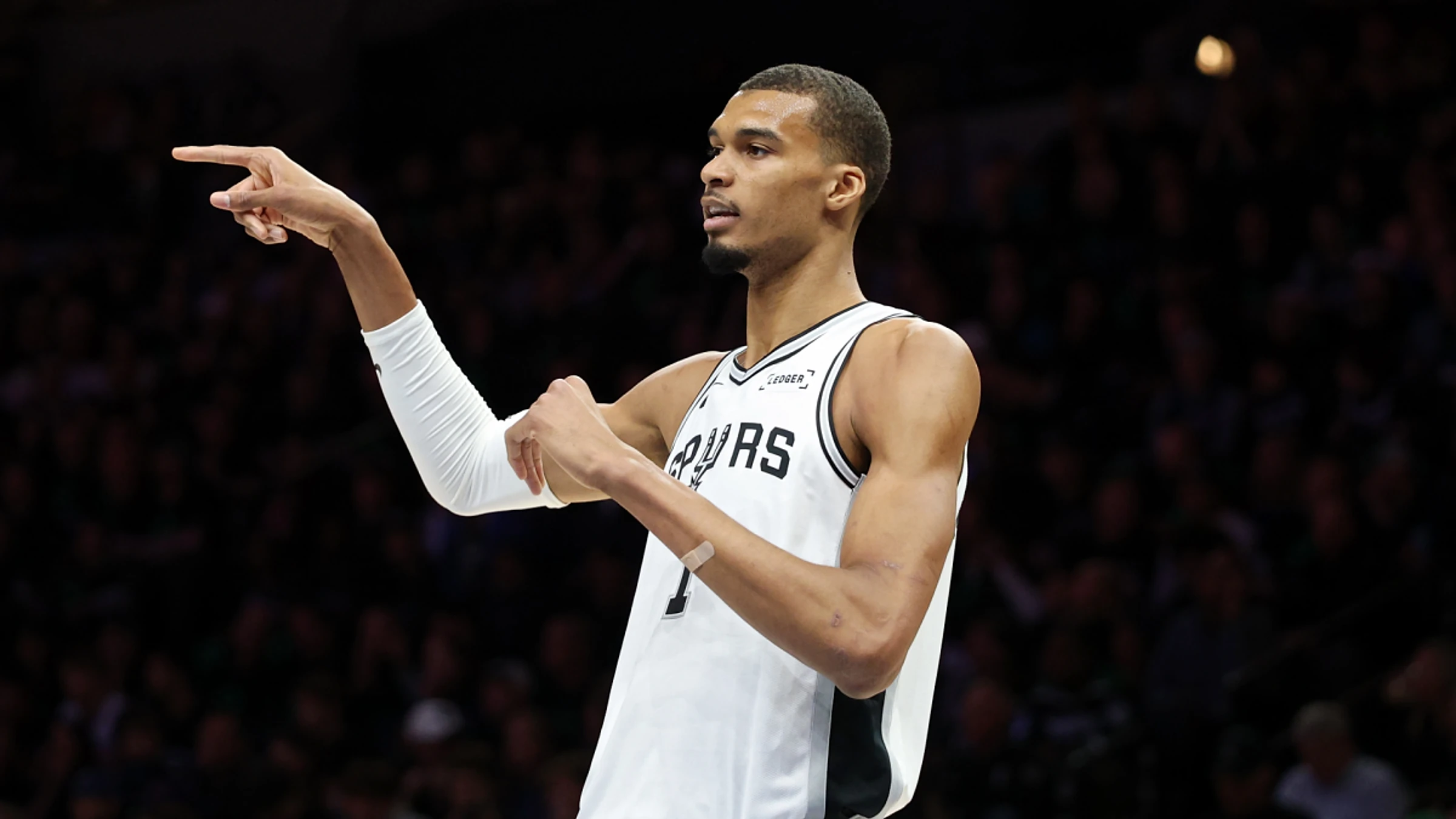
In a move that has Spurs fans breathing a collective sigh of relief, the NBA has confirmed that Victor Wembanyama will face no additional punishment following his ejection in Game 4 against the Timberwolves. The league’s decision, first reported by ESPN, means the towering French sensation will be on the court and ready to go for the pivotal Game 5.
The drama unfolded Sunday night when Wembanyama caught Naz Reid with an elbow to the chin, a play that officials upgraded to a Flagrant 2 foul after review. The call meant an automatic ejection for the 7-foot-4 rookie, and for a moment, it looked like the Spurs might be facing the unthinkable: heading into a must-win playoff game without their superstar. But as the dust settled, the league opted not to escalate the matter further.
So, why no suspension? Let’s break down the logic, the rulebook, and a little bit of playoff history.
First, the rulebook isn’t as cut-and-dried as you might think. The NBA’s guidelines are crystal clear on punches—those carry an automatic one-game suspension at minimum. But an elbow? That falls into a gray area, giving the league office discretion to weigh the circumstances. In Wembanyama’s case, officials had several factors to consider: his clean disciplinary record, the context of a heated playoff series, and precedent from similar incidents.
History offers a useful contrast. In 2012, Metta World Peace earned a seven-game suspension for a vicious elbow to James Harden, a penalty that reflected his reputation as a repeat offender. That was never going to be the standard here. A more relevant comparison is Hassan Whiteside’s 2016 elbow to Boban Marjanovic, which drew a one-game ban. But even that case differs—Whiteside’s incident occurred in a regular-season game, and his history factored in.
Wembanyama, by contrast, has no such baggage. He’s not a player known for crossing the line, and the league clearly took that into account. In the high-stakes environment of a playoff series, where every game carries monumental weight, a suspension would have felt disproportionately harsh. The NBA’s decision to let the on-court penalty stand—and nothing more—reflects a balanced approach: acknowledging the foul while recognizing the player and the moment.
For Spurs fans, the message is simple: Wembanyama will be in uniform, ready to make his presence felt. And for a team fighting to extend its postseason run, that’s the best news they could have asked for.