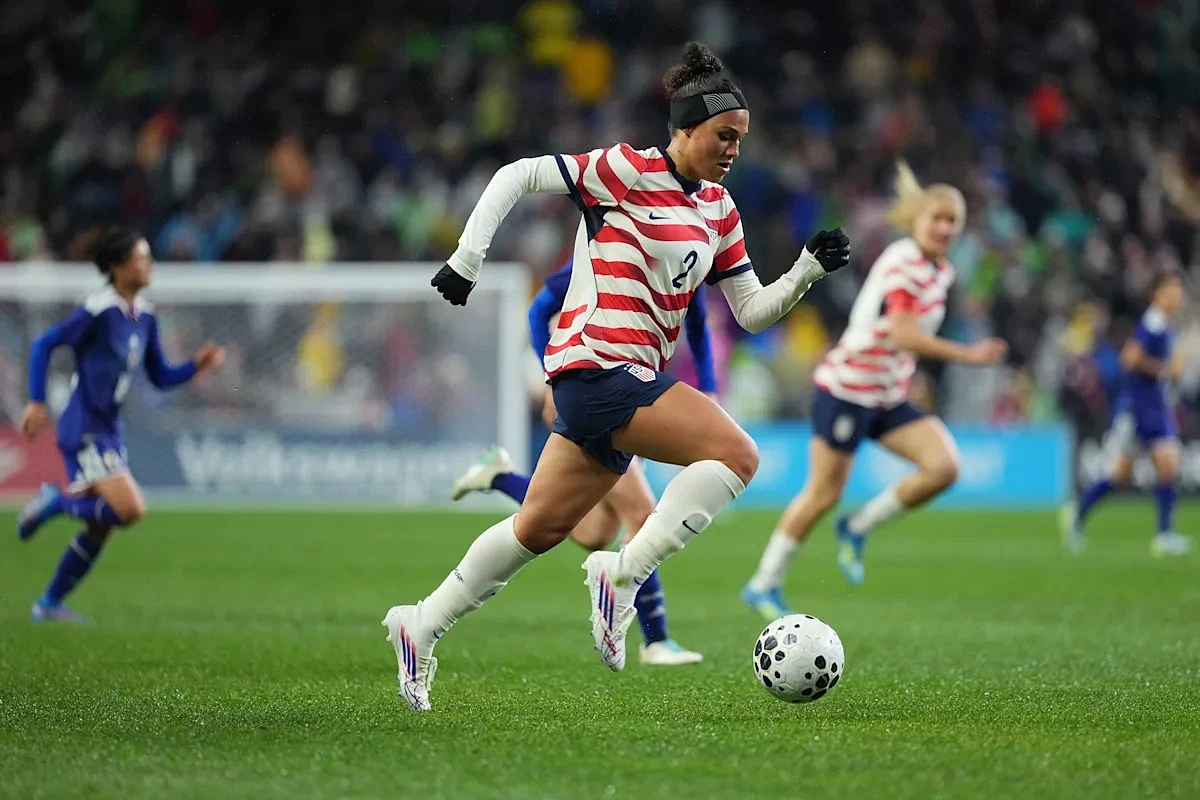
The numbers from the USWNT's April 14th match against Japan tell a story of dominance that didn't translate to the scoreboard. With 67% possession and a 12-9 shot advantage, the U.S. controlled the game but fell 1-0 to a clinical Japanese counter-attack, a goal scored by Tottenham's Maika Hamano.
This result ended a promising 10-game winning streak and marked the team's first shutout since late 2024. While the U.S. dictated play and created early chances at Seattle's Lumen Field, the decisive final touch was missing. The lack of precision in the attacking third proved to be the difference.
Midfielder Lindsey Heaps pinpointed the issue, stating, "We had a lot of control... but it's like, alright, with all that control, what can we do? It’s that finishing phase." Her comments underscore a critical focus for the squad: turning possession and pressure into goals.
This focus on connection comes at a pivotal time. Head coach Emma Hayes, who has evaluated a vast pool of 60 players since taking the helm, is now honing the core group for the challenges ahead. With World Cup qualifying on the horizon, building cohesion, especially in attack, is paramount.
That cohesion will be tested again in Friday's finale against Japan in Colorado. The task is heightened with key attackers like Mallory Swanson and Catarina Macario absent, and Sophia Smith working back to full match sharpness. The team's ability to be more clinical and find that final-third alignment is the clear objective. As Hayes emphasizes, the attacking third is where games are truly won and lost, making this final tune-up a crucial opportunity for refinement.