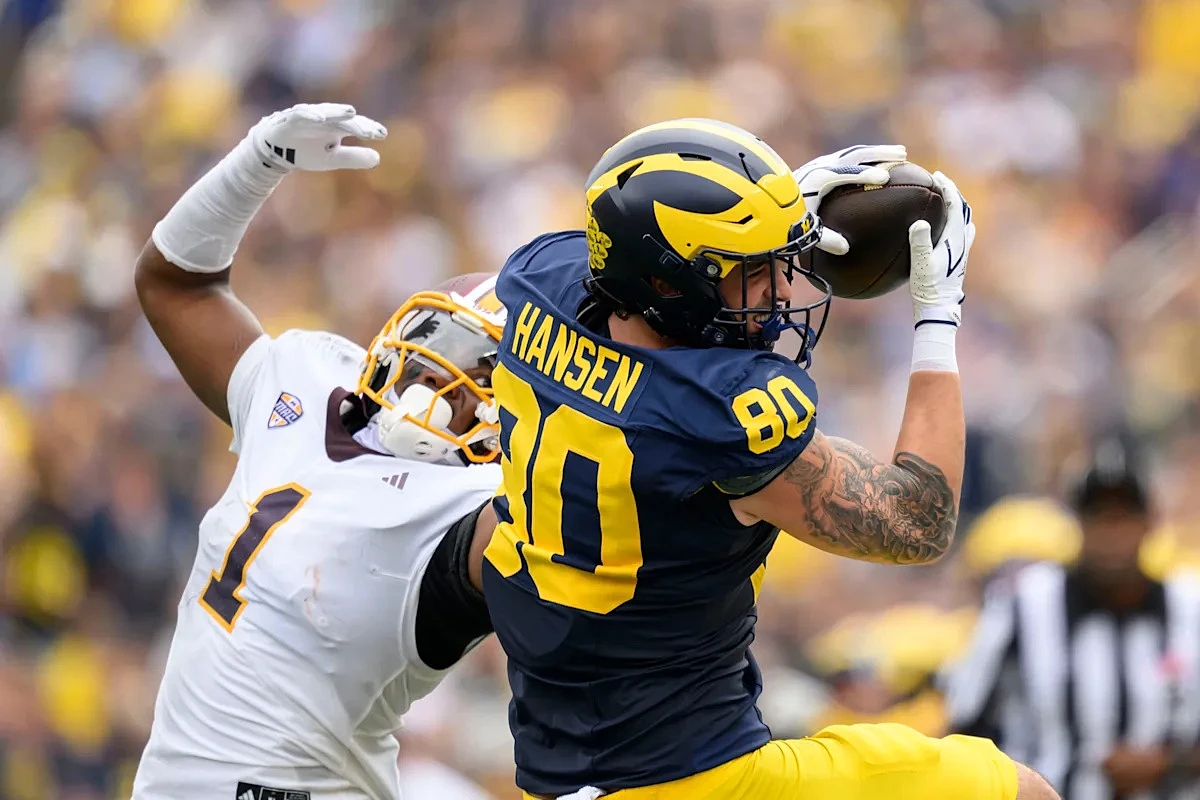
As Michigan football turns the page to a new era under head coach Kyle Whittingham, one position group is poised for a spotlight role: the tight ends. Known for his successful tenure at Utah, Whittingham's arrival in Ann Arbor signals a fresh offensive philosophy, and early indications suggest the tight ends will be central to the attack.
This Saturday's spring game at Michigan Stadium will offer fans a first glimpse of the evolving scheme. For players like Hogan Hansen and Deakon Tonielli, it's a prime opportunity to showcase their skills and make a statement for the upcoming season. Both are looking to rebound and thrive with a clean slate under the new coaching staff.
Hansen, whose 2023 campaign was derailed by shoulder and soft-tissue injuries, is now reportedly in the best health of his Michigan career. "This is the healthiest I've been, honestly, since I've been here," he told reporters, expressing optimism about his potential impact. While the core tight end responsibilities remain familiar, Hansen hinted at new wrinkles, including more perimeter assignments and blocking roles that could diversify the offense.
The departure of reliable target Marlin Klein to the NFL Draft leaves a production gap, but also a significant opportunity. Last season, despite injuries across the unit, tight ends remained a key part of the passing game. Now, with a full offseason in Whittingham's system, players like Hansen and Tonielli are focused on becoming versatile, every-down weapons who can block in the trenches and create mismatches downfield.
For Michigan fans and followers of offensive trends, the development of this group is a storyline to watch. A dynamic tight end corps can be a quarterback's best friend and a defensive coordinator's nightmare, adding a powerful, flexible dimension to any playbook. As the Wolverines install their new identity, all eyes will be on how these athletes are utilized to control the middle of the field and beyond.