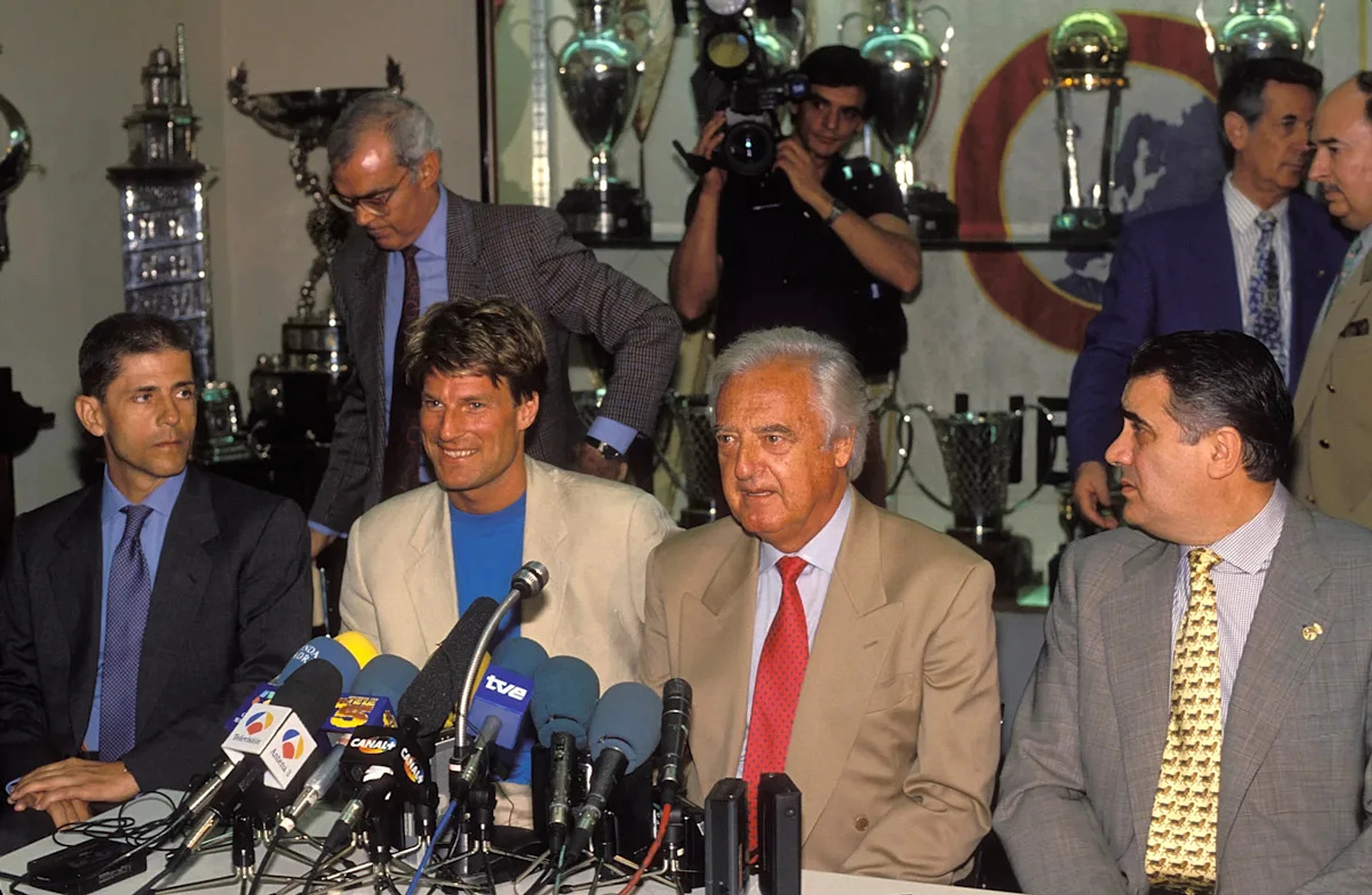
When Florentino Pérez stepped to the podium on Tuesday to call for fresh presidential elections at Real Madrid, the atmosphere was surreal. In all likelihood, he and his board will run unopposed, continuing their reign without drama. But it wasn't always this way. There was a time when the Real Madrid presidency was a battleground, with campaigns that kept fans on the edge of their seats.
Let's rewind to February 1995. Incumbent Ramón Mendoza seemed set for an easy win. His challengers? A 47-year-old construction businessman named Florentino Pérez—making his first bid—and a third candidate, Santiago Gómez Pintado. The race turned fierce. Four televised debates aired, including one on Telemadrid moderated by José Joaquín Brotons. Tensions ran so high that the candidates refused to sit at the same table, forcing the debate into three separate pairings. When the votes were tallied, Mendoza won with 15,203 (45.2%), edging out Pérez's 14,505 (42.8%), and Gómez Pintado's 4,154 (12%). The margin was just 700 votes, and controversy lingered.
But Mendoza's victory was short-lived. The club's finances were in turmoil, and on November 20, 1995—less than nine months after his re-election—he resigned. Instead of a fresh election, the board elevated Lorenzo Sanz, a director who reportedly carried the largest share of the club's financial guarantees. Sanz finished Mendoza's term, then stayed on for nearly five years, overseeing two Champions League triumphs in 1998 and 2000. Ultimately, though, he fell to Florentino Pérez in the 2000 election—a rematch that changed the club's history.
Fast forward to July 2006, and Real Madrid witnessed its closest presidential race by raw margin. Florentino had resigned in February, leaving the door open. Five candidates qualified, an unprecedented number. The frontrunner was Juan Miguel Villar Mir, expected to dominate thanks to a strong postal vote. But on June 30, a Madrid court judge ordered the suspension of the postal ballot count—10,511 votes in total, with Villar Mir's team estimating around 4,500 were his. Only the in-person votes would decide the outcome, setting the stage for a dramatic finish that kept the football world guessing.