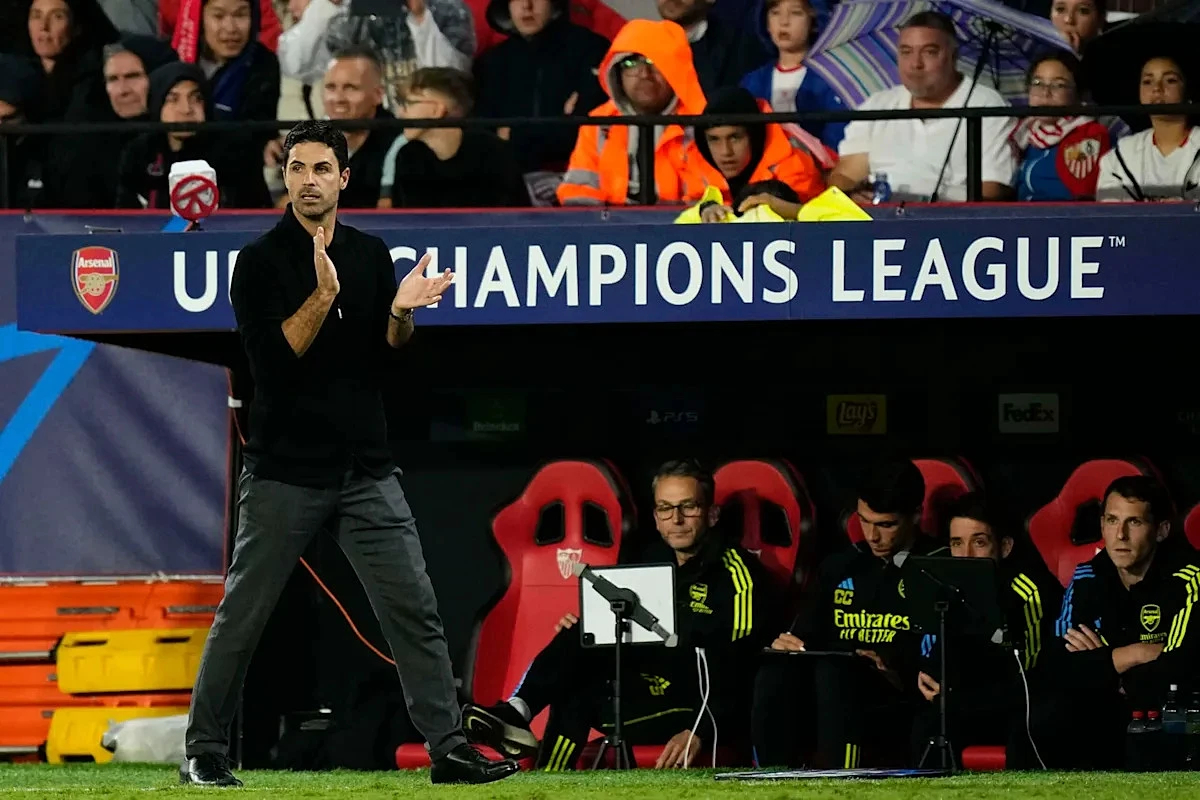
Arsenal's Champions League journey has hit a critical juncture, where tactical discipline could be just as important as technical skill. As the Gunners prepare to host Sporting CP in the quarter-final second leg, they carry a precious 1-0 aggregate lead from Lisbon, courtesy of Kai Havertz's late heroics. However, a significant disciplinary shadow looms over the Emirates, threatening to disrupt their momentum for a potential semi-final.
The tension centers on two key midfielders, Martin Zubimendi and Christian Norgaard, who are both one yellow card away from suspension. In the high-stakes theatre of the Champions League, where a single booking can alter a team's destiny, their every challenge will be scrutinized. Losing either player for a semi-final would force Mikel Arteta into an unwanted tactical reshuffle, potentially destabilizing the midfield balance and defensive structure that has been so effective.
Navigating this scenario requires a delicate balance of aggression and restraint. UEFA's rules state that players are suspended after accumulating three yellow cards, with bans also following subsequent odd-numbered cautions. The good news for Arsenal is a procedural lifeline: all yellow cards are wiped clean after the quarter-finals. This means if Zubimendi and Norgaard can avoid a booking against Sporting, they will start the next round with a clean disciplinary slate.
This sets the stage for a fascinating psychological battle within the match itself. The instinct to press, tackle, and break up play must be tempered by the long-term prize. Arsenal's mission is clear: protect their lead and advance to the last four, but they must do so with their key personnel intact. How Arteta manages this risk, and how his players walk the tightrope between competitive fire and calculated caution, could define their entire European campaign.