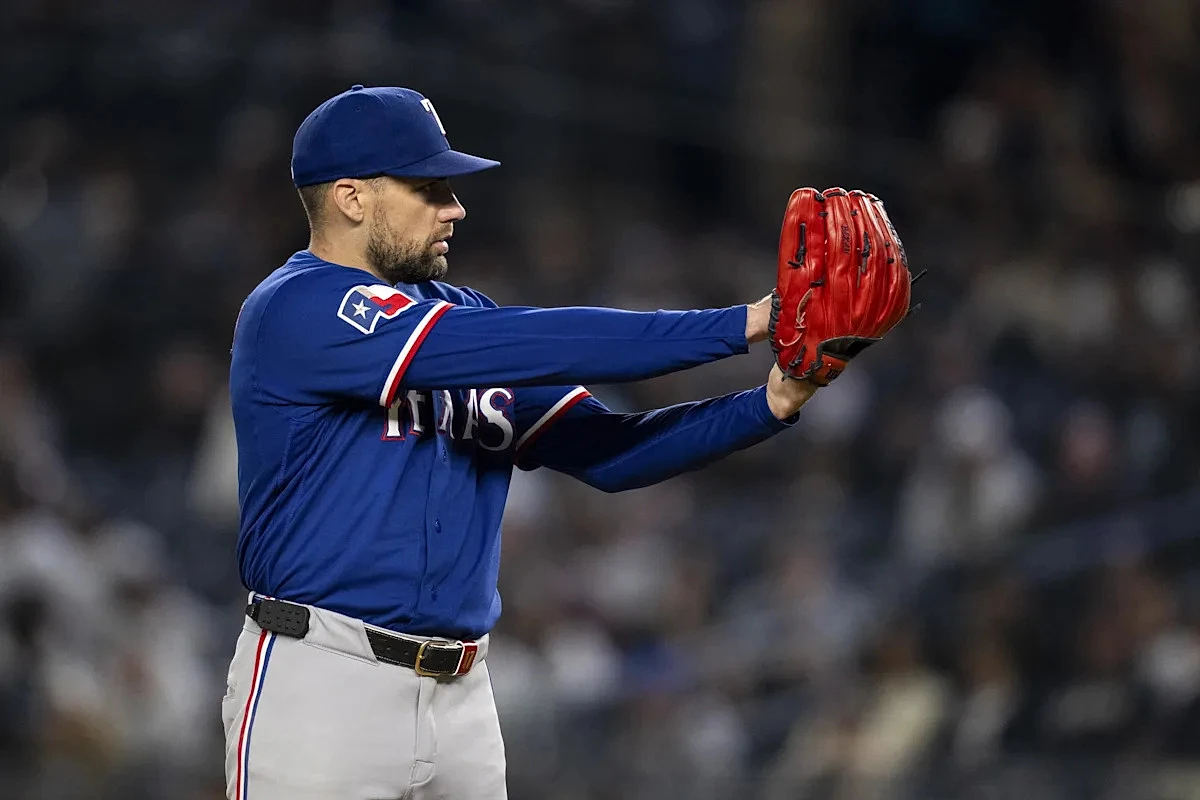
The Texas Rangers delivered a commanding 6-1 victory over the New York Yankees, proving they can hang with the American League's elite. It was a much-needed win against one of only two A.L. teams currently sporting a record above .500—a reminder of just how wide open the league is right now.
Nathan Eovaldi was the star of the show, turning in a masterful performance on the mound. Over eight innings, he racked up eight strikeouts on 101 pitches, relying heavily on his off-speed arsenal. Nearly two-thirds of his offerings were splitters or curveballs, with the curveball alone generating eight of his 19 whiffs. When he did go with heat, he leaned on his cutter 23 times, mixing in just nine four-seam fastballs and four sinkers. The only blemish? A solo home run by Aaron Judge—but honestly, that's almost expected these days.
The Rangers' bats provided plenty of support. Evan Carter and Corey Seager both went deep, giving the home crowd plenty to cheer about. With the win, Texas sits two games below .500, but they're just one game back of the Athletics and tied with the Mariners. That's the kind of parity we're seeing across the A.L. this season.
Speaking of parity, the Yankees (25-12) are tied with the Cubs for the second-best record in baseball, trailing only the 26-12 Atlanta Braves. The other A.L. team above .500? The Tampa Bay Rays, who are 24-12 and riding a six-game winning streak—their third such streak of the year. Baseball is weird like that.
Around the league, four teams have exactly 12 losses, while four others—the Astros, Angels, Giants, and Rockies—have 23 losses. And get this: six teams are sitting on exactly 20 losses. That's a lot of mediocrity in the middle.
On the radar gun, Eovaldi touched 96.8 mph with his fastball, averaging 95.0 mph, while reliever Jacob Latz hit 95.5 mph. At the plate, Jake Burger smoked a 109.1 mph single and a 103.0 mph groundout. Ezequiel Duran added a 107.6 mph double and a 102.3 mph sacrifice fly, while Evan Carter's home run left the bat at 99.6 mph. It was a night of hard contact and solid pitching—exactly the formula the Rangers need to keep climbing.