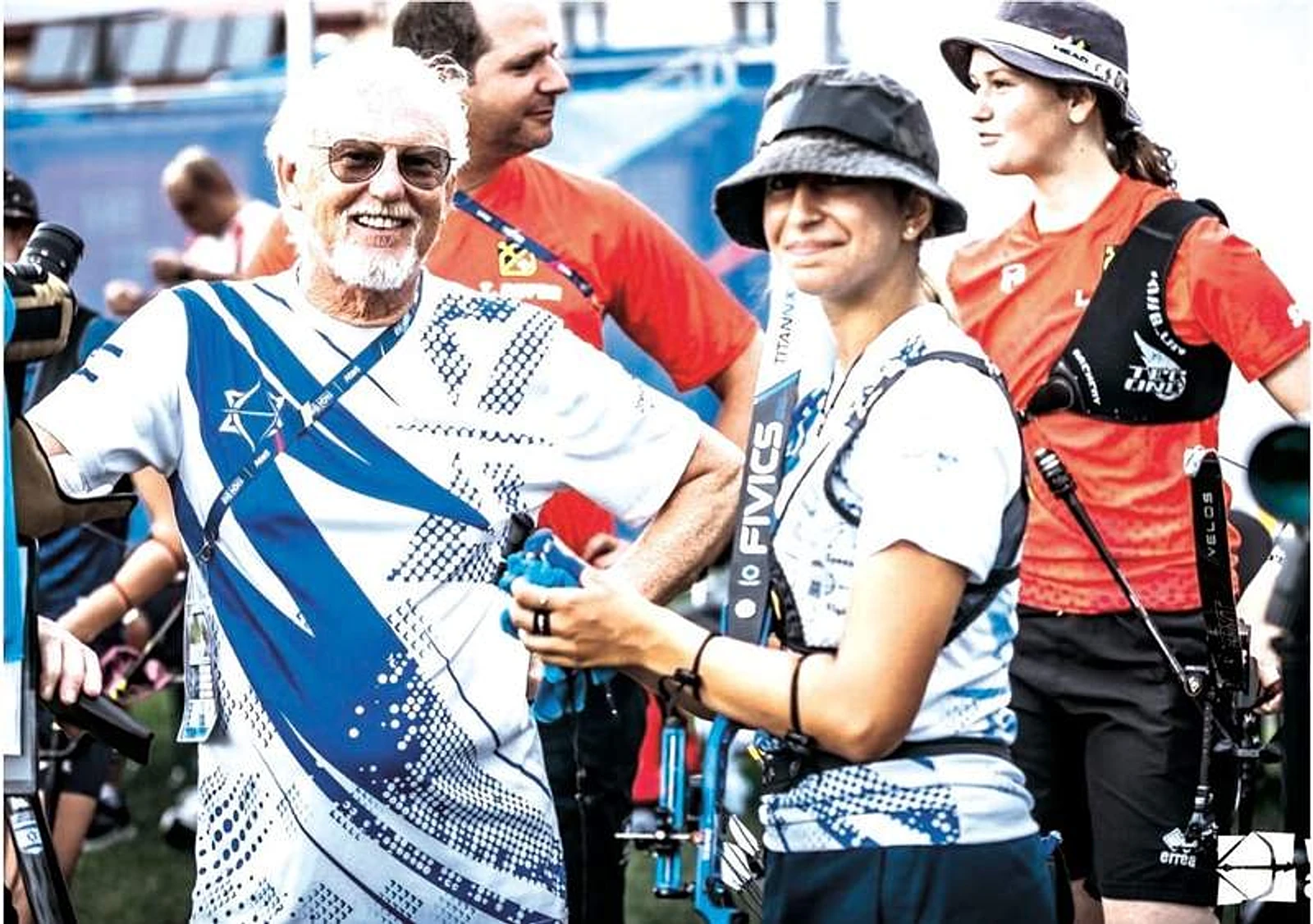
At 71 years old, Richard Priestman has returned home to Burscough—a quiet town nestled between Liverpool and Manchester—where the weather is, in his own words, "cloudy, miserable, and not nice." It's a far cry from the intensity of Tel Aviv or the pressure-cooker atmosphere of the Wingate Institute, where for the past four years, Priestman orchestrated nothing short of an Israeli sporting revolution.
Now, he's cleaning his apartment and "recharging" after leading a nation with virtually no archery pedigree into the global elite. But to understand why a 71-year-old Englishman would spend four years coaching in a conflict zone, you first need to understand the man himself.
Priestman isn't just a coach—he's a living archive of archery history. Born in 1955, his journey began when archery was transitioning from a traditional pastime into a high-stakes Olympic discipline. As a competitor, he embodied British grit, standing on the Olympic podium twice—earning bronze at the 1988 Seoul Games and again at the 1992 Barcelona Games. Those weren't just medals; they were masterclasses in mental endurance.
For decades, Priestman traveled the world as a global "missionary" for the bow. His passport tells the story of tenures in Brazil, Colombia, and Great Britain, where he led national squads through the Rio and Tokyo Olympic cycles. But Israel, he admits, was a different kind of puzzle entirely.
To appreciate Priestman's impact, you have to understand modern Olympic archery—and why it's so difficult to master in a country as "loud" as Israel. Archery is a sport of "closed skills," where the environment is theoretically stable, and success depends entirely on repeating an internal process with flawless precision. The archer stands 70 meters from a target that requires absolute stillness, focus, and control—qualities that are hard to cultivate amid the constant noise and tension of daily life in Israel.
Yet Priestman didn't just teach technique; he built a culture. He transformed a nation with almost no archery tradition into a contender on the world stage, proving that the right mindset—and the right gear—can overcome even the most challenging circumstances. For athletes and enthusiasts alike, his story is a powerful reminder that archery isn't just about hitting a target—it's about finding stillness in the chaos.