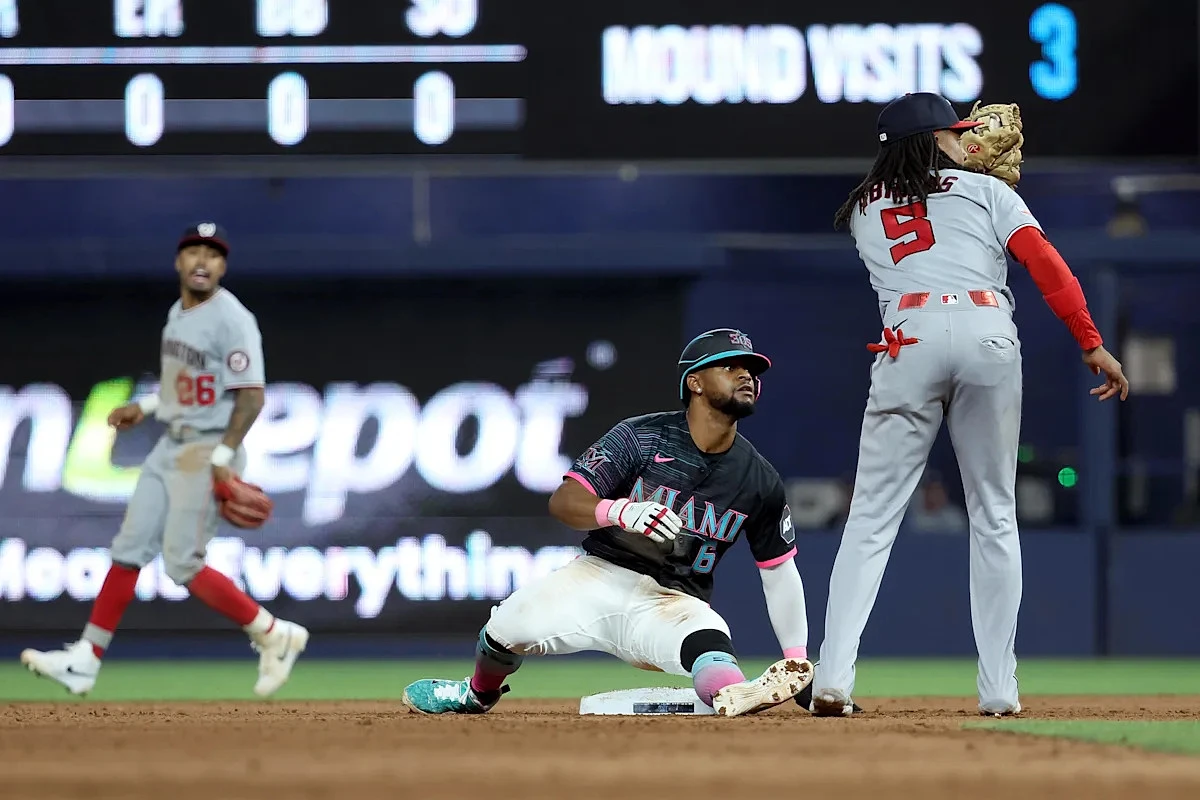
The Washington Nationals had a golden opportunity to climb back to .500 this afternoon, but a series of costly mistakes turned what looked like a sure victory into a frustrating defeat. After a blistering start that saw them jump out to a 4-0 lead through three innings, the Nats simply couldn't hold it together, letting the Miami Marlins storm back with seven unanswered runs.
Things couldn't have started much better for Washington. For the third time this season, rookie sensation James Wood launched a leadoff home run—a towering, 442-foot moonshot that sailed into the second deck at 109.6 mph off the bat. It was the kind of swing that makes you stop and watch, the kind of raw power that reminds everyone why Wood is one of the most exciting young hitters in the game.
That blast seemed to set the tone immediately. Luis Garcia Jr., Brady House, and CJ Abrams followed with three straight hits, and before fans could settle into their seats, the Nationals were up 3-0. The offense kept rolling when Abrams tripled and later scored on a sacrifice fly, giving Washington a commanding 4-0 lead after just three innings. It felt like deja vu from the night before, when the Nats also jumped out early—but this time, the script flipped in a much uglier way.
The bats went silent after that early outburst. From the fourth inning through the eighth, the Nationals managed almost nothing off Marlins pitching, wasting chance after chance to put the game away. Meanwhile, the momentum shifted dramatically once Zack Littell entered the game in relief. Littell has been perhaps the biggest disappointment of the season so far, struggling to fool anyone at the plate. Even when he managed to get outs, they were loud outs—hard-hit balls that suggested trouble was brewing.
And trouble came quickly. In the fourth inning, Littell served up a meatball to Kyle Stowers, who crushed it for a home run. It was a pattern that would repeat itself all afternoon: Nationals pitchers kept hanging offspeed pitches right over the heart of the plate, and the Marlins made them pay. All three Miami homers came on secondary pitches that caught too much of the strike zone, a cardinal sin at any level of baseball.
To make matters worse, Littell didn't get much help from his defense. CJ Abrams committed his second error in as many days, a sloppy play that extended an inning and allowed the Marlins to keep chipping away. The Nats had plenty of chances to stop the bleeding, but the combination of shaky pitching, defensive miscues, and a suddenly silent offense proved too much to overcome.
By the time Washington finally mounted a rally in the ninth inning, it was too little, too late. The Marlins had built a comfortable lead, and the Nationals' comeback attempt fell short. For a team that had a chance to reach .500 and build some real momentum, this loss stings—not just because of the final score, but because of how it happened. The Nats were their own worst enemy, and in a tight division race, those are the games that haunt you.