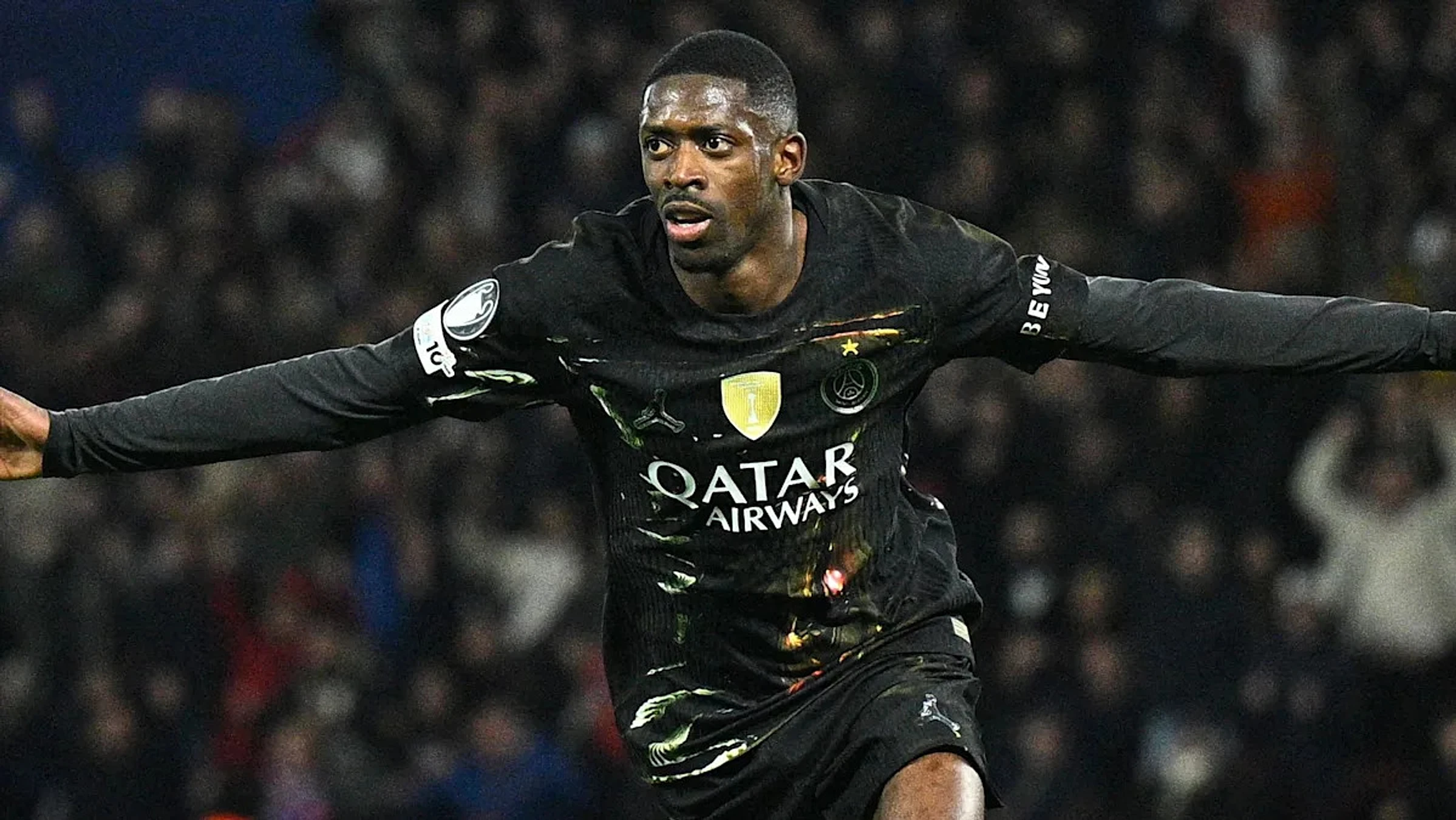


Champions League holders Paris St-Germain are into the semi-finals of this season's competition and strong contenders to repeat last year's impressive feat.
Despite boasting squads that have included the likes of Lionel Messi, Neymar and Kylian Mbappe, it is the current side - who host Bayern Munich in the first leg on Tuesday (20:00 BST) - that has played the club's most impressive football.
This month, manager Luis Enrique said "it would be a dream to have 20 players who can play everywhere", a nod to how he has looked to develop this squad.
It is through that focus on versatility and continuous rotations on the pitch that PSG have confused and outplayed some of the best teams in the world.
Watching PSG right-back Achraf Hakimi tap in their opener from seven yards out in last season's Champions League final win felt odd. In Paris, full-backs are regularly found in the penalty area while attackers are seen in defensive midfield positions.
This fluidity appears hard to understand, but there are underlying principles from the coaches that enable it to work without descending into chaos.
The two PSG centre-backs are fixed in their positions. Coaches like Igor Tudor, Chris Wilder and Simone Inzaghi have all encouraged central defenders, albeit in back threes, to roam and rotate with their team-mates so this is a possibility, but Luis Enrique opts against this.
The Spanish manager believes there has to be some structure to allow other players to play fluidly. The phrase 'floaters and anchors' has been used to help explain this concept.
During a game, PSG have players who act as anchors occupying zones that provide the team with balance. These positions include the two centre-backs, the touchline players on both sides, and one player stretching the opposition up top.
Aside from the centre-backs who remain in their positions, these anchoring positions can be taken up by players moving into these spaces.
For example, left-winger Khvicha Kvaratskhelia might start in the left-wing position before moving infield resulting in left-back Nuno Mendes filling that position. The key however is that - that area is anchored by a player.
These rotating movements can be described as zone replacements. PSG have specific areas that they need filling according to the coach. When a player leaves that area, another player rotates into that position or "replaces that zone". This helps keep the side balanced. Although they appear spontaneous, there is a level of coordination and predictability to them.
The floating players by comparison are the players who find themselves in the middle of the pitch - not bound by the positional instructions of the anchors.
These players have more license to roam freely, often combining with one-touch passing in close proximity. Naturally, defending against technical players with no true position is a task most teams struggle with.
When on the ball, PSG's two centre-backs are often joined by a third player to form a back three.
If the right-winger moves inside, the right-back, Hakimi, fills the space out wide. If the winger stays wide, Hakimi attacks more centrally. From this central position, he is able to pick up the ball in midfield or push further up as an extra attacker.
Mendes, the left full-back with equally as much license to attack, has a different reference point. He is asked to form part of the back three in build-up. If however the defensive midfielder - often Vitinha - drops into the backline, Mendes now has license to push up.
At this stage, his point of reference is now the winger. If the winger has moved inside, Mendes moves to the flank as somebody has to fill this space. If the winger is out wide, Mendes can now play in a free role centrally.
Based on these steps, different players end up centrally with true freedom so it can look like every player is able to move where they please. In actuality, the PSG players are going through the instructions in their head as they decide where to move.
Ballon d'Or winner Ousmane Dembele is given the most freedom of the PSG players, and rightly so. He is perhaps the only player free to move where he feels best and is frequently seen posing difficult questions of defenders by moving into positions that they are reluctant to move into.