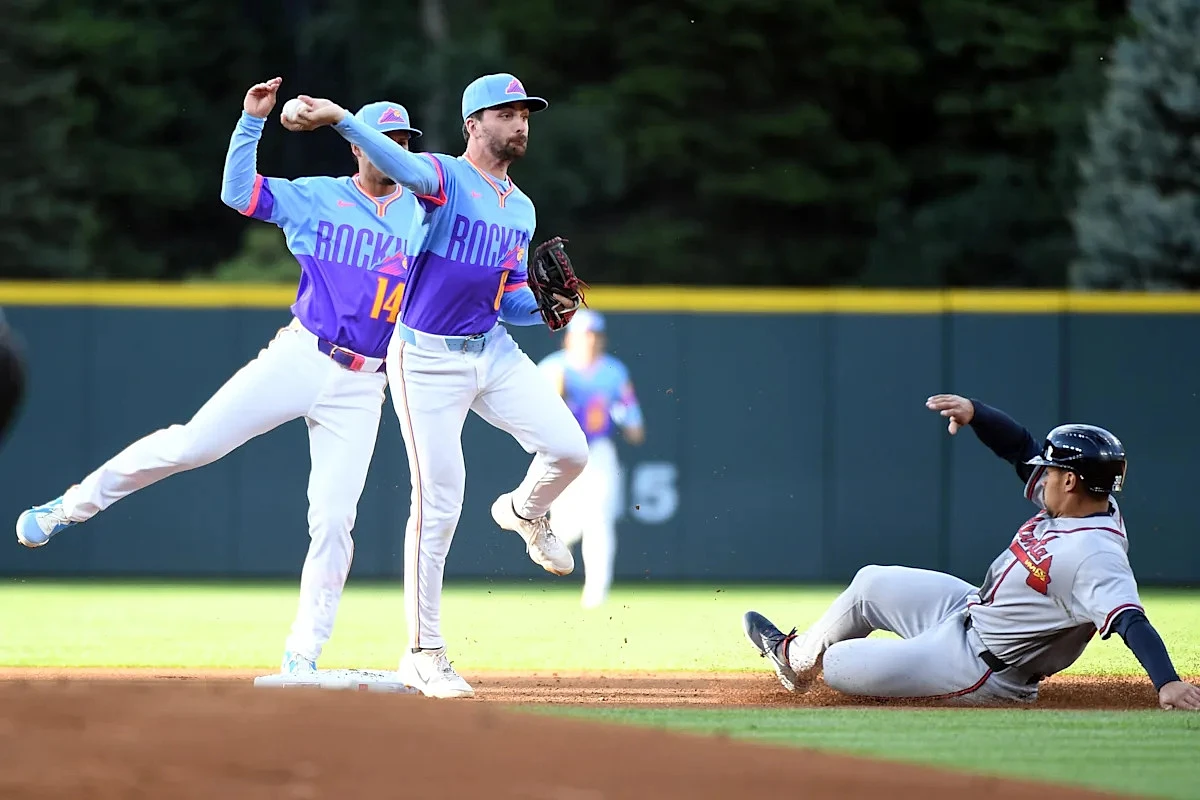
At Coors Field, innings can turn dangerous in a heartbeat. A walk. A single. A bloop. Suddenly, what looked like a routine frame is teetering on the edge of a big inning.
That's why a clean double play feels like an escape hatch: one ground ball, two outs, crisis averted. For the Colorado Rockies, that hatch has been a lifeline for years. But lately, it's getting harder to find.
Double plays have their own language. 6-4-3. 4-6-3. 5-4-3. To the uninitiated, they're just numbers. To baseball fans, they're cheat codes. Every number is a position, every dash is a throw. The first number tells you where the trouble started. The last tells you where it ended.
The classic 6-4-3 isn't the same as a 4-6-3. The 3-6-1 asks the pitcher to finish the job. The 1-2-3 is panic turned into process. And the 7-6-3? That's basically a practical joke.
The double play isn't one play. It's a family of escape routes. And for years, the Rockies used them more than almost anyone. Coors Field's spacious outfield and thin air make ground balls a pitcher's best friend, and Colorado built an identity around turning those grounders into quick, two-out relief.
So what's changed? The Rockies still have the main ingredient: ground balls. As of May 9th, they ranked 12th in MLB with a 42.3% ground-ball rate. That's solid. But grounders need the right setup. A ground ball with nobody on is just an out. A grounder with a runner on first and less than two outs? That's gold.
The easy explanation is actually good news: the Rockies are walking fewer hitters. Fewer free passes mean fewer runners on base, which means fewer double-play chances. It's a trade any pitching coach would make every day. Still, it changes the math.
But there's another layer. The total double-play count includes more than the classic infield turns. A strike-'em-out, throw-'em-out counts. So does a weird outfield double play. The stat that really matters for middle infielders is rGDP—a measure that asks whether a shortstop or second baseman completed the turn more or less often than an average fielder would, given the runner, batter, and batted ball.
For years, Colorado was elite at this. Earlier this season, though, the Rockies dipped to -2 rGDP, which stood out against their recent history. They've since climbed back to league average, so the usual small-sample warnings apply. Still, that early dip suggested the issue wasn't just fewer opportunities. For a stretch, when the escape hatch was there, they weren't opening it.
The good news? This is fixable. The ground balls are still coming. The walks are down. If the middle infielders can find their timing again, those 6-4-3s and 4-6-3s could start feeling like old friends once more.