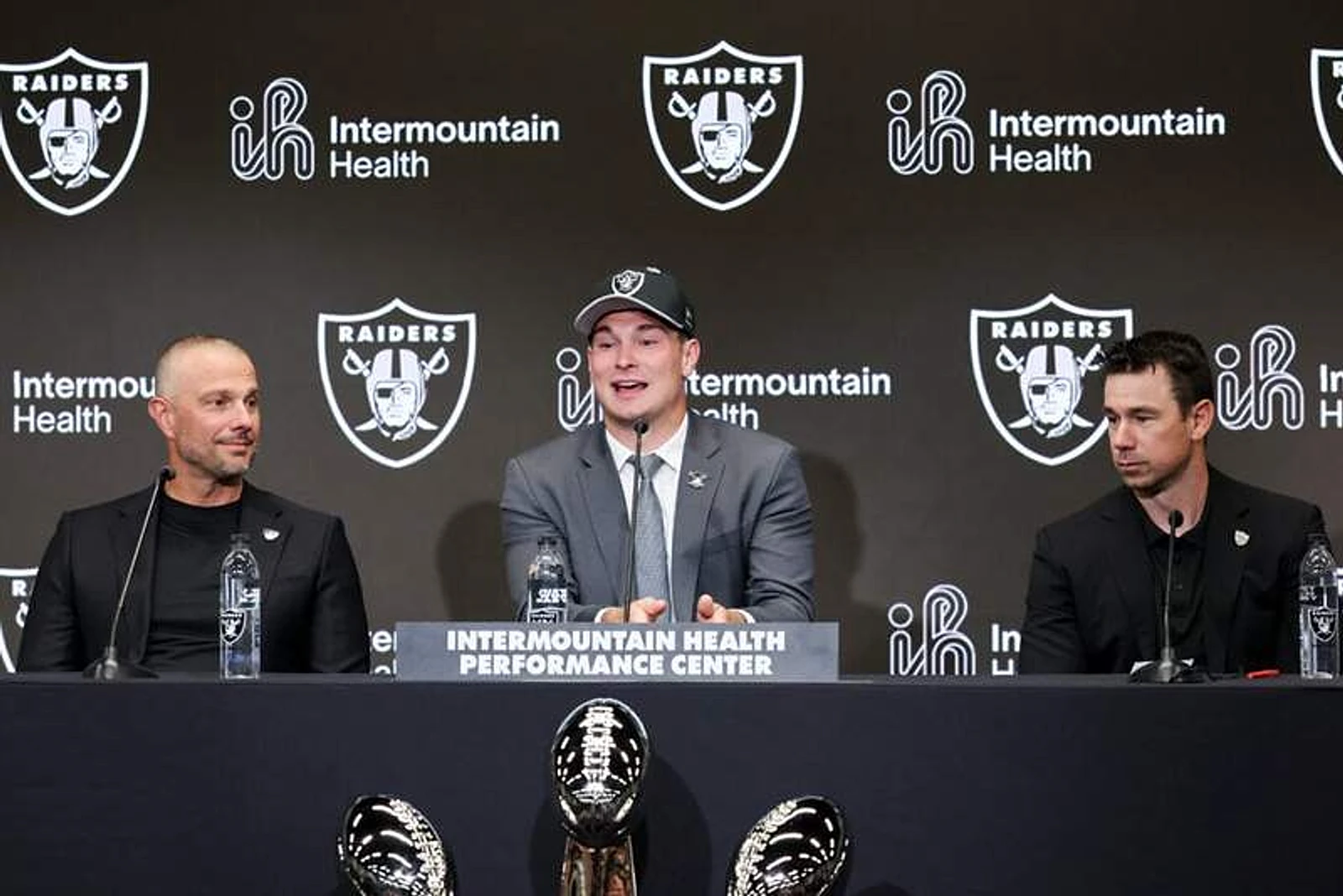


Fernando Mendoza is already making headlines as the No. 1 overall pick, but there is another layer to his rookie deal that sets him apart from most of his draft class.
Top-five picks are expected to cash in immediately, yet not all contracts are created equal once taxes come into play. Where a player lands can quietly reshape how much of that money they actually keep.
And in this year’s draft, one particular detail has created a clear divide among the very top selections.
As highlighted by Front Office Sports, the gap in projected state income tax between the top-five picks is massive.
Fernando Mendoza, after going No. 1 overall to the Las Vegas Raiders, is projected to pay $0 in state income tax on his rookie deal.
Meanwhile, David Bailey with the Jets is expected to owe around $5.7 million, Jeremiyah Love with the Cardinals about $1.3 million, and Arvell Reese with the Giants roughly $4.7 million.
Only one other top-five selection joins Mendoza in that $0 category, creating a clear split at the very top of the draft when it comes to take-home earnings.
It is a striking reminder that the draft is not just about talent evaluation. The destination can completely reshape the financial outcome.
The difference comes down to something simple but extremely impactful: state tax laws.
Nevada, where Mendoza now plays, does not impose a state income tax. That means a significant portion of his rookie earnings tied to team activities in Las Vegas avoids that deduction entirely.
The same applies to one other destination inside the top five, which also operates without a state income tax on wages. That is why only two players from this group fall into the $0 category.
By contrast, players drafted into markets tied to states like New Jersey face some of the highest tax rates in the country, which explains the multi-million dollar difference in projected payments.
Even Arizona, which has a relatively low flat tax rate, still cannot match the complete tax relief offered by those zero-income-tax states.
There is still a wrinkle, though. Players across the league are subject to jock taxes when playing road games in other states, meaning they do not escape taxation entirely.
Detroit rebooted: Brad Holmes picks Blake Miller, trades up for Derrick Moore to spark a comeback
Vikings opt for upside and athleticism; Leave run defence unaddressed
Howie Roseman’s high-stakes gamble: Choose chaos, skip the A.J. Brown replacement